Two Hands Ultherapy Prime & Aesthetic Lifting Clinic in Gangnam, Seoul · 1:1 Physician Care
Ultherapy & Sofwave Specialized Clinic · Gangnam-daero
en-US

Clinical Guide
Sofwave and Thermage for Deeper Skin Tones: A Guide
How energy-based lifting devices Sofwave and Thermage work, and how clinicians tailor treatment for Latina, Mediterranean and deeper skin tones.
Schedule a ConsultationSofwave and Thermage for Deeper Skin Tones: A Guide
Medically reviewed by Dr. Min Byung Yee, Chief Director and Board-Certified Family Medicine Physician, Maison de M Clinic · Last updated July 2026
When people research Sofwave, Thermage, and skin tone together, they are usually asking a practical question: are energy-based lifting treatments a reasonable option for medium, olive, Latina, Mediterranean, or deeper skin? The short answer is that these two devices work through mechanisms that behave differently from the light- and laser-based treatments many patients worry about. Sofwave uses microfocused ultrasound and Thermage uses monopolar radiofrequency (RF) energy — neither one relies on targeting the pigment (melanin) in the skin the way many pigment-seeking lasers do. That distinction matters when energy lifting is considered for darker skin, and it is one reason RF and ultrasound devices are frequently discussed for a broad range of skin types. Suitability, settings, and expected results are still individual, gradual, and best determined during a consultation.
This guide explains, in neutral terms, how these RF and ultrasound skin-type considerations are weighed, what the science says about melanin and energy-based devices, and how a clinician personalizes a plan. It is educational only and does not replace an in-person medical assessment.
Why skin tone comes up with energy devices
Skin tone is often described using the Fitzpatrick scale, a system that groups skin by how it tends to respond to sun exposure, from very fair (types I–II) to medium and olive (III–IV) to brown and deep brown or black (V–VI). Latina and Mediterranean skin commonly falls into the middle-to-higher range of this scale, and it typically contains more active melanin than very fair skin.
Melanin is the pigment that gives skin its color, and it also absorbs certain wavelengths of light. With some traditional laser and intense-light treatments, that absorption is central to how the device works — but it can also mean the epidermis (the outer layer) heats up more in richly pigmented skin. When too much heat is deposited at the surface, the risk of a temporary or, less often, longer-lasting change in pigment (either darkening, called post-inflammatory hyperpigmentation, or lightening) can increase. This is why clinicians reviewing options for deeper skin tones pay close attention to how a given device delivers its energy and where that energy is concentrated.
Two clarifications are worth making up front. First, having a deeper skin tone does not automatically rule out energy treatments; it means the choice of technology and the specific settings deserve careful, individualized thought. Second, no cosmetic treatment is risk-free or guaranteed, regardless of skin tone. Results vary from person to person.
How Sofwave and Thermage deliver energy differently
Sofwave and Thermage are both non-invasive, energy-based lifting and tightening treatments, but they use different forms of energy.
Sofwave (microfocused ultrasound). Sofwave uses SUPERB (Synchronous Ultrasound Parallel Beam) technology to deliver controlled ultrasound energy into the mid-dermis, the supportive middle layer of the skin. The goal is to create controlled thermal stimulation at a set depth that prompts the body's natural collagen remodeling over time. The system includes an integrated cooling feature (SofCool) designed to help protect the skin surface during treatment. Because the energy is focused below the surface and is not aimed at pigment, ultrasound-based devices are generally discussed as an option across a range of skin types. A narrative review of energy-based devices in skin of color notes that microfocused ultrasound does not directly target melanin and delivers energy below the epidermis, which supports its use across skin types when appropriately performed.
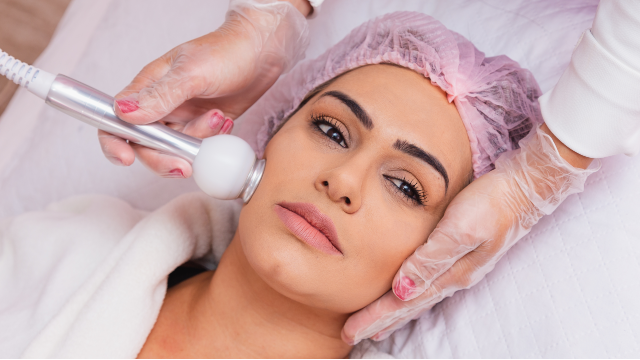
Thermage (monopolar radiofrequency). Thermage FLX uses monopolar RF energy to heat the deeper dermal layers, again with the aim of stimulating collagen remodeling for firmer skin. RF energy generates heat based on tissue resistance rather than by being absorbed by pigment. As reviews of RF in skin of color describe, radiofrequency heating depends largely on the tissue's electrical properties and water content, a process that is essentially independent of skin pigment. For this reason, RF and RF-microneedling procedures are often described in the literature as having a relatively lower risk of pigment-related side effects in darker skin types when performed correctly. Thermage FLX also uses a cooling system, along with AccuREP technology and vibration, to help protect the epidermis and improve comfort during energy delivery.
The practical takeaway is that both technologies are engineered to concentrate their working energy below the skin surface, and neither depends on melanin to function. That is a meaningful difference from many pigment-targeting light treatments, and it is a large part of why these devices come up so often in conversations about deeper skin tones.
Are these devices FDA-cleared?
Yes — and it helps to be precise about what that means. Sofwave and Thermage are both energy-based medical devices that have received U.S. Food and Drug Administration (FDA) 510(k) clearance for specific aesthetic uses. Sofwave's clearance covers non-invasive treatment to improve the appearance of facial lines and wrinkles, to lift the eyebrow, and to lift lax tissue under the chin (submental area) and on the neck. Thermage's monopolar RF system has likewise been cleared through the FDA's 510(k) process as an energy-based device for aesthetic and related uses.
An important distinction: FDA clearance applies to the device and its cleared indications. It confirms that the device was found substantially equivalent to legally marketed devices for those uses. It is not a promise of any specific result for an individual patient, and it does not guarantee outcomes. How well any person responds still depends on their skin, their anatomy, the treatment plan, and other personal factors.
Maison de M Clinic offers both Sofwave and Thermage FLX as part of its non-surgical lifting and contouring services, and the clinic's team determines which — if either — is appropriate for a given patient during consultation.
How a clinician individualizes treatment for deeper skin tones
Choosing and adjusting an energy treatment for medium, olive, Latina, Mediterranean, or deeper skin is a personalized process. In general terms, a thoughtful assessment may consider several factors:
- Skin type and history. A clinician typically reviews your Fitzpatrick skin type, your history of pigment changes (such as melasma or dark marks after inflammation or previous procedures), and how your skin has responded to past treatments or sun exposure.
- Device selection. Because RF and microfocused ultrasound do not rely on pigment absorption, they are frequently discussed as reasonable candidates for deeper skin tones. The most suitable choice depends on your goals — for example, addressing surface laxity versus deeper structural support — and on your skin condition.
- Settings and technique. Treatment parameters are individualized. Cooling of the epidermis, appropriate energy levels, and careful technique are all part of delivering energy where it is intended while helping to protect the skin surface.
- A cautious, staged approach. Some clinicians prefer conservative initial settings, particularly in richer skin tones, and adjust based on how the skin responds. A test area or a gradual plan may be discussed in some cases.
- Aftercare and sun protection. Consistent sun protection and gentle post-treatment skincare are commonly emphasized, since sun exposure and irritation can contribute to pigment changes in any skin but especially in more pigmented skin.
Published guidance on non-invasive cosmetic treatments for Fitzpatrick types IV–VI reinforces the same overall theme: safety and results in deeper skin tones depend heavily on selecting appropriate technology, using suitable settings, and matching the treatment to the individual patient. None of this can be decided from an article; it is why an in-person evaluation matters.
You can learn more about the clinic's approach and team on the Maison de M Clinic about-us page, and you can arrange an individualized assessment through the clinic's contact page.
What results are realistic — and what they are not
Both Sofwave and Thermage work by encouraging your own collagen to remodel over time, so results are gradual rather than immediate. It is common for visible firming or lifting to develop over a period of weeks to a few months as new collagen matures, and the degree of improvement varies with age, skin condition, and individual biology.
These are non-surgical treatments. They are generally discussed for mild to moderate skin laxity and for supporting skin firmness — not as substitutes for surgery, and not as a way to stop the natural aging process. As the National Institute on Aging notes, skin changes with age as it loses elasticity and structural support, which is a normal, ongoing process. Energy-based treatments may help address the appearance of some of these changes, but they do not halt aging, and their effects are not permanent. Maintenance sessions are sometimes discussed over time, based on individual factors.
Every treatment also carries the possibility of temporary side effects such as redness, mild swelling, warmth, or tenderness, which typically settle within a short period. Your clinician should review the specific risks, benefits, and alternatives with you before any procedure.
The Bottom Line
- Sofwave (microfocused ultrasound) and Thermage (monopolar RF) deliver energy below the skin surface and do not depend on melanin to work, which is why they are commonly discussed as options across a range of skin tones, including Latina, Mediterranean, and deeper skin.
- Both are FDA-cleared medical devices for specific aesthetic uses; clearance applies to the device and its indications and is not a guarantee of any individual result.
- For deeper skin tones, device choice, settings, cooling, technique, and aftercare are individualized to help balance results with skin-surface protection.
- Results are gradual and vary from person to person; these non-surgical treatments do not stop aging or replace surgery, and no outcome is guaranteed.
- Suitability can only be determined through an in-person consultation with a qualified clinician.
Frequently Asked Questions
**Is Sofwave or Thermage safe for darker or olive skin tones?**Because both devices deliver energy below the skin surface and do not rely on targeting pigment, they are frequently discussed as options for a range of skin tones. Reviews of energy-based devices in skin of color note that RF heating is largely independent of pigment and that microfocused ultrasound does not directly target melanin. Even so, safety depends on individualized settings and technique, and suitability must be confirmed during a consultation.
**Which is better for my skin, Sofwave or Thermage?**Neither is universally "better." They use different energy types and can suit different goals — for example, surface laxity versus deeper support — and in some cases they are considered as complementary options. The right choice depends on your skin, your goals, and a clinician's assessment.
**Does deeper skin tone mean a higher risk of pigment changes?**With some pigment-targeting light and laser treatments, richly pigmented skin can be more prone to temporary pigment changes because melanin absorbs the energy. RF and microfocused ultrasound work differently and are generally described as having a lower pigment-related risk profile, but no treatment is risk-free. A clinician individualizes the plan to help manage this.
**Are the results permanent?**No. These treatments encourage gradual collagen remodeling, and results develop over weeks to months. Skin continues to age naturally over time, so effects are not permanent, and maintenance may be discussed based on individual factors. Results vary.
**What does "FDA-cleared" actually mean here?**It means Sofwave and Thermage are medical devices that the FDA has cleared for specific aesthetic uses through its 510(k) process. Clearance relates to the device and its indications; it does not guarantee a particular outcome for any individual.
**Will treatment hurt, and is there downtime?**Both systems include cooling and comfort features. Many patients experience only temporary redness, warmth, or mild swelling, and non-invasive energy treatments generally involve minimal downtime. Your clinician will explain what to expect for your specific plan.
**How do I find out if I'm a candidate?**The most reliable way is an individualized consultation, where your skin type, history, and goals are evaluated. You can request an assessment through the clinic's contact page.
This article is for general informational purposes and does not constitute individualized medical advice. Consult a qualified physician about your specific condition.
References
- U.S. Food and Drug Administration — Sofwave System 510(k) clearance (K211483)
- U.S. Food and Drug Administration — Thermage FLX System 510(k) clearance (K170758)
- Energy-Based Devices for the Treatment of Facial Skin Conditions in Skin of Color (PMC11189641)
- Noninvasive Cosmetic Treatments for Fitzpatrick IV–VI: A Narrative Review of Safety and Efficacy Guidelines (PMC13012588)
- National Institute on Aging — Skin Care and Aging
- MedlinePlus — Skin Aging
More Clinical Articles
Continue reading physician-informed guides on non-surgical lifting, skin texture renewal, and aftercare in Seoul.
CellExosome BLACKLABEL: Exosome Skin Care at Maison de M
An evidence-cautious look at CellExosome BLACKLABEL exosome skin treatments at Maison de M Clinic in Seoul, and why exosome products are not FDA-approved.
Learn More
Sofwave and Thermage for Deeper Skin Tones: A Guide
How energy-based lifting devices Sofwave and Thermage work, and how clinicians tailor treatment for Latina, Mediterranean and deeper skin tones.
Learn More
Pting Laser vs CO2 Laser: Pain Scores and Recovery Benchmarks from KR
Pting Laser vs CO2 Laser: Pain Scores and Recovery Benchmarks from KR
Learn More