Two Hands Ultherapy Prime & Aesthetic Lifting Clinic in Gangnam, Seoul · 1:1 Physician Care
Ultherapy & Sofwave Specialized Clinic · Gangnam-daero
en-US

Clinical Guide
Non-Surgical Lifting for Women 60+ at Maison de M Clinic
A neutral guide to non-surgical lifting and skin tightening for women 60 and older at Maison de M Clinic in Seoul, with realistic expectations.
Schedule a ConsultationNon-Surgical Lifting for Women 60 and Older at Maison de M Clinic
Medically reviewed by Dr. Min Byung Yee, Chief Director and Board-Certified Family Medicine Physician, Maison de M Clinic · Last updated July 2026
Non-surgical lifting over 60 is one of the questions women most often raise once they notice softening along the jawline, deeper folds around the mouth, or looser skin on the neck. At Maison de M Clinic, a dermatology and aesthetic clinic in Seoul, South Korea, mature skin lifting is treated as a matter of realistic, individualized planning rather than a search for a single dramatic device. This guide explains what energy-based skin tightening for older women can and cannot reasonably do, who tends to be a suitable candidate, what safety issues matter more with age, and why some women in their sixties and beyond may be better served by surgical or combination options. The goal here is neutral information, not a promise of a specific outcome.
How Skin Changes After 60

Understanding what non-surgical lifting is working with starts with the biology of aging skin. As the National Institute on Aging notes, skin becomes thinner, less elastic, and more fragile with age, and the fat layer beneath the skin thins, which contributes to a looser, more lined appearance. Collagen and elastin—the proteins that keep skin firm and springy—decline steadily over the decades, and this process accelerates in the years after menopause for many women.
By the age of 60 and beyond, several changes commonly overlap. Skin laxity in the mid-face and along the jaw becomes more pronounced, the neck may show banding or crepiness, and static wrinkles (lines visible at rest) tend to deepen. Sun exposure accumulated over a lifetime, described by health authorities such as Mayo Clinic as a major driver of wrinkling and texture change, compounds the effect. These changes are gradual and natural, and they influence how much a non-surgical device can realistically achieve. A treatment that stimulates new collagen relies on the skin's own repair capacity, and that capacity is more modest in older skin than in younger skin.
What "Non-Surgical Lifting" Actually Means
The phrase "non-surgical lifting" can be misleading if it is read as a substitute for a facelift. Energy-based skin tightening does not cut, remove, or reposition tissue. Instead, these devices deliver controlled heat or focused energy into deeper layers of the skin to prompt collagen contraction and, over the following weeks and months, gradual collagen remodeling. Published reviews of non-invasive skin tightening explain that ultrasound and radiofrequency devices work by heating the dermis and deeper structures to stimulate this remodeling response, producing firming that develops slowly rather than an immediate surgical lift.
In practice, this means the results are typically subtle and gradual. A review of microfocused ultrasound and related skin-tightening technologies emphasizes that these treatments are most appropriate for mild to moderate skin laxity and that patient selection and realistic expectations are central to satisfaction. For women 60 and older, this framing matters: the treatments can offer a modest, natural-looking improvement in firmness and contour, but they do not reproduce the degree of change that surgery can deliver when laxity is advanced.
Maison de M Clinic frames its lifting treatments the same way—as tools within a personalized plan, with candidacy and expectations determined at an in-person or virtual consultation rather than promised in advance. Results vary from person to person.
Energy-Based Lifting Options at Maison de M Clinic
Maison de M Clinic offers a range of non-surgical, energy-based treatments, and the appropriate choice—or combination—depends on the individual assessment. Broadly, these devices fall into a few technology categories. In the United States, energy-based aesthetic devices such as microfocused ultrasound and radiofrequency systems are cleared by the FDA as a category for specific cosmetic uses; a clearance reflects that a device is considered substantially equivalent to others already marketed, not a guarantee of a particular result for any individual patient.
Microfocused ultrasound (HIFU/MFU). Ultherapy Prime is the clinic's focused-ultrasound platform. It uses DeepSEE real-time ultrasound visualization so the physician can see tissue layers before delivering energy, and it targets deeper structural layers of the face and neck. The clinic also offers a "Two Hands" bilateral protocol designed to treat both sides simultaneously. Ultrasound-based lifting is generally positioned for mild to moderate laxity and gradual tightening.
Ultrasound in the mid-dermis. Sofwave uses a parallel-beam ultrasound technology with integrated cooling to stimulate collagen in the mid-dermis while protecting the skin surface. The clinic describes gradual improvements in firmness and fine lines that develop over roughly three to six months as collagen matures.
Radiofrequency (RF). Thermage FLX and Density deliver monopolar RF energy to heat the dermis and stimulate collagen remodeling. RF is widely used for skin texture, elasticity, and surface laxity. Notably, Thermage FLX is contraindicated for people with implantable pacemakers, defibrillators, or other implantable electrical devices—a safety point that becomes more relevant with age, since these devices are more common in older adults.
Other options. The clinic also offers additional energy-based treatments such as InMode RF and ONDA microwave-based contouring, which may be considered depending on the individual's concerns. For any of these, the clinic states that treatment selection is made by a physician after facial assessment.
Realistic Expectations: What Devices Can and Cannot Do
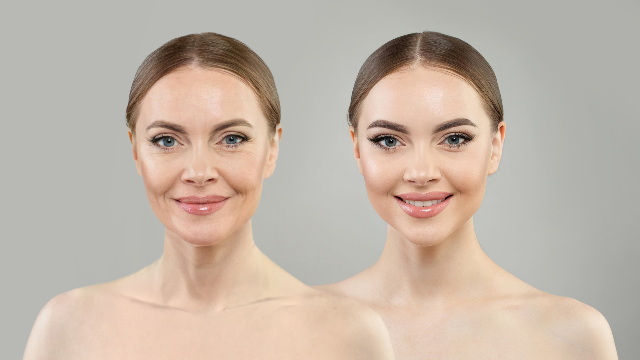
For women over 60, honest expectation-setting is the most important part of the conversation. Based on how these technologies work, here is a reasonable framing:
- What they can do: offer modest, gradual improvement in skin firmness and contour; soften early-to-moderate laxity along the jawline, cheeks, and neck; and provide a treatment path with little to no downtime for those who prefer to avoid surgery.
- What they cannot do: remove significant excess skin, reproduce the lift of a surgical procedure, or halt the ongoing aging process. Results are not lifelong; the clinic and published literature both describe effects that develop over months and then gradually fade, so maintenance sessions may be discussed over time.
- How results vary: outcomes depend on baseline skin condition, the degree of laxity, general health, sun history, and each person's individual collagen response. Two people the same age can respond quite differently.
Independent reviews of these technologies underline that satisfaction is highest when patients are selected carefully and understand that improvement is incremental. Maison de M Clinic publishes patient before-and-after references that can help set a visual baseline, though individual results are not assured and any images reflect specific patients rather than a promised outcome.
When Surgery or Other Options May Be a Better Fit
A neutral guide must acknowledge that non-surgical lifting is not the right answer for everyone. When skin laxity is advanced—significant jowling, substantial excess neck skin, or heavy folds—energy-based devices are unlikely to meet the goal, and a surgical consultation with an appropriately qualified surgeon may be the more realistic route. The American Society of Plastic Surgeons describes non-invasive skin tightening as suited to mild or early laxity, positioning surgery as the option for more pronounced changes.
Some women may also be better served by, or may benefit from combining, other non-surgical approaches. Skin-quality treatments (such as skin boosters), pigment and tone lasers, or injectable options may address concerns that lifting devices do not, such as dull texture, uneven tone, or volume loss. The most appropriate plan is determined individually. Importantly, some injectable and regenerative treatments used in Korea—including certain skin boosters, polynucleotide-based products, exosome therapies, and collagen-stimulating injectables—are regulated by Korean authorities (MFDS/KFDA) but are not approved by the US FDA for effectiveness. US patients should factor this regulatory difference into their decision and discuss it directly with the physician.
Safety and Candidacy for Women 60 and Older
Candidacy at Maison de M Clinic is decided after a physician assessment that reviews facial anatomy, skin condition, medical history, current medications and supplements, and treatment goals. For older adults, a few safety considerations deserve emphasis:
- Implanted devices. RF treatments such as Thermage FLX are not appropriate for people with pacemakers, defibrillators, or similar implants.
- Medications and health conditions. Blood thinners, photosensitizing medicines, and certain skin or systemic conditions can affect suitability and should be disclosed.
- Skin fragility. Thinner, more fragile mature skin means the physician must adjust technique and expectations accordingly.
- General side effects. Energy-based treatments commonly cause temporary redness, mild swelling, warmth, or tenderness that usually resolve within hours to a few days. Serious complications are uncommon when treatment is performed by trained clinicians, but no cosmetic procedure is free of risk, and individual risks should be reviewed in person.
The clinic's team is led by Dr. Min Byung Yee, Chief Director and a board-certified Family Medicine physician; you can read more about the clinic and its physicians before booking.
What to Expect at a Consultation
A thorough consultation is where realistic planning happens. At Maison de M Clinic, this includes an evaluation of skin laxity and facial structure, standardized clinical photographs for planning and follow-up, and a discussion of whether a single device or a combination protocol is most appropriate—or whether a non-surgical approach is suitable at all. International patients can begin with a virtual consultation, and the clinic provides English-language support, written treatment information, and follow-up communication. The cost associated with getting started is the consultation itself; specific treatment planning and pricing are handled directly by the clinic.
The Bottom Line
- Non-surgical lifting over 60 can offer modest, gradual improvement in firmness and contour, but it is not a facelift replacement, and results vary by individual.
- Energy-based devices (ultrasound such as Ultherapy Prime and Sofwave; radiofrequency such as Thermage FLX and Density) are FDA-cleared as a category for cosmetic use and work by stimulating collagen over weeks to months.
- Mature, thinner skin has a more limited repair capacity, so expectations should be realistic and maintenance may be discussed over time.
- Women with advanced laxity, or those with certain implants or health conditions, may be better served by surgery or other options—candidacy is decided at consultation.
- Some injectable and regenerative treatments offered in Korea are not US-FDA-approved for effectiveness; discuss this with the physician.
Frequently Asked Questions
**Is non-surgical lifting worth it after 60?**It can be, if your goal is a subtle, natural-looking improvement and you understand the limits. For advanced sagging, a surgical option may better match your goal. A consultation is the clearest way to judge suitability for your specific skin.
**Will non-surgical lifting replace a facelift?**No. Energy-based devices do not remove excess skin or reposition tissue the way surgery does. They stimulate gradual collagen remodeling and are generally suited to mild to moderate laxity.
**How long do the results last?**Results are not lifelong. Improvements typically develop over three to six months and then gradually fade as aging continues, so periodic maintenance may be considered. The exact timeline varies by person, and the clinic does not publish a fixed guarantee.
**Does it hurt, and is there downtime?**Most patients experience only temporary redness, warmth, mild swelling, or tenderness, and many return to normal activities the same day. Comfort measures are used during treatment. Your physician will explain what to expect for the specific device recommended.
**Are these treatments safe for older skin?**When performed by trained clinicians after a proper assessment, energy-based treatments are generally considered low-risk, but no procedure is free of risk. Certain devices are not suitable for people with implanted electrical devices such as pacemakers, and mature skin may require adjusted technique.
**Can I combine treatments?**Sometimes. Physicians may recommend combining technologies, or pairing lifting with skin-quality treatments, based on your assessment. Any combination should be planned by the treating physician.
**What about injectables or regenerative treatments?**These may be discussed as part of a broader plan, but some products used in Korea are not approved by the US FDA for effectiveness. Ask the physician about the regulatory status and evidence for anything recommended.
This article is for general informational purposes and does not constitute individualized medical advice. Consult a qualified physician about your specific condition.
References
- National Institute on Aging (NIH) — Skin Care and Aging
- MedlinePlus (NIH) — Skin Aging (health topic)
- Mayo Clinic — Wrinkles
- American Society of Plastic Surgeons — Non-Invasive Skin Tightening
- Noninvasive skin tightening: focus on new ultrasound techniques (PMC4327394)
- Customized Treatment Using Microfocused Ultrasound with Visualization — review of skin-tightening technologies (PMC8211327)
More Clinical Articles
Continue reading physician-informed guides on non-surgical lifting, skin texture renewal, and aftercare in Seoul.
CellExosome BLACKLABEL: Exosome Skin Care at Maison de M
An evidence-cautious look at CellExosome BLACKLABEL exosome skin treatments at Maison de M Clinic in Seoul, and why exosome products are not FDA-approved.
Learn More
Sofwave and Thermage for Deeper Skin Tones: A Guide
How energy-based lifting devices Sofwave and Thermage work, and how clinicians tailor treatment for Latina, Mediterranean and deeper skin tones.
Learn More
Pting Laser vs CO2 Laser: Pain Scores and Recovery Benchmarks from KR
Pting Laser vs CO2 Laser: Pain Scores and Recovery Benchmarks from KR
Learn More