Two Hands Ultherapy Prime & Aesthetic Lifting Clinic in Gangnam, Seoul · 1:1 Physician Care
Ultherapy & Sofwave Specialized Clinic · Gangnam-daero
en-US

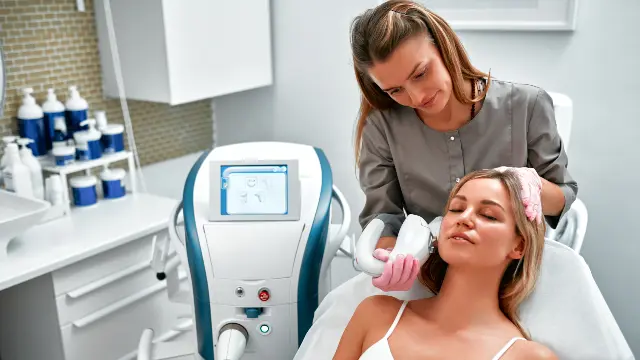
Clinical Guide
Density Lifting Korea: How It Differs from Ultherapy | Maison de M
Discover how Density High Frequency Lifting in Korea outperforms Ultherapy. Learn the science, results, and why US patients choose Maison de M Clinic Seoul.
Schedule a ConsultationIntroduction
If you have had Ultherapy in New York, Chicago, Miami, or Los Angeles and found yourself disappointed by the results, you are not alone and the reason likely has nothing to do with your skin. The truth is, a fundamentally more advanced lifting technology has been quietly transforming how Seoul's top aesthetic clinics approach non-surgical anti-aging, and most American patients have not heard of it yet. Density lifting Korea has rapidly emerged as one of the most talked-about non-surgical anti-aging treatments available to international patients today, and the science behind it explains precisely why so many women are choosing Seoul over their local dermatologist.
Standard HIFU-based treatments like Ultherapy target a single tissue layer using focused ultrasound energy a technology that, while effective for some patients, has well-documented limitations in collagen output, comfort, and versatility across skin types. For women in their late 30s through their 50s dealing with jowling, midface descent, and neck laxity, a single-modality approach often reaches a clinical ceiling long before the patient is satisfied with her results. The gap between what was promised and what was delivered is not a coincidence it is a structural limitation of the technology itself.
By the end of this guide, you will understand exactly how Density High Frequency Lifting works and why its dual-mode RF mechanism produces clinical results that HIFU cannot replicate. You will see a precise head-to-head comparison between density lifting Korea treatments and Ultherapy across every clinically relevant dimension. You will also understand why Seoul and Maison de M Clinic specifically has become the destination of choice for discerning American patients seeking this technology, along with who is an ideal candidate, what realistic results look like, and what recovery actually involves.
As specialists who have spent years treating international patients with the most advanced non-surgical lifting protocols available, the team at Maison de M Clinic understands precisely why Density High Frequency Lifting represents a meaningful clinical step forward and which patients will benefit most from it.

What Is Density High Frequency Lifting? Korea's Next-Generation RF Technology Explained
Density lifting Korea is not simply another radiofrequency device added to a clinic menu. It represents a genuine architectural departure from how RF energy has traditionally been applied to the face. Understanding the technology from first principles is essential to appreciating why its clinical outcomes are categorically different from both standard RF and HIFU-based treatments.
Density High Frequency Lifting Explained: The Dual-Mode RF Difference
Density is a non-invasive RF lifting treatment developed by Jeisys Medical Inc. in South Korea, operating at a frequency of 6.78MHz. Unlike standard monopolar RF devices such as Thermage, or focused ultrasound treatments such as Ultherapy, Density uses a proprietary Sequential RF Pulsing system that combines both monopolar and bipolar RF energy in a single treatment session.
This distinction matters enormously in clinical practice. Monopolar RF penetrates to the subcutaneous fat layer and the fascia layer the deepest structural level of the face triggering long-term collagen remodeling at the foundational plane of facial support. Bipolar RF simultaneously targets the upper dermis for surface texture refinement, pore tightening, and elastin stimulation closer to the skin surface. This dual-mode action means the treatment addresses multiple skin depths in one session a capability that neither standard RF alone nor Ultherapy alone can match.
The Jeisys DENSITY device operates at a maximum output of 400W, with a real-time impedance feedback system that auto-calibrates energy delivery to each patient's individual skin resistance. This means the device is not simply applying a fixed energy level across the face it is reading and responding to the unique electrical properties of each patient's tissue in real time to ensure that the targeted therapeutic dose is actually achieved at depth. For patients considering density high frequency lifting explained in simple terms, the core concept is this: it lifts from the inside out, at multiple levels, all at once, with intelligent energy control throughout.
The Science of Sequential RF Pulsing: Why It Produces Enhanced Collagen Stimulation
The mechanism behind Density's clinical advantage lies in what happens at a cellular level when both monopolar and bipolar energies are delivered in sequence. Clinical peer-reviewed evidence published in PMC (2025) demonstrates that the DENSITY sequential monopolar-bipolar system stimulates significantly more collagen than single-mode RF approaches, with prior research supporting that sequential RF systems produce enhanced collagen and elastin remodeling compared with monopolar RF alone.
The mechanism works through two distinct biological events. Controlled thermal energy first induces immediate collagen fiber contraction a rapid, visible tightening effect. This is followed by a regenerative wound-healing cascade that builds new collagen type I and III over the subsequent 30 to 90 days. The result is both an immediate lift and a progressive, building improvement that continues to develop over three months post-treatment.
The Sequential RF Pulsing delivers monopolar pulses with integrated cooling on alternate pulses, protecting the epidermis while maximizing deep dermal heating. Smart Adjustable Cooling (SAC) and Real-Time Auto Calibration (RAC) maintain patient comfort throughout which is the key reason most patients report no need for topical anesthesia at any point during the session.
What Does a Density Lifting Session Feel Like?
For patients accustomed to the significant discomfort associated with standard Ultherapy, the experience of density lifting Korea is often a genuine surprise. A typical full face session lasts approximately 40 minutes, requires no needles, and requires no numbing cream in most cases. Real-time contact cooling protects the skin surface continuously throughout the treatment.
Most patients report a warm, mild pressure sensation. In the PMC peer-reviewed case series (2025) evaluating the DENSITY device across five patients with Fitzpatrick Skin Type IV, VAS pain scores averaged between 2 and 3 out of 10 placing the treatment firmly in the minimal discomfort range without any anesthesia administered. Zero social downtime is the clinical norm: most patients return to normal activity immediately, with any mild redness resolving within 2 to 4 hours.
The device includes six interchangeable treatment tips that allow precise customization: the HIGH-F Tip for general face areas, the HIGH-E Tip for delicate small areas around the eyes and mouth, and the HIGH-B Tip for thicker or wider areas including the neck and jowls. This tip versatility is one of the reasons density lifting Korea can be precisely tailored to each patient's specific concern areas rather than applied as a one-size-fits-all protocol.
How Density High Frequency Lifting Works: A Layer-by-Layer Breakdown
To fully appreciate why density lifting Korea produces results that standard RF and HIFU often cannot match, it helps to understand the structural architecture of the face and which layer of tissue each modality is actually reaching. Maison de M Clinic's approach to this technology is grounded in a deep understanding of facial anatomy and that understanding directly informs how every session is structured.
The Four Target Layers of Density Treatment
Facial aging is not a single-layer problem. It occurs simultaneously across multiple tissue planes and that is precisely why single-modality treatments so often produce incomplete results. Here is how Density addresses each layer of the face during a single session.
The epidermal layer is protected and cooled throughout the entire session. It is not a treatment target, but it benefits from the regenerative cascade that follows deep thermal stimulation patients typically observe surface brightening and texture refinement as a secondary benefit. The dermal layer is the primary zone for collagen and elastin production. Bipolar RF from the DENSITY device targets this layer directly, improving firmness, reducing fine lines, and refining surface texture and pore visibility.
The subcutaneous fat layer is where monopolar RF penetrates to trigger fat layer tightening without ablation producing the contouring and slimming effect that is clinically observed in the submental and lower face areas. Patients often notice a more defined jawline and a subtler, more structured lower face appearance as this layer responds to treatment. The fascia layer, which sits at the deepest plane reached by monopolar RF, is the structural foundation of facial support. Thermal stimulation here produces the most significant lifting of jowls, jawline definition, and midface elevation the effects that most patients associate with the visible "lifted" quality of their results.
Skin Layer | Depth | Treated by Density? | Treatment Method | Clinical Effect |
|---|---|---|---|---|
Epidermis | Surface | Protected | Active cooling | No damage; surface preserved |
Upper Dermis | Shallow | Yes | Bipolar RF | Texture, pore reduction, elastin |
Deep Dermis | Mid | Yes | Monopolar RF | Collagen type I and III synthesis |
Subcutaneous Fat | Deep | Yes | Monopolar RF | Contouring, slimming effect |
Fascia Layer | Deepest | Yes | Monopolar RF | Structural lift, jowl reduction |
It is worth noting that Ultherapy targets the SMAS layer using focused ultrasound coagulation points, while Density heats a wider, more uniform zone across multiple layers simultaneously. This is a key distinction in mechanism and in the character of the results patients experience.
The Role of Impedance Feedback in Consistent Results
One of the most technically significant features of the Jeisys DENSITY platform is a capability that most competitor content does not discuss at all: real-time impedance feedback. Skin resistance varies significantly between individuals and even across different facial zones in the same patient. A patient with thicker subcutaneous fat in the lower face has very different tissue electrical properties than the same patient's periorbital area and delivering a fixed energy setting across both zones would mean under-treating one and potentially over-treating the other.
Density's impedance feedback system automatically measures skin resistance in real time and recalibrates energy delivery at every point to ensure the targeted therapeutic level is actually achieved at depth. In practical terms, this means that no two treatment zones are treated identically unless their tissue properties are identical the device adapts continuously to the individual patient's anatomy throughout the entire session.
This is a meaningful quality advantage over older RF devices and is one of the reasons that Korean protocols using the DENSITY platform produce more consistent, reproducible results than their counterparts operated on older hardware without this feedback capability.
Density High Frequency Lifting vs Ultherapy: A Clinical Comparison
This is the question that most American patients are asking when they research density lifting Korea for the first time particularly those who have already invested in Ultherapy treatments at home and found the results underwhelming. A fair, evidence-based comparison between these two technologies requires looking at the mechanism, the depth, the pain profile, the downtime, the skin type suitability, and the character of the results they produce.
Technology, Depth, and Mechanism: The Fundamental Difference
Ultherapy uses microfocused ultrasound with visualization (MFU-V) to create precise coagulation points at fixed depths of 1.5mm, 3mm, and 4.5mm, primarily targeting the SMAS layer. The mechanism is ablative at a microscopic level focused energy deliberately creates controlled thermal injury points to trigger a healing and collagen response. This approach is genuinely effective for SMAS-level structural lifting, and for patients with early-to-moderate SMAS laxity and minimal surface skin concerns, Ultherapy can produce a satisfying result.
Density high frequency lifting vs Ultherapy, however, differs at the most fundamental level of energy physics. Density uses radiofrequency electrical current that heats tissue via the water content of cells a process that is entirely chromophore-independent across a continuous zone rather than discrete focal points. The result is more uniform, broader collagen stimulation across multiple layers simultaneously, while Ultherapy produces a more concentrated but narrower, depth-specific lift.
Neither technology is universally superior in every scenario. But for patients presenting with multi-layer laxity those dealing with both deep structural sagging and surface skin quality concerns including texture, pore enlargement, and fine lines Density's broad-spectrum approach addresses a more comprehensive range of concerns in a single session, which is a clinically significant advantage for the majority of patients seeking non-surgical face lifting Seoul specialists see in their practices.
Head-to-Head Comparison: Density vs Ultherapy Across 8 Clinical Dimensions
The table below provides a direct comparison of density high frequency lifting vs Ultherapy across the dimensions that matter most to patients making a treatment decision. This is the comparison that no US clinic website currently provides, and it is the clearest way to understand why patients are increasingly choosing density lifting Korea over their local Ultherapy providers.
Clinical Dimension | Density High Frequency Lifting | Ultherapy (Standard) |
|---|---|---|
Energy Type | Dual-mode RF (monopolar and bipolar) | Focused ultrasound (MFU-V) |
Treatment Depth | Epidermis to fascia layer (multi-level) | SMAS layer (1.5 to 4.5mm fixed points) |
Collagen Stimulation | Enhanced; sequential RF systems outperform single-mode RF (clinical data) | Significant but point-specific |
Pain Level | VAS 2 to 3 out of 10; no anesthesia needed | VAS 5 to 7 out of 10; topical anesthesia typically required |
Downtime | Zero to minimal (redness 2 to 4 hours) | Zero to minimal (potential swelling 1 to 3 days) |
Skin Type Suitability | All Fitzpatrick types I through VI; chromophore-independent | Best for Fitzpatrick I through III; caution with darker types |
Result Character | Broad lift and texture improvement and contouring | Deep structural lift with less surface effect |
Session Duration | Approximately 40 minutes | 60 to 90 minutes |
For patients comparing Seoul lifting treatment cost alongside treatment outcomes, you can also explore Seoul lifting treatment cost comparison to understand the full value equation of traveling to Korea for these treatments.
If you are evaluating multiple technologies beyond these two, compare Seoul's top lifting devices for a comprehensive overview of how Density, Ultraformer Prime, Sofwave, and Thermage FLX each address different patient concerns.
The Skin Tone Advantage: Why Density Is Safer for Diverse Patients
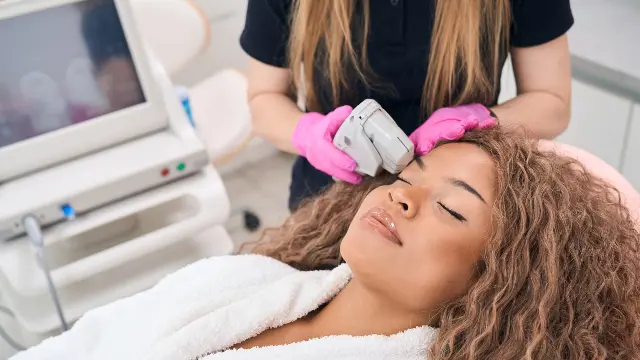
One of the most clinically significant and most underreported distinctions in the density high frequency lifting vs Ultherapy comparison involves skin tone safety. Ultherapy uses ultrasound energy that can behave unpredictably in patients with higher melanin content and greater dermal thickness not directly due to pigment, but due to the tissue acoustic properties that ultrasound must traverse. Some practitioners exercise additional caution with darker skin tones when applying HIFU-based treatments as a result.
Density's radiofrequency skin tightening Korea delivers energy that is entirely chromophore-independent. It generates heat through tissue water content and electrical resistance, making it equally effective and equally safe regardless of skin color or Fitzpatrick classification. The PMC peer-reviewed case series (2025) that evaluated the DENSITY device specifically focused on patients with Fitzpatrick Skin Type IV a group often underrepresented in aesthetic clinical research. All five patients demonstrated measurable improvements in skin firmness, textural smoothness, and facial contouring, with zero adverse pigmentary events and zero reported downtime across the entire cohort.
For patients with Latina, Mediterranean, South Asian, African American, or mixed heritage skin tones, this chromophore independence is not a minor footnote it is a clinically meaningful reason to choose density lifting Korea over HIFU-based alternatives.
Why Density Lifting Is a Cornerstone of Korea's Combination Anti-Aging Protocol
Understanding where density lifting Korea sits within the broader context of Seoul's approach to non-surgical facial rejuvenation is essential for any patient considering a treatment visit to Korea. The difference between what happens in a Seoul specialist clinic and what happens in a typical US dermatology practice or medical spa is not simply a matter of device availability it is a fundamental difference in clinical philosophy.
The Multi-Layer Lifting Philosophy Behind Maison de M Clinic's Approach
Korean aesthetic medicine operates on a foundational principle that no single device can address all dimensions of facial aging simultaneously. The most impactful and lasting results emerge from a thoughtfully layered combination protocol in which each device addresses a specific anatomical layer with a specific clinical purpose.
At Maison de M Clinic, Density addresses the dermal-to-fascial layers through its radiofrequency skin tightening Korea mechanism. Ultraformer Prime targets the SMAS structural level through focused HIFU energy. Sofwave treats the precise 1.5mm neocollagenesis zone within the dermis. Thermage FLX refines skin surface elasticity and overall skin quality at the superficial level. Each device occupies its own therapeutic niche within the architecture of facial aging and none of them replaces any other. You can learn more in this Ultraformer Prime lifting guide to understand how the HIFU component complements the RF work of Density within a combined protocol.
This is not upselling it is clinical stratification. It means matching treatment modality to the specific anatomical layer that requires intervention for that individual patient, based on their unique aging presentation. At Maison de M Clinic, every combination protocol is designed by the treating specialist based on the patient's age, skin thickness, degree of laxity, target zones, and lifestyle factors.
The combination protocol overview below illustrates how each device fits within the broader anti-aging framework:
Device | Layer Targeted | Primary Effect | Role in Protocol |
|---|---|---|---|
Density (Jeisys) | Dermis to fascia | Multi-layer collagen stimulation | Broad lifting and surface refinement |
Ultraformer Prime | SMAS layer | Deep structural lift | Primary structural repositioning |
Sofwave | 1.5mm dermal zone | Precise neocollagenesis | Targeted mid-dermal regeneration |
Thermage FLX | Skin surface and superficial dermis | Elasticity and skin quality | Surface refinement and texture improvement |
Lifting Technique Comparison: Korea Clinic Standards vs US Dermatology
The lifting technique comparison Korea clinic specialists apply versus what a typical American patient experiences at home could not be more different. In a standard US dermatology or medical spa setting, a patient presenting with jowling and midface descent will typically receive one device, one session, and one depth of treatment. The clinical outcome is accordingly one-dimensional.
In a Seoul specialist clinic like Maison de M, that same presentation is addressed with a combination of two to four devices across multiple sessions or a single intensive visit each targeting a different tissue layer, each reinforcing the work of the others. The result is not simply additive; it is synergistic. Deep structural lift from HIFU combined with broad dermal remodeling from Density, surface refinement from Thermage FLX, and regenerative support from skin boosters creates a layered outcome that no single device can replicate.
For American patients who have already tried Ultherapy and been disappointed, the critical insight is this: the technology was not necessarily wrong the protocol was incomplete. A lifting technique comparison Korea clinic standards reveal that what feels like a treatment failure in the US is often simply the natural limitation of a single-modality, single-layer approach applied to a multi-layer aging concern.
This is why K-Beauty anti-aging technology, particularly as practiced in Seoul's specialist clinics, represents a different clinical standard not merely a different geographic option. Patients seeking skin tightening without surgery are finding that the Korean approach produces the comprehensive results that single-device US protocols cannot achieve.
Who Is an Ideal Candidate for Density High Frequency Lifting in Korea?
One of the most common questions prospective patients ask when researching density lifting Korea is whether they are actually a good candidate particularly those who have tried treatments before, those with diverse skin tones, and those who wonder whether age plays a limiting role in their eligibility. The answer, in most cases, is more encouraging than patients expect.
Ideal Candidates by Age and Concern
Density High Frequency Lifting is suitable across a wide age range, but the clinical picture of how it performs varies meaningfully between patients in their late 30s, 40s, and 50s and understanding those differences helps set realistic and accurate expectations.
Patients in their late 30s the profile of a Maya Chen-Williams (38, New York City) type of patient who present with early jowling, softening of the midface, and fine periorbital lines are excellent Density candidates. At this stage, the dermal layer is still highly responsive and collagen production capacity is strong. Density's surface-to-deep collagen stimulation treatment produces visible lifting without requiring the intensity that more aggressive HIFU protocols demand. Results in this cohort typically present 30 to 45 days post-treatment, with improvement continuing through the 90-day mark as the regenerative cascade completes.
Patients in their 40s the profile of an Elena Vasquez (45, Miami) presenting with mid-stage laxity including visible neck and jawline changes respond particularly well to Density, especially when combined with an Ultraformer Prime session for deeper SMAS structural lifting. Patients in this cohort often report the most dramatic visible transformation because their laxity is significant enough to create obvious, measurable change, but the tissue remains biologically responsive enough to achieve strong collagen remodeling outcomes.
Patients aged 50 and above the profile of a Laura Mitchell (54, Chicago) will find that Density remains highly effective, particularly for surface and mid-dermal remodeling. The PMC clinical case series (2025) included a 54-year-old patient who demonstrated notable brow-lifting effects and marked lower face definition improvement over the 3-month follow-up period. Importantly, her skin thinness was identified as a factor that made the bipolar RF component particularly effective. For patients 50 and older with more advanced skin laxity treatment Seoul specialists recommend positioning Density within a comprehensive multi-device protocol to achieve the most complete result. Non-surgical face lifting Seoul specialists can achieve in this age group is often more comprehensive than patients expect, provided the protocol is appropriately designed.
Patients Who Have Been Disappointed by Previous Treatments
There is an important conversation to have specifically with patients who tried standard Ultherapy in the US and saw limited results. This is a pattern that Maison de M Clinic's team encounters regularly with international patients and understanding why prior Ultherapy disappointment occurred is foundational to understanding what density lifting Korea can offer them differently.
Prior Ultherapy disappointment is almost always attributable to one of three causes: a single modality targeting only one tissue layer; insufficient treatment shot counts below the clinically recommended threshold; or devices operating below optimal energy levels due to practitioner technique or equipment calibration. None of these causes reflects a problem with the patient's skin. Density directly addresses the dermal and fascial layers that Ultherapy's fixed focal points may not adequately reach particularly in patients with thicker or denser facial tissue where focused ultrasound energy sometimes falls short of its target depth.
Prior Botox and filler patients are excellent Density candidates as well. The treatments are clinically complementary, not competitive injectable treatments address volume and dynamic lines, while Density addresses laxity and structural support from the tissue level upward. Patients with existing filler in the treatment area typically proceed without issue, though this is always reviewed in the pre-treatment consultation.
Who Should Wait or Consult Before Proceeding
As with any energy-based treatment, certain conditions require consultation before proceeding. Patients with active skin infections, open lesions, or inflammatory conditions in the planned treatment zone should postpone treatment until the condition has fully resolved. Patients who have undergone recent surgical procedures or have implants in the treatment area should discuss their history in the pre-treatment consultation. Pregnancy and breastfeeding are standard contraindications for all RF-based treatments. Certain active metallic implants in or near the treatment zone including pacemakers and cochlear implants require careful clinical review before proceeding.
It is worth noting that Density's chromophore independence means there are almost no skin tone or skin type contraindications a genuine clinical advantage over HIFU-based devices for patients with diverse skin tones considering their lifting options.
Results, Recovery, and What to Realistically Expect
Managing expectations accurately is one of the most important things a specialist can do for a patient and it is something that most online content around density lifting Korea fails to do well. This section provides a transparent, clinically grounded picture of what recovery looks like, when results appear, and how long they last.
The Density Recovery Timeline: What to Expect Day by Day
One of the most compelling aspects of Density's clinical profile is its near-zero downtime, which is particularly relevant for international patients flying from New York, Chicago, or Miami who cannot afford an extended recovery period. The PMC case series (2025) confirmed that no patient in the study cohort reported any adverse events or downtime at any point during the observation period.
For a more detailed day-by-day perspective on recovering from combined lifting treatments in Seoul, the full recovery guide for Seoul treatments provides additional context that international patients find helpful before traveling.
Timeframe | What Happens | What You Can Do |
|---|---|---|
Immediately post-treatment | Mild warmth, possible redness (resolves in 2 to 4 hours) | Return to normal activities; no social downtime |
Days 1 to 3 | Skin may feel slightly tighter; subtle initial firming visible | Normal activities, skincare, travel including flying |
Weeks 1 to 2 | Initial visible improvement begins; some patients note pore refinement and texture change | All normal activities; avoid intense sun exposure; apply SPF 50 |
Month 1 | Significant collagen production underway; visible lifting effect emerging; brow area and lower face definition improving | Normal activities; follow Maison de M Clinic aftercare protocol |
Months 2 to 3 | Full collagen remodeling results visible; maximum lifting, firmness, and contour improvement | Full normal life; enjoy results |
Months 4 to 6 and beyond | Results sustained; natural aging continues gradually; maintenance session planning appropriate | Plan maintenance visit to Seoul or virtual consultation with Maison de M Clinic |
This timeline is consistent with the PMC (2025) clinical findings, in which improvements became evident as early as one month post-treatment and continued to progress through the full 3-month follow-up period.
How Long Do Density Results Last and What Maintenance Looks Like
Results from the Jeisys DENSITY platform are sustained for 12 to 18 months in most patients, with ongoing maintenance sessions every 12 months recommended for optimal long-term outcomes. This durability is grounded in the biology of what the treatment produces. Newly generated collagen type I and III does not simply "wear off" the skin continues to benefit from the collagen built during the treatment period. However, the natural aging process continues, which is why annual maintenance sessions are clinically advisable.
For Maison de M Clinic's international patients, the maintenance model is highly practical. Annual or biennial Seoul visits, combined with virtual follow-up consultations in the interim, allow US patients to sustain their results without frequent travel. The clinic's virtual consultation infrastructure was designed specifically with this international maintenance model in mind US patients in all time zones can connect with their treating specialist for follow-up care without needing to book flights between maintenance sessions.
Patients who receive combination protocols Density paired with Ultraformer Prime and skin boosters typically report longer-lasting results in the range of 18 to 24 months. This extended duration reflects the fact that multiple collagen pathways have been simultaneously stimulated, creating a more comprehensive regenerative response that takes longer to fully dissipate.
Why Choose Maison de M Clinic for Density High Frequency Lifting in Korea
Choosing where to receive density lifting Korea treatment is not simply a matter of which clinic has the Jeisys DENSITY device it is a question of who is operating it, within what clinical philosophy, and with what level of personalized care for international patients. Maison de M Clinic answers each of these questions with a precision and depth of care that sets it apart within Seoul's highly competitive aesthetic medicine landscape.
Our Specialists' Expertise and Combined Experience
Maison de M Clinic's medical team brings together five specialist doctors whose combined clinical experience spans over 55 years of aesthetic medicine practice and more than 1,000 procedures performed annually.
Dr. Min Byung Yee serves as Chief Doctor and holds a Family Medicine specialization with over 15 years of experience. He is a recognized clinical advisor and Key Doctor certified in advanced lifting protocols including Ultherapy Prime and multi-device combination programs, with academic positions and clinical roles across major Seoul aesthetic institutions.
Dr. Chang Won Choi is the clinic's Aesthetic and Laser Specialist with over 10 years of experience across multiple leading aesthetic institutions. He holds extensive professional memberships and specializes in advanced RF technologies and combination anti-aging treatments, making him one of the clinic's lead practitioners for Density protocols.
Dr. Bobae Kang brings over 10 years of experience as a former aesthetic clinic director, with deep specialist expertise in fillers, Botox, and comprehensive skin treatments. As Aesthetic Director, he oversees the clinical philosophy that underlies Maison de M Clinic's multi-layer protocol approach.
Dr. Jeongmin Choi is an Aesthetic Physician with 9 years of experience, hospital-trained at Soonchunhyang University and a former clinic director. His background bridges both hospital medicine and specialist aesthetic practice a combination that brings rigorous clinical discipline to the treatment environment.
Dr. Ari Byun is a Dermatology and Aesthetic Specialist with over 10 years of experience focused on lifting, laser treatments, and anti-aging protocols. Her training across leading aesthetic clinics in Seoul makes her particularly skilled in the nuanced management of diverse skin types, including the full Fitzpatrick spectrum.
You can read more about the full credentials, training history, and clinical philosophy of the Maison de M Clinic team in the dedicated meet our specialist team profile article.
The Maison de M Clinic Difference: K-Beauty Precision Meets Global Standard
Maison de M Clinic combines advanced K-Beauty anti-aging technology with personalized care in Seoul's Gangnam district one of Korea's most concentrated and highly regarded areas for premium aesthetic medicine. The clinic's central philosophy is that every patient protocol is individually designed rather than templated combining the most clinically appropriate devices for each patient's specific aging presentation rather than defaulting to a standard menu.
This contrasts directly with the US-market standard of care, where a typical American medical spa provides one device per visit according to a pre-set menu. At Maison de M Clinic, a specialist designs a multi-layer protocol based on the patient's anatomy, aging profile, goals, and timeline then explains the rationale for every element of that protocol in language the patient can understand. Premium facility presentation in Gangnam, Seoul; full English consultation support; and a dedicated international patient coordinator ensure that anti-aging treatment for American patients visiting the clinic is as seamless as possible from arrival to departure. Real stories from US patients at Maison de M Clinic provide first-hand perspective on what this experience looks like in practice.
For patients wondering about safety considerations before traveling to Seoul for aesthetic care, the comprehensive safety guide for US patients in Seoul addresses the most common questions international patients have before their first visit.
International Patient Support for US Patients
Maison de M Clinic has built a dedicated infrastructure for supporting US patients throughout their entire treatment journey from the initial consultation in their home city through to post-treatment follow-up after they return home. The full English consultation process includes a complimentary video consultation available prior to travel, so patients arrive in Seoul having already received a preliminary protocol recommendation and with all their questions answered.
An English-speaking patient coordinator manages communication before, during, and after the visit handling treatment scheduling, local area guidance, and aftercare planning so that the patient can focus entirely on the experience and results. Virtual follow-up consultations are available for US patients after returning home, ensuring continuity of care that does not end when the flight departs Seoul. The clinic actively serves patients from New York City, Los Angeles, Chicago, Houston, Phoenix, and Miami, with video consultation availability designed to accommodate US time zones.
How to Book Your Density Lifting Treatment at Maison de M Clinic
The path from interest to treatment is straightforward, fully transparent, and supported in English at every step. There are no hidden requirements, no opaque pricing structures, and no friction in the process for international patients.
Step 1: Book Your Free Video Consultation
The recommended first step for all US patients is a virtual video consultation, which is available free of charge for international patients. This consultation serves as a full clinical assessment conducted remotely a Maison de M Clinic specialist will review your specific concerns, assess your suitability for Density High Frequency Lifting and any complementary treatments, and design a personalized protocol recommendation based on your individual aging presentation and goals.
The consultation is conducted in English, takes approximately 30 minutes, and can be scheduled at a time that accommodates US time zones. To book, patients can reach the clinic via email, WhatsApp, or directly through the clinic website all contact details are listed in the section below.
Step 2: Receive Your Personalized Treatment Plan
Following the video consultation, every patient receives a written personalized treatment plan in English. This document includes the recommended treatments for their specific presentation, the session structure and estimated timeline, fully itemized pricing with no hidden fees, a recovery timeline based on their planned treatments, and pre-treatment preparation instructions.
The pricing provided in the written plan is fully transparent what you see in the plan is what you will pay at the clinic. There are no surprises at the front desk, no add-on charges that were not disclosed in advance, and no pressure to expand the protocol beyond what was discussed in the consultation.
Contact Maison de M Clinic
📞 Phone: +1 650-276-7756 (WhatsApp)
💬 WhatsApp: Click Here
📧 Email: Online Consultation
🌐 Website: /
📍 Location: Seocho-gu, Seoul, South Korea
Consultation Hours: The clinic operates from Monday to Thursday between 10:00 AM and 7:00 PM, providing consistent weekday availability. On Fridays, hours are extended until 8:00 PM for added convenience. Saturday hours are from 10:00 AM to 4:00 PM, offering limited weekend access, while the clinic remains closed on Sundays.
Frequently Asked Questions
What Is Density High Frequency Lifting and How Is It Different from Ultherapy?
Density high frequency lifting explained simply: it is a non-invasive RF treatment developed by Jeisys Medical Inc. in South Korea that uses both monopolar and bipolar radiofrequency in sequential pulses. Unlike Ultherapy, which targets a single tissue layer using focused ultrasound, density lifting Korea simultaneously stimulates multiple skin layers from the fascia to the upper dermis producing both structural lift and surface improvement in a single session.
Is Density RF Lifting Painful? Do I Need Anesthesia?
Density lifting Korea is among the most comfortable energy-based lifting treatments available. In the PMC peer-reviewed clinical case series (2025), patients reported VAS pain scores of 2 to 3 out of 10 with no anesthesia administered at any point during treatment. Most patients describe the sensation as mild warmth with light pressure. Non-invasive lifting no downtime is the accurate clinical description for the vast majority of patients who undergo the procedure.
How Long Does a Density Treatment Session Take at Maison de M Clinic?
A full face density lifting Korea session at Maison de M Clinic Seoul takes approximately 40 minutes from start to finish. There is no preparation time required for anesthesia, and no recovery time at the clinic is needed before the patient departs. Most international patients schedule their treatment within a normal day of activities.
Can I Fly Home to the US After a Density Lifting Session at Maison de M Clinic?
Yes. Density lifting Korea is a zero-downtime treatment. The PMC case series (2025) confirmed no adverse events or downtime across all five patients evaluated. Any mild redness typically resolves within 2 to 4 hours. Flying home on the same day or the following day is entirely appropriate and is the standard experience for the clinic's international patients seeking non-surgical face lifting Seoul specialists offer.
Is Density High Frequency Lifting Safe for Latina, Mediterranean, and Diverse Skin Tones?
Density high frequency lifting explained at a mechanistic level: it is entirely chromophore-independent, meaning it heats tissue via water content and electrical resistance rather than through pigment interaction. This makes radiofrequency skin tightening Korea-style equally safe and equally effective across all Fitzpatrick skin types, including I through VI. The PMC (2025) case series was conducted specifically on Fitzpatrick Type IV patients, all of whom showed improvement with zero pigmentary adverse events.
How Long Do Results from Density Lifting Last?
In most patients, results from density lifting Korea are sustained for 12 to 18 months following treatment. Collagen stimulation treatment results do not simply disappear the newly synthesized collagen type I and III continues to benefit the skin throughout the result period. Annual maintenance sessions are recommended to sustain outcomes as the natural aging process continues. Combination protocol patients may experience results lasting 18 to 24 months.
Can I Combine Density with Ultraformer Prime or Sofwave at Maison de M Clinic?
Absolutely. The lifting technique comparison Korea clinic specialists apply shows that combining devices across tissue layers produces synergistic not merely additive results. Maison de M Clinic Seoul routinely designs combination protocols pairing Density with Ultraformer Prime for SMAS-level lift, and Sofwave for precise mid-dermal neocollagenesis. Your written treatment plan following the video consultation will specify exactly which combination is recommended for your presentation.
How Many Density Sessions Do I Need to See Results?
The PMC clinical case series (2025) evaluated patients who received a single treatment session, with measurable improvements documented at both 1-month and 3-month follow-up. For many patients, density lifting Korea delivers meaningful results from a single session. Skin laxity treatment Seoul specialists at Maison de M Clinic may recommend additional sessions depending on the severity of laxity and the patient's goals this is determined individually during the consultation.
Is 54 Too Old for Density High Frequency Lifting to Be Effective?
Not at all. The PMC case series (2025) specifically included a 54-year-old female patient who demonstrated notable brow-lifting effects, significantly enhanced lower face definition, and marked skin firmness improvement at the 3-month follow-up. Density high frequency lifting vs Ultherapy for older patients is actually favorable in part because RF energy heats tissue uniformly regardless of the degree of laxity present. For patients with more advanced laxity, non-surgical face lifting Seoul specialists recommend combining Density within a multi-device protocol for the most comprehensive result.
How Much Does Density High Frequency Lifting Cost at Maison de M Clinic?
Pricing for density lifting Korea at Maison de M Clinic Seoul is fully itemized and transparently provided in your written treatment plan following your video consultation there are no hidden fees and no surprises at the clinic. Pricing depends on the specific treatment area, session structure, and whether Density is part of a combination protocol. For context on how Seoul lifting costs compare to equivalent treatments in New York, Los Angeles, and Chicago, please refer to the Seoul lifting treatment cost comparison resource.
Conclusion
Density High Frequency Lifting is a clinically advanced dual-mode RF treatment developed in South Korea that simultaneously addresses multiple skin layers from the fascia to the upper dermis in a single comfortable, downtime-free session. Its core advantage over Ultherapy lies in the breadth of tissue engagement: where Ultherapy targets discrete focal points in the SMAS layer, Density's Sequential RF Pulsing stimulates collagen across every layer simultaneously with a chromophore-independent mechanism that makes it equally effective and equally safe for all skin tones including the full Fitzpatrick I through VI spectrum.
For American patients who have tried standard lifting treatments at home and found them insufficient, density lifting Korea represents a genuine evolution beyond what most US clinics currently offer not simply a geographic change, but a clinical one. The technology, the protocol philosophy, and the specialist expertise available at Maison de M Clinic reflect a standard of non-surgical anti-aging care that is simply not yet replicated in most American dermatology practices. K-Beauty anti-aging technology at this level is not a trend it is a substantive advancement in what skin tightening without surgery can achieve.
At Maison de M Clinic, every Density lifting protocol is designed individually by a specialist with a combined team experience of 55 or more years ensuring that each US patient receives a protocol calibrated to their specific aging presentation rather than a templated approach. The results are not generic; they are yours.
If you are ready to explore whether Density High Frequency Lifting is right for you, we invite you to book a free video consultation with a Maison de M Clinic specialist available in English for patients across New York, Los Angeles, Chicago, Houston, and Phoenix.
About the Authors:
Dr. Min Byung Yee, Chief Doctor and Family Medicine Specialist Chief Doctor at Maison de M Clinic, Gangnam, Seoul, South Korea. Dr. Min brings over 15 years of specialist experience in advanced lifting and anti-aging protocols. He is a Key Doctor certified in Ultherapy Prime and multi-device combination lifting protocols, with academic positions and clinical roles at major Seoul aesthetic institutions. His dual background in family medicine and aesthetic specialization provides a uniquely rigorous clinical foundation for the clinic's internationally focused practice.
Dr. Chang Won Choi, Aesthetic and Laser Specialist Aesthetic, Laser, and Anti-Aging Specialist at Maison de M Clinic. Dr. Choi brings over 10 years of experience across multiple leading aesthetic institutions in Seoul, with extensive professional memberships and a specialist focus on advanced RF technologies and combination anti-aging treatments.
For consultations: | +1 650-276-7756 (WhatsApp) | Online Consultation | WhatsApp: Click Here
More Clinical Articles
Continue reading physician-informed guides on non-surgical lifting, skin texture renewal, and aftercare in Seoul.
CellExosome BLACKLABEL: Exosome Skin Care at Maison de M
An evidence-cautious look at CellExosome BLACKLABEL exosome skin treatments at Maison de M Clinic in Seoul, and why exosome products are not FDA-approved.
Learn More
Sofwave and Thermage for Deeper Skin Tones: A Guide
How energy-based lifting devices Sofwave and Thermage work, and how clinicians tailor treatment for Latina, Mediterranean and deeper skin tones.
Learn More
Pting Laser vs CO2 Laser: Pain Scores and Recovery Benchmarks from KR
Pting Laser vs CO2 Laser: Pain Scores and Recovery Benchmarks from KR
Learn More