Two Hands Ultherapy Prime & Aesthetic Lifting Clinic in Gangnam, Seoul · 1:1 Physician Care
Ultherapy & Sofwave Specialized Clinic · Gangnam-daero
en-US

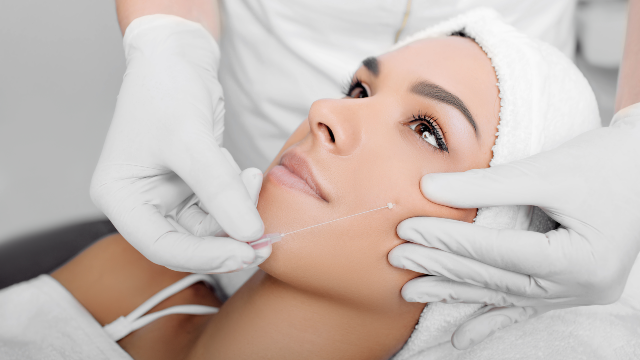
Clinical Guide
Thread Lifting in Korea: PDO & PLLA at Maison de M
A neutral guide to thread lift Korea options, PDO thread lift Seoul and PLLA thread lifting: candidacy, results, duration and honest risks.
Schedule a ConsultationThread Lifting in Korea: PDO & PLLA at Maison de M
Medically reviewed by Dr. Min Byung Yee, Chief Director and Board-Certified Family Medicine Physician, Maison de M Clinic · Last updated July 2026
For international patients researching a thread lift Korea offers as a non-surgical option, the appeal is usually the same: a way to address mild sagging along the jawline, cheeks or neck without the incisions, general anesthesia or extended downtime of a surgical facelift. Thread lifting is a minimally invasive procedure in which absorbable sutures are placed under the skin to provide a degree of mechanical lift and to encourage the skin's own collagen response over time. This guide explains what the procedure involves, who tends to be a suitable candidate, what results are realistic, how long they generally last, and the honest risks to weigh before booking. Maison de M Clinic, a dermatology and aesthetics clinic in Seoul, South Korea, offers thread lifting as part of its treatment menu, and the information below is written to help you have a better-informed consultation.
What Is a Thread Lift?

A thread lift uses absorbable (dissolvable) medical sutures inserted into the subcutaneous layer of the skin. According to the American Society of Plastic Surgeons (ASPS), the procedure uses absorbable, sometimes barbed, sutures to give a tighter, more youthful appearance to the face and neck. It works in two ways: the threads mechanically lift and reposition slightly lax tissue where they are placed, and, as the material is gradually absorbed by the body, they stimulate the skin's production of collagen. The result is intended to be a combination of an immediate, modest lifting effect and a slower firming effect that develops as collagen responds.
Because the entry points are small and there are no large surgical incisions, a thread lift is sometimes described informally as a "lunchtime" procedure. It is important to keep expectations grounded: a thread lift is not equivalent to a surgical facelift and does not remove excess skin. It is a tool for mild-to-moderate laxity, not for advanced sagging.
PDO and PLLA threads
The two thread materials most relevant to this discussion are PDO and PLLA:
- PDO (polydioxanone) is a synthetic absorbable material long used in surgical sutures. In aesthetic use, PDO threads provide mechanical support and are gradually broken down by the body, prompting a localized collagen response during absorption.
- PLLA (poly-L-lactic acid) is another absorbable material. PLLA is also known for stimulating collagen and tends to be absorbed more slowly than PDO, which can influence how long the collagen-related effect is felt.
At Maison de M Clinic, thread lifting is described as inserting dissolvable PDO/PLLA threads into the subcutaneous layer to lift sagging skin and encourage collagen regeneration. The specific thread type, thread count and placement are individualized and determined by the treating physician after assessment. You can ask the clinic which thread material would be considered for your goals during a consultation.
How the Procedure Works
The treatment is performed in an office setting, typically under local anesthesia. Per ASPS, medications are administered for comfort, usually local anesthesia; there are no true incisions, only small entry points for the threads, which generally become inconspicuous within a few days. Once the area is numb, the threads are passed beneath the skin along planned vectors, and the physician adjusts them to create the intended lift.
A general sequence looks like this:
- Consultation and facial assessment, including a discussion of goals, medical history and suitability.
- Marking of treatment vectors and cleansing of the skin.
- Local anesthesia at the entry points.
- Insertion and positioning of the PDO or PLLA threads.
- Trimming of any excess and a review of symmetry before you leave.
Maison de M Clinic notes that patients may generally wash the face and apply makeup starting the day after the procedure (a few hours later, per clinic guidance). Because individual anatomy varies, the physician will confirm the specific plan and aftercare for your case.
Who Is a Good Candidate?
Thread lifting tends to suit people with mild-to-moderate skin laxity who want some improvement without surgery. Based on general clinical understanding and clinic guidance, reasonable candidates often include those who:
- Have early jowls or a softening jawline and want a subtle lift.
- Notice mild sagging of the cheeks or neck.
- Prefer a non-surgical approach with limited downtime.
- Have realistic expectations about the degree and duration of improvement.
Thread lifting is generally not the right choice for everyone. People with significant, advanced skin laxity are usually better served by a surgical lift, because threads cannot remove excess skin. Other reasons to postpone or avoid the procedure may include active skin infection, certain bleeding disorders, and pregnancy (confirm clinic policy). Anyone seeking a "permanent" or dramatic transformation should reconsider, since results are temporary and modest. A physician evaluation is the only reliable way to determine candidacy, and Maison de M Clinic determines the plan individually after consultation.
Thread lift versus surgical facelift
A surgical facelift repositions deeper tissue and removes excess skin, producing longer-lasting and more pronounced change, but with incisions, a longer recovery and the risks associated with surgery and anesthesia. A thread lift is less invasive with shorter downtime, but the effect is subtler and temporary. Neither is universally "better"; the appropriate option depends on the degree of laxity and personal priorities, which is a conversation to have with a qualified physician.
Realistic Results and How Long They Last
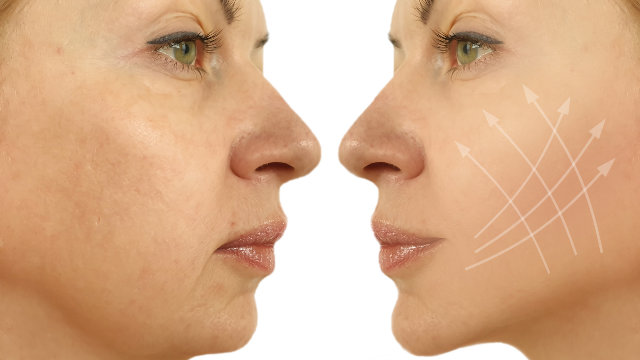
Two effects are typically described. First, there is an immediate lift as the threads reposition tissue. Second, a gradual firming can develop over roughly two to three months as collagen responds during thread absorption. It is normal for the initial lift to settle somewhat as swelling resolves, so the final look is not what you see on day one.
Duration is where honesty matters most. Because the threads are absorbable, the effect is temporary. Maison de M Clinic lists its thread products with an expected duration of about 6 to 12 months, and notes that improvement in skin elasticity may be maintained for several months or longer depending on the thread type. This is broadly consistent with the published literature: a large multicenter review of facial thread lifting cases reported that the average longevity of the thread lift effect is approximately 6 to 12 months, depending on the thread material and the area treated. Individual results vary, and maintenance sessions may be considered over time.
It is worth restating what a thread lift does not do. It does not stop the aging process, it does not replace lost facial volume the way a filler might, and it does not deliver a facelift-level change. Sun protection and general skin care remain relevant to how skin ages overall; resources such as MedlinePlus note that sun exposure is a major contributor to skin aging.
Honest Risks and Side Effects
No aesthetic procedure is without risk, and a balanced view is essential. Commonly described, usually temporary, effects after a thread lift include:
- Swelling and bruising around the entry points and treated area.
- Mild pain, tightness or a pulling sensation, often for about a week.
- Temporary dimpling or puckering along the thread tracks, which typically eases as the skin settles.
Less common but more significant issues can include asymmetry, thread migration or visibility, infection, and, rarely, thread extrusion. ASPS notes that initial healing may include swelling, bruising, irritation and discomfort, generally managed with medication, cold compresses and ointment. The published literature emphasizes that thorough knowledge of facial anatomy is essential to reduce the risk of complications, which is one reason the choice of clinician and setting matters.
Maison de M Clinic advises that swelling and bruising may occur and suggests measures such as a gentle cold compress and sleeping in a more upright position for a few days to help reduce swelling. Follow your physician's specific aftercare instructions, and report persistent pain, spreading redness, fever or unusual symptoms promptly. You can review patient experiences and outcomes on the clinic's before-and-after gallery, keeping in mind that individual results differ.
Combining Thread Lifting With Other Treatments
Thread lifting is sometimes used alongside other non-surgical treatments as part of a broader plan. Clinically, threads are often paired with dermal fillers, which address volume loss rather than laxity, or with energy-based skin-tightening devices. Whether any combination is appropriate for you is a clinical decision that depends on your anatomy and goals, and it should be made with your physician rather than assumed in advance. Costs for thread lifting and any combined treatments are not published here; confirm pricing and specifics at consultation.
The Bottom Line
- A thread lift uses absorbable PDO or PLLA sutures to provide a modest mechanical lift and to encourage a collagen response; it is not a substitute for a surgical facelift.
- The best candidates typically have mild-to-moderate laxity of the jawline, cheeks or neck and hold realistic expectations.
- Results combine an immediate lift with gradual firming over about two to three months; the effect is temporary, commonly cited at roughly 6 to 12 months and varying by individual and thread type.
- Common side effects such as swelling, bruising and temporary dimpling are usually short-lived, but asymmetry, thread visibility and infection are possible; clinician skill and setting matter.
- Suitability, thread choice and cost are determined individually at consultation. Maison de M Clinic in Seoul offers thread lifting and can assess whether it fits your goals.
Frequently Asked Questions
**Who is a good candidate for thread lifting?**People with mild-to-moderate skin laxity along the jawline, cheeks or neck who want a non-surgical lift and understand that results are subtle and temporary. A physician confirms candidacy after evaluating your skin and medical history.
**Who should avoid or postpone a thread lift?**Those with severe skin laxity that is better addressed surgically, an active skin infection, certain bleeding disorders, or unrealistic expectations. Pregnancy is a common reason to postpone; confirm the clinic's specific policy at consultation.
**Is a thread lift painful?**The procedure is usually performed under local anesthesia, and many patients report little discomfort during thread placement. Some tenderness, tightness or a pulling sensation is common afterward. Your physician will discuss appropriate comfort measures.
**How long is the downtime?**Downtime is generally limited. Swelling, bruising and a tight or pulling sensation may last roughly a week, and temporary dimpling along the thread tracks can occur. Many people return to routine activities quickly, following their physician's aftercare guidance.
**When will I see results and how long do they last?**An immediate lift is usually visible, with gradual collagen-related firming over about two to three months. Because the threads are absorbable, the effect is temporary, commonly cited at roughly 6 to 12 months and varying by thread type and individual response.
**What is the difference between PDO and PLLA threads?**Both are absorbable materials that support tissue and stimulate collagen during absorption. PLLA is generally absorbed more slowly than PDO, which can influence how the collagen-related effect is experienced. The physician selects the material based on your goals.
**Can a thread lift replace a facelift?**No. A thread lift does not remove excess skin and delivers a subtler, temporary result. A surgical facelift offers more pronounced, longer-lasting change with greater invasiveness and recovery. The right choice depends on your degree of laxity and priorities.
**How much does thread lifting cost at Maison de M Clinic?**Cost depends on the thread type, thread count and treatment plan, and is confirmed at consultation. You can reach the clinic through its contact page to ask about a personalized assessment.
This article is for general informational purposes and does not constitute individualized medical advice. Consult a qualified physician about your specific condition.
References
- Thread Lift — American Society of Plastic Surgeons (ASPS)
- Thread Lift Recovery — American Society of Plastic Surgeons (ASPS)
- Wrinkles — Mayo Clinic
- Aging Skin — MedlinePlus (U.S. National Library of Medicine)
- Multicenter Review of More Than 110,000 Facial Thread Lifting Cases — PMC
- Skin Care and Aging — National Institute on Aging (NIH)
More Clinical Articles
Continue reading physician-informed guides on non-surgical lifting, skin texture renewal, and aftercare in Seoul.
CellExosome BLACKLABEL: Exosome Skin Care at Maison de M
An evidence-cautious look at CellExosome BLACKLABEL exosome skin treatments at Maison de M Clinic in Seoul, and why exosome products are not FDA-approved.
Learn More
Sofwave and Thermage for Deeper Skin Tones: A Guide
How energy-based lifting devices Sofwave and Thermage work, and how clinicians tailor treatment for Latina, Mediterranean and deeper skin tones.
Learn More

Pting Laser vs CO2 Laser: Pain Scores and Recovery Benchmarks from KR
Pting Laser vs CO2 Laser: Pain Scores and Recovery Benchmarks from KR
Learn More