Two Hands Ultherapy Prime & Aesthetic Lifting Clinic in Gangnam, Seoul · 1:1 Physician Care
Ultherapy & Sofwave Specialized Clinic · Gangnam-daero
en-US

Clinical Guide
ReVINAS 4D vs Sofwave vs Thermage FLX: Which Lifting Technology Is Right for You
Compare ReVINAS 4D, Sofwave, and Thermage FLX lifting technologies by mechanism, sensation, downtime, and candidacy to help find the right option for you.
Schedule a ConsultationReVINAS 4D vs Sofwave vs Thermage FLX: Which Lifting Technology Is Right for You
Medically reviewed by Dr. Min Byung Yee, Chief Director, Maison de M Clinic
Energy-based lifting has become one of the most searched-for categories in aesthetic medicine, and for good reason: it promises firming and tightening without incisions, without stitches, and usually without meaningful downtime. But once you start reading, the names pile up quickly — ReVINAS 4D, Sofwave, Thermage FLX, and many more — and it can be hard to tell whether they do the same thing or something quite different. The short answer is that they are related but not interchangeable. They rely on different forms of energy, reach different depths, feel different during treatment, and suit different concerns.
This guide walks through three energy-based lifting options — ReVINAS 4D, Sofwave, and Thermage FLX — and compares them across the factors that matter when you are actually making a decision: how each one works, how it feels during treatment, what downtime to expect, what it is typically used for, and who tends to be a reasonable candidate. Just as importantly, it explains the regulatory status of each, because that is an area where marketing language and factual accuracy often diverge. There is no single "best" device in this category. The right choice depends on your skin, your goals, and a professional assessment. At Maison de M Clinic in Seoul — a non-surgical aesthetic and dermatology practice led by Dr. Min Byung Yee — the approach is to match technology to the individual rather than to promote one machine over another.
First, the Foundation: How Energy-Based Lifting Works
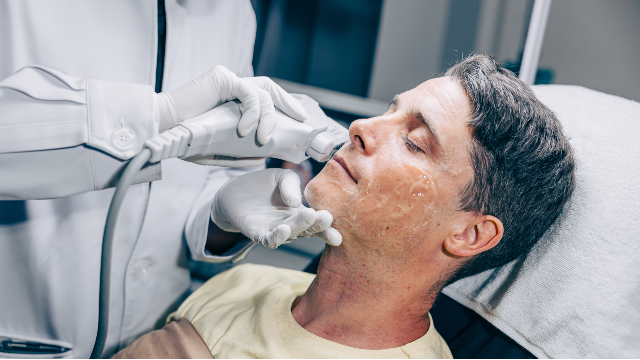
Before comparing specific devices, it helps to understand the shared principle behind all of them. As skin ages, it loses collagen and elastin — the proteins that keep it firm and springy — and the deeper support structures relax. Energy-based lifting devices aim to reverse a little of that by delivering controlled energy into the skin's deeper layers to create precise, sub-surface heating or stimulation. That controlled stimulus prompts the body's natural wound-healing and collagen-remodeling response, so new collagen forms gradually over the following weeks and months. The visible effect is a subtle firming and tightening rather than an instant, dramatic change.
Two important consequences follow from this. First, results are usually gradual, developing over roughly two to three months as collagen remodels, so patience is part of the process. Second, results are not permanent — skin continues to age, so maintenance sessions are common and expectations should be realistic. No energy device stops the aging process; it works with your own biology to nudge it.
Where the devices differ is in how they deliver that energy. This is the crucial distinction, and it splits our three options into two families.
Ultrasound vs radiofrequency: the core divide
- Ultrasound-based devices use focused or parallel sound-wave energy to deposit heat or stimulation at specific, targeted depths. Because ultrasound can be focused, these devices are often designed to reach particular tissue layers with precision.
- Radiofrequency (RF) devices pass electrical energy through the tissue, which meets natural resistance and generates heat, warming a volume of tissue to stimulate collagen. RF heating tends to be distributed through a treated area rather than concentrated at a single focal point.
Neither modality is inherently superior; they simply behave differently, which is why clinicians sometimes select one over the other — or combine them — based on the concern being treated. With that foundation in place, here is how ReVINAS 4D, Sofwave, and Thermage FLX fit in.
Sofwave: Focused Ultrasound at the Mid-Dermis
How it works
Sofwave uses a proprietary ultrasound technology the manufacturer calls SUPERB (Synchronous Ultrasound Parallel Beam). Rather than aiming very deep, Sofwave is designed to deliver controlled ultrasound energy to the mid-dermis — a relatively defined depth within the skin — to stimulate collagen remodeling. A distinguishing feature is its integrated cooling system (marketed as SofCool), which protects the skin's surface while energy is delivered to the layer beneath. Maison de M Clinic offers Sofwave as part of its energy-based lifting menu and notes that treatment is customized to each patient's skin condition and goals.
Regulatory status
This is a point you can rely on: Sofwave is cleared by the U.S. Food and Drug Administration (FDA). Its cleared indications include lifting the eyebrow, lifting lax tissue of the submental (under-chin) area and neck, and improving the appearance of facial fine lines and wrinkles. That FDA clearance is a meaningful marker of regulatory review and is one reason ultrasound-based lifting is frequently part of an evidence-minded, non-surgical plan.
Sensation and downtime
Ultrasound energy is felt differently by different people; some notice brief warmth or a prickling sensation as the energy is delivered, and the surface cooling is intended to keep the experience tolerable. Because Sofwave is non-invasive, downtime is generally minimal. Temporary redness, mild swelling, or tenderness can occur but typically settle quickly, and most people return to their usual activities without a recovery period.
Typical use and candidacy
Sofwave tends to suit people with mild to moderate laxity and fine lines who want a non-surgical option with little downtime — for example, softening of the jawline, early neck laxity, or fine facial lines and wrinkles. Because its energy is aimed at the mid-dermis, it is often discussed for surface-to-mid skin firming and line improvement. Candidacy is determined individually, and results vary from person to person.
Thermage FLX: Monopolar Radiofrequency for Firming
How it works
Thermage FLX is a monopolar radiofrequency device. Instead of ultrasound, it uses RF energy to heat a volume of tissue deep within the skin, stimulating collagen remodeling for a firmer, tighter appearance. Because monopolar RF distributes heat through the treated area rather than focusing it at a single depth, it is often described as a "bulk heating" approach that suits broad firming and contour improvement. Thermage FLX incorporates comfort-oriented features — including a vibration technology the manufacturer calls AccuREP and integrated cooling — intended to make the heating more tolerable. Maison de M Clinic offers Thermage FLX within its RF lifting category.
Regulatory status
Like Sofwave, Thermage FLX is FDA-cleared — in its case as a monopolar radiofrequency device for the treatment of wrinkles. This again places it on a documented regulatory footing, which is worth confirming when you compare any energy device.
Sensation and downtime
RF heating produces a characteristic warm-to-hot sensation as the tip delivers energy and then cools, and Thermage FLX's vibration and cooling features are designed to offset that heat. Most people tolerate treatment without general anesthesia, though a topical numbing cream or oral pain relief may be used at the clinician's discretion depending on the area and individual sensitivity. As a non-invasive treatment, downtime is minimal; mild redness, swelling, or sensitivity may occur but usually resolve within hours to a couple of days, with gradual firming continuing over the following weeks.
Typical use and candidacy
Thermage FLX is often chosen by people with mild to moderate laxity, wrinkles, and reduced skin elasticity who want non-surgical firming and contour improvement with minimal downtime. Because RF heats a broader volume of tissue, it is frequently discussed for overall skin firming rather than for a single focused depth. Importantly, there is a specific safety consideration: monopolar RF is contraindicated for people with implantable electrical devices such as pacemakers or implantable cardioverter-defibrillators (ICDs), because RF energy may interfere with them. This is one reason a thorough medical history is essential before treatment. As always, candidacy is individualized and results vary.
ReVINAS 4D: A Branded Energy-Based Lifting Device Offered at the Clinic
How it works
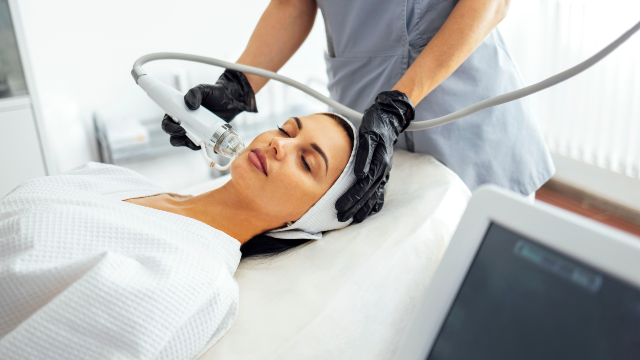
ReVINAS 4D (also written as Levinas) is a branded, energy-based lifting device that Maison de M Clinic offers as part of its lifting menu. The clinic describes it as a non-thermal treatment that delivers focused acoustic, sound-wave–type energy to the deep fascia beneath the skin, layer by layer, with the aim of stimulating regeneration and supporting skin elasticity — an approach the clinic positions as generally comfortable, with patients typically describing a warming sensation and pressure rather than sharp pain. In practical terms, it belongs to the same broad family of non-invasive, energy-based lifting devices as the options above, delivering energy into deeper tissue to encourage a collagen and tissue response.
Regulatory status — read this carefully
Here the distinction matters, and it is worth stating plainly. ReVINAS 4D is a Korean/branded device, and we do not claim any U.S. FDA status for it. Unlike Sofwave and Thermage FLX, which carry documented FDA clearances as described above, ReVINAS 4D should be understood simply as an energy-based lifting device offered at the clinic. If a device holds Korean Ministry of Food and Drug Safety (MFDS) approval or a European CE mark, that is not the same as U.S. FDA clearance or approval — regulatory authorization in one jurisdiction does not carry over to another, and the review standards differ. When you are comparing any branded device, particularly one you first encountered through marketing, it is entirely reasonable to ask the clinic directly which regulatory authorizations a device holds and for which specific indications. Transparency on this point is part of making an informed choice.
Sensation and downtime
According to the clinic, most patients describe ReVINAS 4D as producing a warming sensation and pressure rather than sharp pain, with occasional brief heat when deeper layers are treated; a topical numbing cream is typically applied beforehand for comfort. As with other non-invasive energy treatments in this category, downtime is generally limited, and any mild redness or tenderness would be expected to settle relatively quickly. Because it is a branded device without an FDA indication, the most reliable way to understand its exact treatment experience, session length, and expected recovery is to ask during an in-person consultation.
Typical use and candidacy
The clinic positions ReVINAS 4D for non-surgical lifting and skin-firming goals in appropriate candidates, with treatment planning individualized to each person's skin condition and objectives. As with every device discussed here, results develop gradually as collagen remodeling progresses, results are not permanent, and outcomes vary from person to person. Suitability should be determined only after a professional assessment.
Side-by-Side Comparison
| Factor | ReVINAS 4D | Sofwave | Thermage FLX |
|---|---|---|---|
| Energy type | Branded energy-based device (acoustic / sound-wave–type, per clinic) | Ultrasound (SUPERB parallel-beam) | Monopolar radiofrequency |
| General target | Deeper tissue / fascia (per clinic) | Mid-dermis | Broader volume of tissue |
| Sensation | Warming and pressure (per clinic) | Brief warmth or prickling | Warm-to-hot with cooling and vibration |
| Downtime | Generally minimal | Minimal | Minimal |
| Result onset | Gradual over weeks to months | Gradual over weeks to months | Gradual over weeks to months |
| Longevity | Temporary; maintenance common | Temporary; maintenance common | Temporary; maintenance common |
| Regulatory status | Korean/branded device; no U.S. FDA claim (MFDS/CE ≠ US-FDA) | FDA-cleared for specific lifting and line indications | FDA-cleared for wrinkles |
| Notable safety note | Confirm details in consultation | Confirm suitability in consultation | Contraindicated with pacemakers/ICDs and other implantable electrical devices |
This table is a simplified aid for discussion, not a ranking. None of these options is universally "best"; each behaves differently and suits different situations, and the differences are best interpreted by a clinician who has examined your skin.
How to Think About Choosing
Because these devices are not interchangeable, the choice is less about finding the "strongest" machine and more about matching the tool to your concern. A few practical considerations tend to drive the decision:
- What you are trying to improve. Fine lines and mid-skin firmness point in a different direction than broad, overall firming or deeper laxity. The target layer of each technology is part of why clinicians select one over another.
- Ultrasound or RF. If precise, depth-targeted energy is the priority, an ultrasound device may be discussed; if broad, volumetric firming is the goal, RF may be considered. Sometimes the two are complementary rather than competing.
- Your medical history. Certain conditions and implanted devices affect eligibility — most notably, monopolar RF such as Thermage FLX is not appropriate for people with pacemakers, ICDs, or other implantable electrical devices. A complete history is essential.
- Regulatory transparency. Knowing which devices carry documented FDA clearance — and understanding that a Korean or European authorization is not the same as U.S. FDA status — helps you weigh your options honestly. It is always fair to ask.
- Realistic expectations. All three produce gradual, temporary results, not a permanent lift. If your laxity is significant and advanced, energy-based devices may not fully address it, and a clinician may discuss other categories of treatment during your assessment.
- Combination planning. In non-surgical practice, energy-based devices are sometimes combined with one another or with injectable treatments that work at different layers, sequenced over time. Maison de M Clinic designs personalized combination lifting protocols individually, targeting different skin layers based on each patient's anatomy and goals rather than applying a fixed package.
The most dependable way to determine which of these technologies — if any — fits your situation is an in-person evaluation, where a clinician can assess your skin, review your history, and explain the trade-offs candidly.
A Word on Marketing Language
Energy-based lifting is a heavily marketed field, and it is common to encounter superlatives and dramatic before-and-after promises. It is worth approaching those with healthy skepticism. No responsible provider can guarantee a specific result, no device is a cure for aging, and outcomes genuinely vary from one person to the next. Terms like "FDA-cleared" should be tied to a specific device and a specific indication — not used loosely to imply blanket approval of a whole category or of a branded device that does not hold that status. A clinic that answers regulatory questions plainly and sets realistic expectations is giving you the information you need to decide well.
Bottom Line
ReVINAS 4D, Sofwave, and Thermage FLX all belong to the family of non-invasive, energy-based lifting treatments, but they are not the same tool. Sofwave uses ultrasound aimed at the mid-dermis and is FDA-cleared for specific lifting and line indications; Thermage FLX uses monopolar radiofrequency to firm a broader volume of tissue and is FDA-cleared for wrinkles, with an important contraindication for people who have implantable electrical devices; and ReVINAS 4D is a Korean/branded energy-based device offered at the clinic for which no U.S. FDA status is claimed, keeping in mind that an MFDS or CE authorization is not equivalent to U.S. FDA clearance. All three produce gradual, temporary results, none is universally best, and outcomes vary by individual. The right choice depends on your concern, your history, and a professional assessment — so a personalized, in-person consultation is the proper starting point.
Frequently Asked Questions
**Is ultrasound or radiofrequency better for lifting?**Neither is inherently better; they work differently. Ultrasound can deliver focused energy to targeted depths, while monopolar RF heats a broader volume of tissue. The more useful question is which one suits your specific concern, which is best answered after an assessment. Clinicians sometimes even combine the two.
**Are Sofwave and Thermage FLX FDA-cleared?**Yes. Sofwave is FDA-cleared for indications including eyebrow lift, lifting lax submental and neck tissue, and improving facial fine lines and wrinkles. Thermage FLX is FDA-cleared as a monopolar radiofrequency device for wrinkles. It is always sensible to confirm the specific cleared indication for any device.
**Does ReVINAS 4D have FDA clearance?**We make no U.S. FDA claim for ReVINAS 4D. It is a Korean/branded energy-based lifting device offered at the clinic. A Korean MFDS approval or a European CE mark, if applicable, is not the same as U.S. FDA clearance. If FDA status matters to you, ask the clinic directly which authorizations the device holds and for which indications.
**How long do results last, and when will I see them?**With all three, results develop gradually as collagen remodels, often becoming most noticeable over roughly two to three months. Results are temporary because skin continues to age, so maintenance sessions are common. Individual results vary, and no specific outcome can be guaranteed.
**Is there anyone who should avoid these treatments?**Yes. Suitability is individualized, and certain conditions affect eligibility. Notably, monopolar radiofrequency such as Thermage FLX is contraindicated for people with pacemakers, implantable cardioverter-defibrillators, or other implantable electrical devices. A thorough medical history before treatment is essential for safety.
**Can these devices be combined with other treatments?**In non-surgical practice, energy-based devices are sometimes combined with each other or with injectable treatments that target different layers, sequenced over time. Whether a combination is appropriate for you depends on your assessment. Maison de M Clinic builds personalized combination protocols individually rather than offering fixed packages.
This article is for general educational purposes only and is not a substitute for individualized medical advice; please consult a qualified provider about your specific situation.
References
- FDA — Aesthetic (Cosmetic) Devices
- ASPS — Skin Rejuvenation and Resurfacing
- ASPS — Facelift
More Clinical Articles
Continue reading physician-informed guides on non-surgical lifting, skin texture renewal, and aftercare in Seoul.
CellExosome BLACKLABEL: Exosome Skin Care at Maison de M
An evidence-cautious look at CellExosome BLACKLABEL exosome skin treatments at Maison de M Clinic in Seoul, and why exosome products are not FDA-approved.
Learn More
Sofwave and Thermage for Deeper Skin Tones: A Guide
How energy-based lifting devices Sofwave and Thermage work, and how clinicians tailor treatment for Latina, Mediterranean and deeper skin tones.
Learn More
Pting Laser vs CO2 Laser: Pain Scores and Recovery Benchmarks from KR
Pting Laser vs CO2 Laser: Pain Scores and Recovery Benchmarks from KR
Learn More