Two Hands Ultherapy Prime & Aesthetic Lifting Clinic in Gangnam, Seoul · 1:1 Physician Care
Ultherapy & Sofwave Specialized Clinic · Gangnam-daero
en-US


Clinical Guide
Postpartum Skin and Body Concerns: What Maison de M Clinic Offers New Mothers
How Maison de M Clinic in Seoul approaches postpartum skin and body changes for new mothers, with key pregnancy and breastfeeding safety notes.
Schedule a ConsultationPostpartum Skin and Body Concerns: What Maison de M Clinic Offers New Mothers
Medically reviewed by Dr. Byun Ari, Director, Maison de M Clinic
The months after having a baby bring enormous physical change on top of the demands of caring for a newborn. Many new mothers notice differences in their skin and body: patches of darker pigment on the face, softer or looser skin around the abdomen, stretch marks, and hair that seems to shed more than usual. These changes are extremely common and, in most cases, entirely normal parts of recovery after pregnancy. Understanding why they happen, and what a realistic timeline for recovery looks like, can take some of the worry out of the experience.
This article explains the common postpartum skin and body changes in neutral terms and describes, cautiously, how a non-surgical aesthetic and dermatology clinic such as Maison de M Clinic in Seocho-gu, Seoul, may approach them. A crucial point runs through everything below: many aesthetic treatments are deliberately deferred during pregnancy and breastfeeding, and timing matters. Nothing here is a recommendation for your situation, and none of it is a promise of results. Before considering any elective treatment postpartum, speak with your own physician and with the clinic, and be clear about whether you are still breastfeeding.

Common Postpartum Skin and Body Changes
The body undergoes rapid hormonal shifts after delivery, and the skin often reflects them. The changes below are among the most frequently reported. They vary widely from person to person, and many resolve on their own over the months following birth.
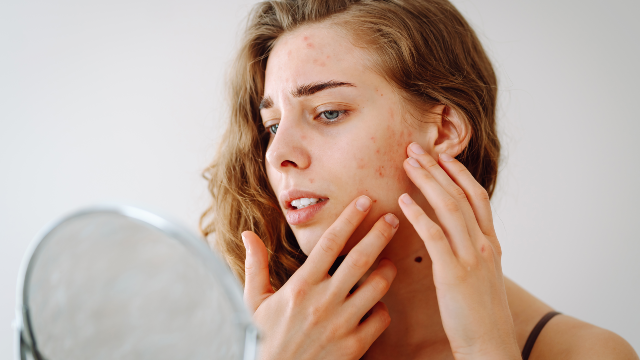
Melasma and pigmentation. Many people develop patches of darker pigment on the face during pregnancy, sometimes called the "mask of pregnancy." For some, this fades gradually after delivery; for others it lingers. Sun exposure can make it more noticeable, which is why daily sun protection is a foundational step regardless of any other approach.
Skin laxity. The abdominal skin stretches significantly during pregnancy, and afterward it may feel looser or less firm. The abdominal muscles can also separate, a condition that is best evaluated by a physician or physical therapist rather than treated cosmetically.
Stretch marks. These are common on the abdomen, breasts, hips, and thighs. Newer stretch marks often appear reddish or purple and tend to fade toward a paler, silvery tone over time. They are a normal form of scarring in the skin.
Hair shedding. A noticeable increase in hair shedding a few months after delivery is very common. During pregnancy, more hairs stay in the growing phase; afterward, many shift into shedding at once. For most people this is temporary, and hair density gradually returns over the following months. Persistent or patchy hair loss is worth discussing with a doctor.
General changes in skin quality. Dryness, sensitivity, and fatigue-related dullness are common in the postpartum period, layered on top of disrupted sleep and the demands of a newborn.
Because so many of these changes improve naturally with time, patience is often the most appropriate first response. Giving the body a period to recover before considering elective cosmetic treatment is reasonable and, in many cases, medically preferable.
Safety and Timing Come First: Pregnancy and Breastfeeding
This is the most important section of the article. Many aesthetic treatments are routinely deferred during pregnancy and breastfeeding. This is a precautionary standard: for a large number of injectables, energy-based devices, and topical agents, there is limited or no safety data in pregnant or breastfeeding patients, so the conservative and widely followed approach is to wait.
That means the honest answer to "what can I have done right now" is often "let's revisit the timing." A responsible clinic will ask whether you are pregnant or breastfeeding before discussing any treatment, and will typically recommend deferring elective procedures until you are no longer breastfeeding and your body has had time to recover. Decisions about what is safe and when belong to a conversation between you, your own physician, and the clinic. Your obstetrician, family doctor, or pediatrician can advise on your individual circumstances, including any considerations related to breastfeeding.
At Maison de M Clinic, an individual consultation is the starting point, and appropriate screening includes asking about pregnancy and breastfeeding status. If treatment should be deferred, that is the guidance you should expect. Elective aesthetic care is never urgent, and there is no downside to waiting for the right time.
How a Non-Surgical Clinic May Approach Postpartum Concerns
Maison de M Clinic is a non-surgical aesthetic and dermatology clinic established in 2023 in Seoul, led by Dr. Min Byung Yee with a team of aesthetic physicians. It focuses on lifting, skin rejuvenation, laser treatments, and regenerative therapies, and often builds personalized combination protocols rather than relying on a single treatment. When a new mother raises postpartum concerns, and once timing and breastfeeding status make elective treatment appropriate, the following categories may be part of a general discussion. This is educational background only, not a treatment plan, and results vary.
Pigmentation and Melasma
For lingering pigment concerns, clinics typically emphasize diligent daily sun protection first, because sun exposure can worsen melasma. Beyond that, pigmentation and toning lasers may be discussed. Melasma in particular can be stubborn and prone to returning, so expectations should be modest and any laser approach carefully matched to skin type and history. This is highly individual, and a proper assessment is essential before anything is recommended.
Skin Quality and Hydration
For dryness, sensitivity, and dull skin quality, clinics often discuss hydration-focused approaches, including injectable skin boosters and mesotherapy alongside supportive skincare. Regulatory precision matters here: skin boosters as a class, including hyaluronic-acid and polynucleotide injectables marketed in Korea, are not approved by the US Food and Drug Administration. Rejuran, a polynucleotide product, is authorized in Korea by the Ministry of Food and Drug Safety (MFDS) but is not US-FDA-approved for injection, and Korea's MFDS clearance or a European CE mark is not the same as US-FDA approval. These are also treatments that would typically be deferred while breastfeeding.
Regenerative options such as autologous blood-derived (PRP) or exosome-based treatments are sometimes offered for skin quality. It is important to be clear: there are no FDA-approved exosome products, and the FDA has issued consumer alerts about regenerative medicine products, including exosomes, and warns of potential serious risks. These are mentioned only so you recognize the terminology; they are not presented as proven, and results cannot be guaranteed.
Skin Laxity
For mild laxity of the skin, once appropriate timing allows, clinics may discuss energy-based devices that use ultrasound or radiofrequency. Maison de M Clinic offers several such technologies, and it is worth stating which carry US-FDA clearance. Ultherapy Prime uses microfocused ultrasound and is US-FDA-cleared for lifting the brow, the submental area and neck, and for improving décolletage lines. Sofwave uses ultrasound and is US-FDA-cleared for eyebrow lift, lax submental and neck tissue, and improving facial lines and wrinkles. Thermage FLX is a monopolar radiofrequency device that is US-FDA-cleared for treating wrinkles. Other devices offered at the clinic, such as ONDA, Ultraformer, and Density, should be understood generically as ultrasound or radiofrequency lifting devices; any Korean MFDS or CE status they hold is not equivalent to US-FDA clearance, and the clinic does not claim US-FDA status for them. Significant abdominal separation or major laxity after pregnancy may be outside the scope of non-surgical aesthetic care and is best evaluated by a physician.
Stretch Marks
Stretch marks are a form of scarring, and no treatment reliably erases them. Clinics may discuss approaches aimed at improving their appearance, but expectations should be realistic and framed cautiously. Newer, reddish stretch marks and older, silvery ones may respond differently, and outcomes vary considerably.
Hair Shedding
Because postpartum hair shedding is usually temporary and resolves on its own, patience is often the most appropriate response. If shedding is severe, prolonged, or patchy, that warrants evaluation by a physician to rule out other causes rather than an assumption that it is simply postpartum change.
Planning Thoughtfully, Especially If Traveling
For international patients, Maison de M Clinic is a Registered Medical Institution for Attracting Foreign Patients under Korea's Ministry of Health and Welfare and provides English-language consultation and reservation support. If you are considering treatment, a personalized consultation is the right first step, and it should include an honest discussion of timing relative to breastfeeding and recovery.
If you are considering traveling for care, the US Centers for Disease Control and Prevention advises researching the clinic and treatment in advance and planning for follow-up and any complication care after returning home. For a new parent, practical logistics matter too: recovery time, childcare, and the demands of a newborn all factor into whether elective treatment makes sense now or later. Keep a written record of exactly what is done and which products are used, and know who to contact with questions afterward.
Bottom Line
Postpartum skin and body changes such as melasma, skin laxity, stretch marks, and hair shedding are common and often improve on their own over the months after delivery. The most important consideration is timing: many aesthetic treatments are deferred during pregnancy and breastfeeding, so the right first step is a conversation with your own physician and the clinic about whether, and when, elective treatment is appropriate. When timing allows, a non-surgical clinic such as Maison de M Clinic may discuss sun protection and pigmentation lasers, hydration treatments, energy-based lifting, and options for stretch marks, always after an individual assessment. Some devices, including Ultherapy Prime, Sofwave, and Thermage FLX, are US-FDA-cleared for their specified uses; skin boosters, Rejuran, and exosome products are not US-FDA-approved. No treatment is guaranteed, and results vary from person to person.
Frequently Asked Questions
**Can I have aesthetic treatment while I am breastfeeding?**Often the recommendation is to wait. Many aesthetic treatments are deferred during pregnancy and breastfeeding because safety data in these situations is limited. Whether and when a specific treatment is appropriate should be decided in a conversation with your own physician and the clinic, and you should disclose that you are breastfeeding.
**Will treatment get rid of my stretch marks or melasma completely?**No treatment reliably erases stretch marks, which are a form of scarring, and melasma can be stubborn and prone to returning. Clinics may discuss approaches to improve appearance, but expectations should be modest, results vary, and nothing is guaranteed.
**Is postpartum hair shedding permanent?**For most people it is temporary and resolves over the following months as the hair cycle normalizes. If shedding is severe, prolonged, or patchy, see a physician to rule out other causes rather than assuming it is only postpartum change.
**Are the treatments offered at the clinic FDA-approved?**Some devices are US-FDA-cleared for specific uses, including Ultherapy Prime, Sofwave, and Thermage FLX. Skin boosters as a class and Rejuran are not US-FDA-approved, and there are no FDA-approved exosome products. Korean MFDS or CE status is not the same as US-FDA clearance, so always ask what is planned for you and its regulatory status.
**How long should I wait after having a baby before considering treatment?**There is no single answer; it depends on your recovery, whether you are still breastfeeding, and your individual health. Because elective aesthetic care is never urgent, waiting is reasonable. Discuss timing with your own physician and the clinic before making any decision.
This article is for general educational purposes only and is not a substitute for personalized medical advice; consult a qualified healthcare professional about your individual situation.
References
- ASPS — Skin Rejuvenation and Resurfacing
- Mayo Clinic — Hair loss
- FDA — Aesthetic (Cosmetic) Devices
- FDA — Consumer Alert on Regenerative Medicine Products, Including Stem Cells and Exosomes
- CDC — Medical Tourism
More Clinical Articles
Continue reading physician-informed guides on non-surgical lifting, skin texture renewal, and aftercare in Seoul.
CellExosome BLACKLABEL: Exosome Skin Care at Maison de M
An evidence-cautious look at CellExosome BLACKLABEL exosome skin treatments at Maison de M Clinic in Seoul, and why exosome products are not FDA-approved.
Learn More
Sofwave and Thermage for Deeper Skin Tones: A Guide
How energy-based lifting devices Sofwave and Thermage work, and how clinicians tailor treatment for Latina, Mediterranean and deeper skin tones.
Learn More
Pting Laser vs CO2 Laser: Pain Scores and Recovery Benchmarks from KR
Pting Laser vs CO2 Laser: Pain Scores and Recovery Benchmarks from KR
Learn More