Two Hands Ultherapy Prime & Aesthetic Lifting Clinic in Gangnam, Seoul · 1:1 Physician Care
Ultherapy & Sofwave Specialized Clinic · Gangnam-daero
en-US

Clinical Guide
Perimenopause and Menopause Skin Changes: How Maison de M Clinic Approaches Them
How perimenopause and menopause skin changes happen, and how Maison de M Clinic in Seoul approaches skin quality and laxity for international patients.
Schedule a ConsultationPerimenopause and Menopause Skin Changes: How Maison de M Clinic Approaches Them
Medically reviewed by Dr. Byun Ari, Director, Maison de M Clinic
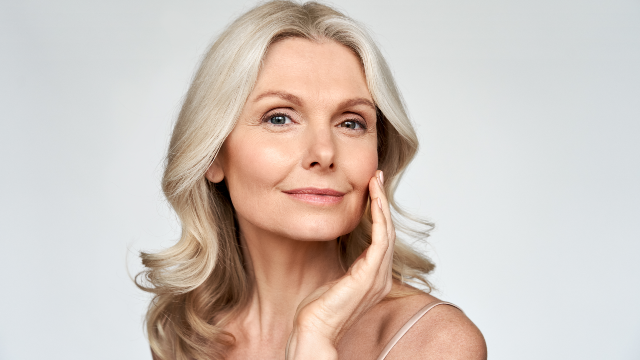
Many people first notice that their skin has changed somewhere in their mid-forties to mid-fifties. The face can feel drier than it used to, makeup may sit differently, and the jawline or cheeks can look softer or less defined than they did a few years earlier. These shifts often coincide with perimenopause and menopause, the natural transition when the ovaries gradually produce less estrogen. Because estrogen plays a role in how skin holds moisture and structure, its decline can be reflected on the surface. Understanding what is happening physiologically can make these changes feel less alarming and help you have a more informed conversation with a clinician.
This article explains, in neutral terms, why the skin changes during this life stage and how a non-surgical aesthetic and dermatology clinic such as Maison de M Clinic in Seocho-gu, Seoul, may approach concerns about skin quality and mild laxity. It is educational information, not a promise of any particular outcome. Menopause is a medical transition, and decisions about your overall health during this time belong with your own physician. Aesthetic care, when appropriate, is one narrow part of a much larger picture.

Why Estrogen Decline Affects the Skin
Estrogen influences several structures in the skin, so a sustained drop in estrogen tends to show up in more than one way. According to Mayo Clinic, menopause and the years leading up to it can bring a range of changes to the body, and the skin is among the tissues affected. The commonly reported skin-related shifts include the following, described here so you know what is typical rather than to suggest anything is wrong.
Dryness and a change in barrier function. Skin can feel tighter, flakier, or less comfortable. Oil production often decreases, and the outer barrier that keeps water in the skin may work less efficiently. This is one of the earliest and most noticeable changes for many people.
Collagen loss and thinning. Collagen is the protein scaffold that gives skin its firmness and thickness. Research has long observed that collagen content in the skin declines in the years surrounding menopause, and the dermis can become thinner. Thinner skin may bruise more easily and can look more translucent.
Loss of firmness and mild laxity. As collagen and elastin remodel more slowly, the skin along the cheeks, jawline, and neck can begin to descend or look less taut. This is a gradual, cumulative process rather than a sudden event.
Pigment changes. Some people notice more uneven tone, sun spots becoming more visible, or new areas of pigmentation. Cumulative sun exposure over a lifetime, combined with hormonal shifts, contributes to how pigment appears at this stage.
Slower repair. Skin may take longer to recover from minor irritation, and wound healing can feel slower than in earlier decades.
None of these changes are a medical emergency, and they vary enormously from person to person. Genetics, lifelong sun exposure, smoking, sleep, and general health all shape how any individual's skin ages alongside hormonal change.
Menopause Is a Medical Transition First
It is worth stating plainly: perimenopause and menopause involve much more than the skin. Sleep, mood, bone health, cardiovascular health, and many other systems can be affected. Any decision about hormone therapy or medical management of menopausal symptoms should be made with a qualified physician such as a gynecologist, family medicine doctor, or endocrinologist who knows your full history. An aesthetic clinic does not replace that care.
At Maison de M Clinic, the team's role is limited and specific: to discuss the appearance and quality of your skin and, where suitable, to talk through non-surgical options that address surface concerns. If something in your history suggests that a medical evaluation is warranted first, the appropriate step is to see your own doctor. Cosmetic treatment is elective, and it should sit on top of good general health care, never in place of it.
How a Non-Surgical Clinic May Approach Skin Quality and Laxity
Maison de M Clinic is a non-surgical aesthetic and dermatology clinic established in 2023 in Seoul, led by Dr. Min Byung Yee with a team of aesthetic physicians. The clinic focuses on lifting, skin rejuvenation, laser treatments, and regenerative therapies, and it commonly builds personalized combination protocols rather than relying on a single treatment. When someone raises menopause-related skin concerns, the starting point is always an individual assessment. What follows is a general overview of the categories a clinic may discuss. It is not a treatment plan, and none of it should be read as a guarantee of results.
Hydration and Skin-Quality Treatments
For dryness and a dull or crepey surface, clinics often discuss hydration-focused approaches. These can include injectable skin boosters and mesotherapy, which aim to deliver hydrating ingredients into the skin, alongside a supportive topical skincare routine. It is important to be precise about regulation here. Injectable skin boosters as a class, including hyaluronic-acid and polynucleotide products marketed in Korea, are not approved by the US Food and Drug Administration. Rejuran, a polynucleotide product, is authorized in Korea by the Ministry of Food and Drug Safety (MFDS) but is not US-FDA-approved for injection. Korea's MFDS clearance or a European CE mark is not the same as US-FDA approval. Anyone considering these treatments should ask directly what product is being used and understand its regulatory status.
Regenerative options such as autologous blood-derived (PRP) or exosome-based treatments are sometimes offered for skin quality. Here regulatory clarity is especially important: there are no FDA-approved exosome products, and the FDA has issued consumer alerts about regenerative medicine products, including exosomes, and warns of potential serious risks. These treatments are described here only so you recognize the terminology; they are not presented as proven or curative, and results cannot be guaranteed.
Energy-Based Lifting for Firmness
For mild to moderate laxity along the cheeks, jawline, and neck, clinics frequently discuss energy-based devices that use ultrasound or radiofrequency to target deeper layers of the skin. Maison de M Clinic offers several such technologies. Some carry US-FDA clearance, and it is worth stating exactly which.
- Ultherapy Prime uses microfocused ultrasound and is US-FDA-cleared for lifting the brow, the submental area and neck, and for improving lines on the décolletage.
- Sofwave uses ultrasound and is US-FDA-cleared for eyebrow lift, for lax submental and neck tissue, and for improving facial lines and wrinkles.
- Thermage FLX is a monopolar radiofrequency device that is US-FDA-cleared for treating wrinkles.
The clinic also offers other devices such as ONDA, Ultraformer, and Density, and branded combination protocols. These should be understood generically as ultrasound or radiofrequency lifting devices offered at the clinic; any Korean MFDS or CE status they hold is not equivalent to US-FDA clearance, and the clinic does not claim US-FDA status for them. Energy-based lifting is generally aimed at gradual, modest firming rather than the kind of change a surgical procedure produces, and outcomes vary from person to person.
Pigmentation and Tone
For uneven tone and pigment concerns, clinics may discuss pigmentation and toning lasers along with diligent daily sun protection. Sunscreen and sensible sun habits are foundational regardless of any in-office treatment, and they matter especially for pigment. Laser treatment of pigment during this life stage is highly individual, and a proper assessment of skin type and history is essential before anything is recommended.
Injectables for Structure and Expression Lines
Some people ask about neuromodulators and dermal fillers. Botox Cosmetic (onabotulinumtoxinA) is US-FDA-approved for certain facial areas, with other cosmetic uses considered off-label, and hyaluronic-acid dermal fillers are US-FDA-approved for specific facial areas. Whether any injectable is appropriate depends entirely on an individual evaluation, and these are elective medical procedures with their own considerations.
The Value of a Personalized Consultation
Because estrogen-related skin changes rarely appear in isolation, a single treatment seldom addresses everything someone notices. This is why Maison de M Clinic emphasizes personalized combination planning: a consultation looks at your skin quality, degree of laxity, pigment, medical history, and goals together, and then discusses what is and is not realistic. For international patients, the clinic is a Registered Medical Institution for Attracting Foreign Patients under Korea's Ministry of Health and Welfare and provides English-language consultation and reservation support.
If you are considering traveling for treatment, plan sensibly. The US Centers for Disease Control and Prevention advises anyone seeking care abroad to research the clinic, understand the treatment, and plan for follow-up and any complication care after returning home. Build in time to heal, keep a record of exactly what was done and which products were used, and know who to contact if a question arises later.

Bottom Line
Perimenopause and menopause commonly bring skin changes such as dryness, collagen loss, thinning, mild laxity, and shifts in pigment, driven largely by declining estrogen. These changes are a normal part of a life transition, and the medical aspects of menopause belong with your own physician. A non-surgical aesthetic clinic such as Maison de M Clinic may discuss hydration treatments, energy-based lifting, laser toning, and injectables to address the appearance of the skin, always after an individual assessment. Some devices, including Ultherapy Prime, Sofwave, and Thermage FLX, are US-FDA-cleared for their specified uses; skin boosters, Rejuran, and exosome products are not US-FDA-approved. No aesthetic treatment cures or reverses menopause, and results vary from person to person. It is also worth coordinating care: because menopausal skin change is driven by an underlying hormonal shift, the most sensible sequence is often to address health and, where appropriate, medically supervised options with your own physician first, and to treat any aesthetic procedure as a complement to — never a replacement for — that care. For international patients specifically, confirming candidacy, expectations, and follow-up arrangements in advance matters even more, since routine in-person review is harder from abroad. A thoughtful consultation is the right starting point.
Frequently Asked Questions
**Can aesthetic treatment stop or reverse menopausal skin aging?**No. No cosmetic treatment stops or reverses the underlying hormonal transition. Aesthetic care may address the appearance and quality of the skin, but it does not change menopause itself, and outcomes differ for each person. Menopause management is a medical matter for your own physician.
**Are the lifting devices at the clinic FDA-approved?**Some are US-FDA-cleared for specific uses: Ultherapy Prime, Sofwave, and Thermage FLX. Other devices offered at the clinic may hold Korean MFDS or CE status, which is not the same as US-FDA clearance. Always ask which specific device and setting are planned for you and what its regulatory status is.
**Are skin boosters and regenerative injections FDA-approved?**Skin boosters as a class, and Rejuran specifically, are not US-FDA-approved; Rejuran is authorized in Korea by the MFDS. There are no FDA-approved exosome products, and the FDA has issued consumer alerts about regenerative medicine products. Discuss the specific product and its regulatory status with the clinic before proceeding.
**Should I see my regular doctor before pursuing aesthetic treatment during menopause?**Yes. Perimenopause and menopause affect many body systems, and any decisions about symptoms or hormone therapy belong with a qualified physician who knows your history. Aesthetic care is elective and complements, but does not replace, appropriate medical care.
**How do I plan if I want treatment while traveling to Korea?**Research the clinic and the specific treatment in advance, use the clinic's English-language consultation to set realistic expectations, and follow CDC guidance to plan for follow-up and any complication care after you return home. Keep a written record of what was done.
This article is for general educational purposes only and is not a substitute for personalized medical advice; consult a qualified healthcare professional about your individual situation.
References
- Mayo Clinic — Menopause
- ASPS — Skin Rejuvenation and Resurfacing
- FDA — Aesthetic (Cosmetic) Devices
- FDA — Consumer Alert on Regenerative Medicine Products, Including Stem Cells and Exosomes
- CDC — Medical Tourism
More Clinical Articles
Continue reading physician-informed guides on non-surgical lifting, skin texture renewal, and aftercare in Seoul.
CellExosome BLACKLABEL: Exosome Skin Care at Maison de M
An evidence-cautious look at CellExosome BLACKLABEL exosome skin treatments at Maison de M Clinic in Seoul, and why exosome products are not FDA-approved.
Learn More
Sofwave and Thermage for Deeper Skin Tones: A Guide
How energy-based lifting devices Sofwave and Thermage work, and how clinicians tailor treatment for Latina, Mediterranean and deeper skin tones.
Learn More
Pting Laser vs CO2 Laser: Pain Scores and Recovery Benchmarks from KR
Pting Laser vs CO2 Laser: Pain Scores and Recovery Benchmarks from KR
Learn More