Two Hands Ultherapy Prime & Aesthetic Lifting Clinic in Gangnam, Seoul · 1:1 Physician Care
Ultherapy & Sofwave Specialized Clinic · Gangnam-daero
en-US

Clinical Guide
Patients With Advanced Facial Laxity: When Combination Protocols Outperform Single Treatments
For advanced facial laxity, one non-surgical treatment may fall short. How combination protocols work, their limits, and when a facelift may fit.
Schedule a ConsultationPatients With Advanced Facial Laxity: When Combination Protocols Outperform Single Treatments
Medically reviewed by Dr. Min Byung Yee, Chief Director, Maison de M Clinic
Non-surgical lifting treatments have become a mainstay of aesthetic medicine, and for people with mild to moderate skin laxity they can be a reasonable option. But facial laxity is a spectrum. When laxity is more advanced — when the skin along the lower face and neck has loosened substantially, jowls have formed, and there is significant descent of soft tissue — the honest question is not "which single treatment is best" but "what can non-surgical treatment realistically achieve here, and where are its limits?" For some patients with more advanced laxity, a single modality may fall short, and clinicians may consider combining modalities. For others, surgery may be the more appropriate route.
This article explains, in neutral terms, why a single non-surgical treatment can be limited for advanced facial laxity, how and why clinicians sometimes combine modalities into a protocol, and — just as importantly — when a surgical facelift may be a better fit. It is educational only and is not a substitute for a personalized medical evaluation. Throughout, the emphasis is on honesty about what non-surgical options can and cannot do, because managing expectations is central to good care.
Understanding the spectrum of facial laxity
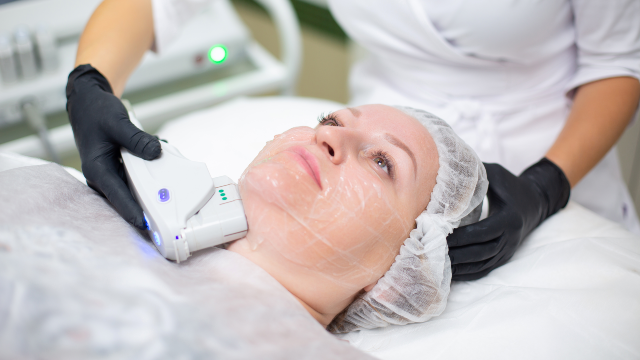
Facial laxity develops as the skin and its deeper support structures lose collagen and elasticity, and as fat pads and bone change with age. In its earlier stages, laxity shows up as slight softening of the jawline, a little less definition in the cheeks, or fine crepiness of the skin. At this stage, collagen-stimulating, energy-based treatments are often discussed, because they aim to firm skin with mild to moderate laxity.
More advanced laxity is a different picture. Here the skin has loosened more substantially, jowls may be visible, the neckline may have lost its definition, and there is often a degree of soft-tissue descent that goes beyond skin quality alone. The important clinical point is that energy-based devices work primarily at the level of the skin and its deeper dermal layers — they stimulate collagen remodeling — but they do not reposition sagging tissue or remove excess skin. As laxity becomes more advanced, the gap between what these devices can do and what the face would need to look substantially tighter tends to widen.
Recognizing where a given face sits on this spectrum is the foundation of any sensible plan. It is also why the same treatment can be a good option for one person and a poor fit for another.
Why a single treatment can be limited for advanced laxity
Each non-surgical modality is designed around a particular mechanism, and each has a ceiling.
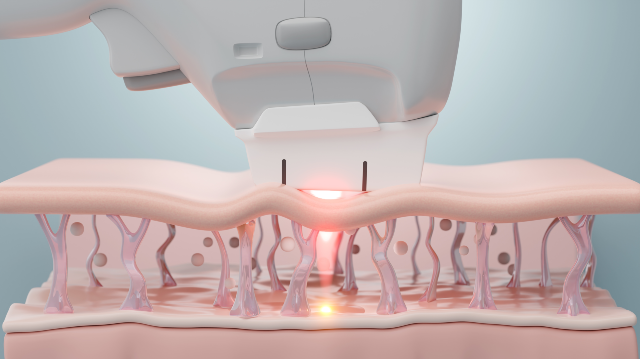
Microfocused ultrasound and radiofrequency deliver energy into the skin to create a controlled thermal stimulus, prompting the body to remodel collagen gradually over weeks and months. This can help with firmness and mild to moderate laxity. But collagen stimulation has limits: it improves skin quality and can produce a subtle tightening, and for a face with substantial descent, that subtle effect may not match the goal.
Injectables address different concerns. Neuromodulators relax the muscles behind expression lines, and HA dermal fillers restore lost volume and support contour. Neither tightens loose skin or removes it. In a face with advanced laxity, fillers may help re-establish some support and balance, but volume restoration is not the same as lifting descended tissue.
Skin-quality and regenerative treatments aim to improve texture, hydration, and overall skin condition. They are useful adjuncts but are not laxity treatments in the structural sense.
The pattern across all of these is the same: each modality does one job well and leaves others unaddressed. When laxity is advanced, several concerns are usually present at once — skin quality, volume, and structural descent — so a single treatment, by design, can only reach part of the way. This is the reasoning behind combination protocols.
How and why clinicians combine modalities
A combination protocol is simply a plan that uses more than one modality to address the different components of aging together, rather than relying on one treatment to do everything. The logic is that different tools reach different layers and different problems.
In practice, a combination approach for laxity might pair a collagen-stimulating energy treatment — such as microfocused ultrasound (often abbreviated HIFU) or radiofrequency (RF) — with injectables that address volume, and sometimes with skin-quality treatments. The energy-based component targets skin firmness; the injectable component addresses volume and contour; skin-quality treatments support overall condition. Layering them is an attempt to treat the face as the multi-layered structure it is.
It is worth being precise about what this does and does not mean. Combining modalities may be more effective for some patients than a single treatment, because it addresses more of the contributing factors at once. It does not, however, turn non-surgical treatment into surgery. A combination protocol still works within the limits of what energy and injectables can achieve: it does not remove excess skin, and it does not reposition deeper structural tissue the way a facelift does. For genuinely advanced laxity, even a well-designed combination may only partially close the gap between the current appearance and the goal — and a candid clinician will say so.
Maison de M Clinic, a non-surgical aesthetic and dermatology clinic in Seocho-gu, Seoul, offers personalized combination lifting protocols and documents its approach as selecting and sequencing treatments — energy-based lifting devices such as Ultherapy Prime, Thermage FLX, and Sofwave, alongside injectables — based on an individual assessment of skin condition, facial anatomy, and goals. The clinic states that combination protocols are designed to target different skin layers for more comprehensive lifting and rejuvenation. As a Registered Medical Institution for Attracting Foreign Patients under Korea's Ministry of Health and Welfare, it also provides English-language consultation for international patients.
Regulatory status of the treatments involved
When several treatments are combined, their regulatory standing can differ, and it is reasonable to understand the distinctions.
Botox Cosmetic (onabotulinumtoxinA) is FDA-approved for its specific approved facial areas, with other cosmetic uses often performed off-label. HA dermal fillers are FDA-approved for specific facial areas, as listed by the U.S. Food and Drug Administration.
Ultherapy and Ultherapy Prime (microfocused ultrasound), Sofwave (ultrasound), and Thermage FLX (monopolar radiofrequency) are among the devices that have received U.S. FDA clearance for specific aesthetic uses such as lifting or improving the appearance of lines and wrinkles. FDA clearance applies to the device and its cleared indications; it is not a guarantee of any individual result.
Some devices, techniques, and injectables marketed in Korea are not FDA-approved or cleared. A number of branded lifting devices and certain regenerative injectables carry Korean Ministry of Food and Drug Safety (MFDS) approval or a European CE mark instead. MFDS approval or CE marking is not equivalent to U.S. FDA approval or clearance. If a specific product is proposed for your protocol, ask what its regulatory status is and have it explained.
A surgical facelift is surgery, not a device treatment. It is a distinct category with its own risks, recovery, and considerations, discussed below.
When surgery may be the more appropriate option
Being honest about the limits of non-surgical care means acknowledging that, for significant facial laxity, a surgical facelift (rhytidectomy) may be more appropriate. The American Society of Plastic Surgeons describes a facelift as a procedure that repositions and tightens deeper facial tissues and removes excess skin — precisely the two things that energy-based devices and injectables cannot do. For a face with substantial descent and excess skin, that structural repositioning is often what would be needed to achieve a meaningful change.
The ASPS also frames the relationship between the two categories carefully: minimally invasive rejuvenation treatments cannot achieve the same results as surgery, though they may complement surgical results and may help delay the point at which surgery becomes appropriate. In other words, non-surgical and surgical care are not interchangeable. For milder laxity, non-surgical treatment may be a good fit; for more advanced laxity, non-surgical treatment may improve skin quality and provide partial improvement, while surgery remains the option designed to address the structural component directly.
Surgery carries its own considerations — anesthesia, recovery time, surgical risks, and cost — and it is not the right choice for everyone. The point is not that surgery is superior in every case, but that a responsible discussion of advanced laxity includes it as a genuine option rather than steering every patient toward non-surgical treatment regardless of fit. A clinician who is candid about this is doing their job well.
Why the plan has to be individualized
Because advanced laxity involves several overlapping factors, and because the right answer ranges from a non-surgical combination to a surgical referral, there is no formula that applies to everyone. A consultation exists to determine where a given face sits on the spectrum and what is realistic.
A thorough evaluation typically reviews your skin condition, facial anatomy, degree of laxity, medical history, medications, and prior treatments, along with your goals and your tolerance for downtime and, in the case of surgery, recovery. From there, a clinician can explain what a combination protocol might realistically achieve, what it cannot, and whether a surgical consultation would serve you better. For patients traveling internationally for treatment, the U.S. Centers for Disease Control and Prevention advises planning for follow-up and any complication care as part of the trip — a consideration that matters for both staged non-surgical protocols and any surgical route.
Two principles anchor all of this. First, no non-surgical treatment or combination stops aging or produces a permanent result, and outcomes vary from person to person; none can be guaranteed. Second, more treatment is not automatically better — the aim is a plan matched to your anatomy and goals. Costs are not discussed here; any pricing should come from the clinic as a personalized, itemized quote after an in-person assessment.
Bottom Line
- Facial laxity is a spectrum; energy-based devices target skin firmness and mild to moderate laxity but do not reposition sagging tissue or remove excess skin.
- For more advanced laxity, a single non-surgical treatment may be limited, so clinicians may combine modalities — for example HIFU or RF with injectables and skin-quality treatments — to address several contributing factors at once.
- A combination protocol may be more effective for some patients than a single treatment, but it still works within non-surgical limits and does not replicate surgery.
- For significant laxity, a surgical facelift may be more appropriate, because it repositions deeper tissue and removes excess skin; the ASPS notes minimally invasive treatments cannot achieve the same results as surgery.
- Botox Cosmetic and HA fillers are FDA-approved for specific areas; Ultherapy, Sofwave, and Thermage FLX are FDA-cleared devices; some Korean or branded devices and injectables are not FDA-approved or cleared, and MFDS or CE marking is not the same as U.S. FDA status. Results vary and are not guaranteed; a personalized evaluation determines the plan.
Frequently Asked Questions
**I have significant sagging. Can a non-surgical combination fix it?**It may improve skin quality and provide partial improvement, but it works within limits. Energy-based devices and injectables do not remove excess skin or reposition deeper tissue the way surgery does. For advanced laxity, a combination protocol can help some patients, while others are better served by a surgical facelift. A personalized evaluation is the way to find out which applies to you.
**Why would a clinic combine treatments instead of using just one?**Because advanced laxity usually involves several factors at once — skin quality, volume loss, and structural descent — and each modality addresses only part of that. Combining an energy-based lifting treatment with injectables and skin-quality treatments is an attempt to address more of the contributing factors together. It may be more effective for some patients, though it does not replace surgery.
**When should I consider a facelift instead of non-surgical treatment?**When laxity is significant and involves excess skin and soft-tissue descent, a surgical facelift may be more appropriate, because it repositions deeper tissue and removes excess skin. The American Society of Plastic Surgeons notes that minimally invasive treatments cannot achieve the same results as surgery. A clinician can advise whether a surgical consultation would serve your goals better.
**Are the lifting devices used in these protocols FDA-approved?**Devices such as Ultherapy, Sofwave, and Thermage FLX are FDA-cleared for specific aesthetic uses, which applies to the device and its indications rather than guaranteeing a result. Some branded devices and injectables offered in Korea are not FDA-approved or cleared and may carry MFDS or CE marking instead, which is not the same as U.S. FDA status. Ask about anything proposed for your plan.
**Will a combination protocol give guaranteed results?**No. No non-surgical treatment or combination stops aging or produces a permanent result, and outcomes vary from person to person. A combination may address more concerns than a single treatment, but results still develop gradually and cannot be guaranteed. Realistic expectations, set during a personalized evaluation, are essential.
This article is for general informational purposes and does not constitute individualized medical advice. Consult a qualified physician about your specific condition.
References
- American Society of Plastic Surgeons — Facelift
- American Society of Plastic Surgeons — Skin Rejuvenation and Resurfacing
- American Society of Plastic Surgeons — Dermal Fillers
- American Society of Plastic Surgeons — Botulinum Toxin
- U.S. Food and Drug Administration — Aesthetic (Cosmetic) Devices
- Centers for Disease Control and Prevention — Medical Tourism
More Clinical Articles
Continue reading physician-informed guides on non-surgical lifting, skin texture renewal, and aftercare in Seoul.
CellExosome BLACKLABEL: Exosome Skin Care at Maison de M
An evidence-cautious look at CellExosome BLACKLABEL exosome skin treatments at Maison de M Clinic in Seoul, and why exosome products are not FDA-approved.
Learn More
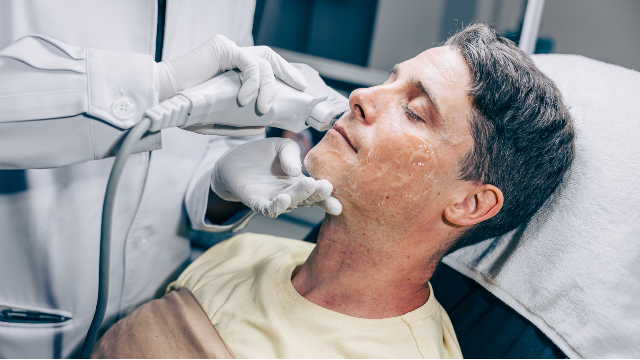
Sofwave and Thermage for Deeper Skin Tones: A Guide
How energy-based lifting devices Sofwave and Thermage work, and how clinicians tailor treatment for Latina, Mediterranean and deeper skin tones.
Learn More
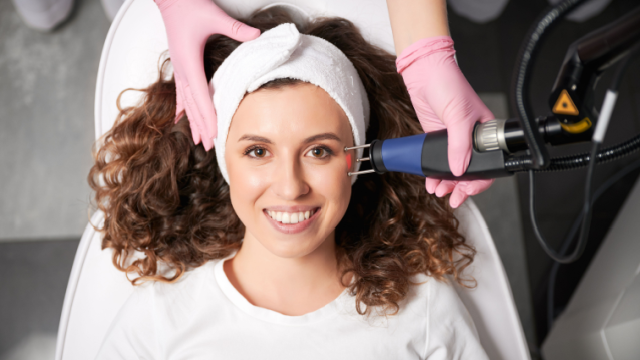
Pting Laser vs CO2 Laser: Pain Scores and Recovery Benchmarks from KR
Pting Laser vs CO2 Laser: Pain Scores and Recovery Benchmarks from KR
Learn More