Two Hands Ultherapy Prime & Aesthetic Lifting Clinic in Gangnam, Seoul · 1:1 Physician Care
Ultherapy & Sofwave Specialized Clinic · Gangnam-daero
en-US


Clinical Guide
Non-Surgical Maintenance After a Facelift: A Guide
How non-surgical energy-based treatments are sometimes used to help maintain skin quality after a facelift — a maintenance complement, not a replacement.
Schedule a ConsultationNon-Surgical Maintenance After a Facelift: A Guide
Medically reviewed by Dr. Min Byung Yee, Chief Director and Board-Certified Family Medicine Physician, Maison de M Clinic · Last updated July 2026
Non-surgical maintenance after a facelift is a common topic for people who have had surgery and want to look after their results as time passes. A facelift (rhytidectomy) is a surgical procedure that repositions and tightens deeper facial tissues and removes excess skin. It can make the face look more youthful — but, as the American Society of Plastic Surgeons and Mayo Clinic both make clear, a facelift does not stop the aging process, and its results are not lifelong. Over the years, skin continues to lose elasticity and firmness. That is where non-surgical, energy-based options for post-facelift skin tightening and skin quality enter the conversation: not as a way to redo or replace surgery, but as a possible complement for maintaining skin quality as aging continues.
This guide explains, in neutral terms, how maintaining facelift results is generally approached, what non-surgical treatments can and cannot do, and why timing and clearance from your operating surgeon come first. It is educational only and is not a substitute for personalized medical advice.
Why maintenance is even a consideration
Surgery addresses sagging tissue and excess skin at a moment in time. It does not freeze the clock. As the National Institute on Aging describes, skin naturally becomes thinner, less elastic, and more fragile with age, and it produces less of the collagen that keeps it firm. MedlinePlus similarly notes that aging skin loses strength and elasticity over time. Sun exposure, genetics, and lifestyle influence how quickly these changes show.
Mayo Clinic states plainly that facelift results are not permanent and that, with age, the skin on the face may begin to sag again. The American Society of Plastic Surgeons frames the role of non-surgical treatments carefully: minimally invasive rejuvenation treatments cannot achieve the same results as surgery, but they may help delay the time at which a facelift becomes appropriate and can complement the results of surgery. In other words, non-surgical care is positioned as a supporting role — one that may help with skin quality and firmness over time — rather than as an equivalent to or replacement for the surgical result.

What non-surgical maintenance can and cannot do
It helps to set expectations clearly.
What non-surgical energy treatments may help with. Energy-based devices such as microfocused ultrasound and radiofrequency work by stimulating your own collagen to remodel gradually. Over weeks to months, this may help support skin firmness and address the appearance of mild to moderate laxity and fine lines. Skin-quality treatments more broadly — including good skincare and sun protection — are commonly part of maintaining a refreshed appearance.
What they cannot do. Non-surgical treatments do not reposition deeper structures the way surgery does, and they do not remove excess skin. They cannot reproduce a surgical facelift, and they cannot guarantee that your facelift results will last a specific length of time. They also do not stop aging. Results are gradual, they vary from person to person, and no outcome is guaranteed. Framing these treatments as maintenance or a complement — not a replacement — keeps expectations realistic.
How collagen-stimulating maintenance works, in brief
It helps to understand why energy-based treatments are discussed for maintenance at all. Much of the skin's firmness comes from collagen and elastin, the proteins that form its supportive scaffolding. As the National Institute on Aging explains, the body produces less collagen with age and the skin's structural support weakens, which contributes to sagging and thinning. MedlinePlus similarly notes that aging skin loses elasticity and becomes more fragile.
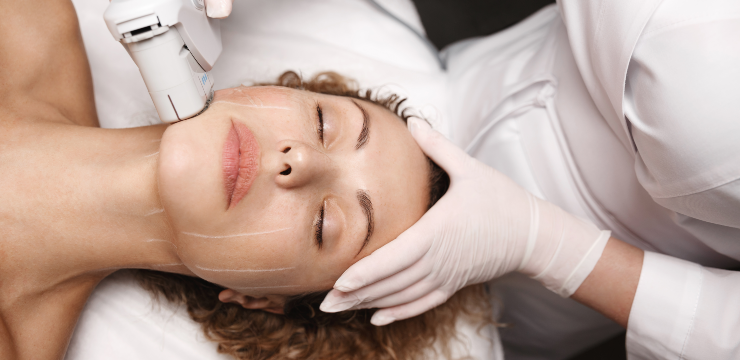
Energy-based devices are designed to prompt a controlled response in the deeper skin layers. By delivering ultrasound or radiofrequency energy to a set depth, they create controlled thermal stimulation that the body responds to by gradually remodeling collagen over the following weeks and months. This is a slow, biological process — not an instant tightening — which is why results appear gradually and why maintenance is framed as ongoing support rather than a one-time fix. Importantly, this collagen-stimulating effect operates at the level of skin quality and mild-to-moderate laxity. It does not lift or reposition the deeper structural tissues that a surgical facelift addresses, and it does not remove skin. That is the core reason non-surgical treatments are described as a complement to, not a substitute for, surgery.
Because the underlying aging process continues regardless of treatment, any improvement from collagen stimulation is temporary in the sense that skin keeps changing over time. This is not a shortcoming unique to these treatments; it reflects the normal biology of aging skin. Setting that expectation early helps patients think of maintenance realistically — as tending to skin quality over the years rather than pausing the clock.
Common non-surgical options used for maintenance
Several categories of non-surgical treatment are commonly discussed in the context of maintaining skin quality over time. Whether any of them is appropriate for you is an individual decision.
- Microfocused ultrasound (for example, Sofwave). This delivers controlled ultrasound energy into the mid-dermis to encourage collagen remodeling, with an integrated cooling feature to help protect the skin surface. It is generally discussed for mild to moderate laxity and skin firmness.
- Monopolar radiofrequency (for example, Thermage FLX). This uses RF energy to heat deeper dermal layers and stimulate collagen, with cooling and comfort features built in. It is often used to address skin texture, elasticity, and surface-level laxity.
- Injectables and skin boosters. Treatments such as neuromodulators, dermal fillers, and skin-hydration or regenerative treatments are sometimes used to address volume, fine lines, or skin quality. These are separate from lifting devices and serve different goals.
- Skincare and sun protection. Daily sun protection and a consistent skincare routine are foundational for skin health and are frequently emphasized as part of any maintenance plan.
Both Sofwave and Thermage are energy-based medical devices that have received U.S. FDA 510(k) clearance for specific aesthetic uses. That clearance applies to the devices and their cleared indications; it is not a promise of any particular result and does not guarantee how your skin will respond. Maison de M Clinic offers a range of non-surgical lifting and skin-quality options, and its team determines which — if any — is suitable during consultation.
Timing and clearance from your surgeon come first
If you have had a facelift, the single most important step before pursuing any non-surgical treatment is to get clearance from your operating surgeon. Healing after facial surgery takes time, and tissues need to settle. Applying heat-based energy to skin that is still recovering, or that has recent incisions, sutures, or altered blood supply, is not something to decide on your own.
Mayo Clinic notes that follow-up care after a facelift continues for a period after surgery and that self-care in the early weeks is important for healing. Your surgeon knows your specific procedure, your incisions, and your healing timeline, and is best positioned to advise when — and whether — non-surgical maintenance is appropriate. A responsible clinic will ask about your surgical history and will coordinate with, or defer to, your surgeon's guidance rather than working around it.
At a consultation, a clinician typically reviews your surgical history and healing, your current skin condition, and your goals before discussing whether an energy-based or other non-surgical option makes sense, and if so, when. You can read about the clinic's team and philosophy on the Maison de M Clinic about-us page and arrange an individualized assessment through the clinic's contact page.
Who might consider maintenance — and who should wait
Non-surgical maintenance is not automatically right for everyone who has had a facelift, and timing is individual. In general terms, people who are fully healed, cleared by their surgeon, and looking to support skin firmness or address mild changes as they age may be reasonable candidates for a discussion about options. Those who are still in the early recovery period, who have not been cleared by their operating surgeon, or who have unrealistic expectations about what non-surgical treatments can achieve are usually advised to wait or to reconsider goals.
Certain individual factors also matter. Some energy-based devices have specific safety considerations — for example, monopolar radiofrequency devices carry cautions related to implantable electronic devices such as pacemakers. Skin condition, medical history, medications, and prior procedures all feed into whether a treatment is appropriate, which is why a thorough consultation precedes any plan. A clinician's job is to screen for these factors and to be candid when the best answer is "not yet" or "not this treatment."
Looking at documented patient experiences can also help set expectations. Prospective patients can review the clinic's published patient reviews to understand how others describe their experience, while keeping in mind that individual results always vary and that no experience predicts your own outcome.
Building a realistic maintenance plan
There is no single schedule that fits everyone, because aging, skin type, the type of facelift, and personal goals all differ. In general terms, a maintenance approach may involve:
- Starting with clearance and assessment. Confirm with your surgeon that you have healed appropriately, then have your skin and goals evaluated.
- Prioritizing the basics. Sun protection and consistent skincare support long-term skin health regardless of any procedure.
- Choosing treatments to match goals. Energy-based options may be discussed for firmness and mild laxity; other treatments address volume or fine lines. A clinician helps match options to what you actually want to improve.
- Spacing and reassessment over time. Because collagen-stimulating treatments work gradually and their effects are not permanent, they may be repeated periodically based on how your skin responds and how it continues to age. Any schedule is individualized.
- Keeping expectations grounded. The aim of maintenance is to help support skin quality over time — not to recreate, extend by a guaranteed amount, or replace the surgical result.
The Bottom Line
- A facelift does not stop aging, and its results are not permanent; skin continues to change over time.
- Non-surgical, energy-based treatments (such as microfocused ultrasound and radiofrequency) may help maintain skin quality as a complement to surgery — they are not a replacement for surgery and cannot reproduce surgical results.
- Sofwave and Thermage are FDA-cleared devices for specific aesthetic uses; clearance is not a guarantee of any individual outcome.
- Clearance from your operating surgeon and appropriate timing after healing should always come first.
- Results are gradual and vary; suitability, timing, and any plan are determined during an individualized consultation.
Frequently Asked Questions
**Can non-surgical treatments replace a facelift?**No. According to the American Society of Plastic Surgeons, minimally invasive treatments cannot achieve the same results as surgery, though they may complement surgical results and help delay when another surgical procedure becomes appropriate. Non-surgical maintenance supports skin quality; it does not reposition deeper tissue or remove excess skin the way surgery does.
**Will these treatments make my facelift last longer?**There is no guarantee about how long facelift results last, with or without maintenance. Skin continues to age naturally. Non-surgical treatments may help support skin firmness and quality over time, but they do not stop aging and cannot promise a specific duration of results.
**When can I start non-surgical treatments after my facelift?**Only after your operating surgeon confirms you have healed appropriately and clears you. Timing depends on your specific surgery and healing. Applying energy-based treatments to recently operated skin without surgeon clearance is not advisable.
**Are Sofwave and Thermage FDA-approved?**They are FDA-cleared medical devices for specific aesthetic uses, granted through the FDA's 510(k) process. Clearance applies to the device and its indications; it is not a guarantee of results for any individual.
**Do non-surgical treatments have downtime?**Energy-based, non-invasive treatments generally involve minimal downtime, with temporary effects such as redness, warmth, or mild swelling that typically settle quickly. Your clinician will explain what to expect for your specific plan.
**How often would I need maintenance treatments?**There is no universal schedule. Because collagen-stimulating treatments work gradually and their effects are not permanent, they may be repeated over time based on how your skin responds and continues to age. Any timing is individualized at consultation.
**What should I bring up at a maintenance consultation?**Share your surgical history and healing timeline, any surgeon instructions or clearance, your current skincare, and the specific things you want to improve. This helps the clinician recommend suitable, realistic options.
This article is for general informational purposes and does not constitute individualized medical advice. Consult a qualified physician about your specific condition.
References
- American Society of Plastic Surgeons — Facelift (Rhytidectomy)
- Mayo Clinic — Face-lift
- National Institute on Aging — Skin Care and Aging
- MedlinePlus — Skin Aging
- U.S. Food and Drug Administration — Sofwave System 510(k) clearance (K211483)
- U.S. Food and Drug Administration — Thermage FLX System 510(k) clearance (K170758)
More Clinical Articles
Continue reading physician-informed guides on non-surgical lifting, skin texture renewal, and aftercare in Seoul.
CellExosome BLACKLABEL: Exosome Skin Care at Maison de M
An evidence-cautious look at CellExosome BLACKLABEL exosome skin treatments at Maison de M Clinic in Seoul, and why exosome products are not FDA-approved.
Learn More
Sofwave and Thermage for Deeper Skin Tones: A Guide
How energy-based lifting devices Sofwave and Thermage work, and how clinicians tailor treatment for Latina, Mediterranean and deeper skin tones.
Learn More
Pting Laser vs CO2 Laser: Pain Scores and Recovery Benchmarks from KR
Pting Laser vs CO2 Laser: Pain Scores and Recovery Benchmarks from KR
Learn More