Two Hands Ultherapy Prime & Aesthetic Lifting Clinic in Gangnam, Seoul · 1:1 Physician Care
Ultherapy & Sofwave Specialized Clinic · Gangnam-daero
en-US

Clinical Guide
Juvelook Collagen Stimulator at Maison de M: A Guide
Juvelook Korea explained: how this PDLLA collagen booster works, candidacy, results, and recovery in Seoul, plus how it differs from US-FDA fillers.
Schedule a ConsultationJuvelook Collagen Stimulator at Maison de M: A Guide
Medically reviewed by Dr. Choi Chang Won, Chief Medical Director, Maison de M Clinic · Last updated July 2026
Juvelook Korea is a common search for people considering a collagen stimulator injection in Seoul that works gradually rather than adding instant volume. Juvelook is an injectable skin booster that combines poly-D,L-lactic acid (PDLLA) with hyaluronic acid (HA). As a PDLLA collagen booster, it is designed to prompt the skin's own collagen-building response over time while the hyaluronic acid provides short-term hydration and smoothing. This guide explains, in neutral terms, how collagen-stimulating injectables generally work, who might be a candidate, what recovery tends to look like, and one point that international readers should understand clearly: Juvelook is approved in Korea but is not a US-FDA-approved product.
Understanding that regulatory distinction, along with realistic expectations about gradual results, is the most useful preparation before a consultation. This article is background reading, not a treatment recommendation, and any decision should follow an individual assessment by a physician.
What Is Juvelook?
Maison de M Clinic describes Juvelook as a collagen-stimulating skin booster injected into the skin to improve overall skin quality, including texture, elasticity, and hydration, while supporting natural collagen production over time. The clinic frames it as a treatment intended to help restore healthier-looking skin rather than simply adding temporary volume like a traditional filler.
The active ingredient of interest is PDLLA, a biodegradable, biocompatible polymer. Independent research describes PDLLA as a biostimulatory material that is gradually broken down by the body while encouraging new collagen formation (neocollagenesis). The added hyaluronic acid, a sugar naturally found in skin that binds water, contributes early hydration and smoothing while the collagen-related changes develop more slowly.
It is worth naming what Juvelook is not. It is not a rapid volumizer, and it is not a device or laser. It is an injectable biostimulator, a category in which the intended benefit accrues over weeks to months rather than immediately.

How Collagen Stimulators Generally Work
Collagen is the structural protein that gives skin firmness and support. As the National Institute on Aging explains, skin loses collagen and elastin with age, and sun exposure speeds that loss, leading to thinner, less elastic skin and wrinkles. Mayo Clinic similarly notes that aging skin has less collagen in its deeper layers.
Biostimulatory injectables aim to work with this biology. Rather than filling a line directly, the material is placed in the skin, where its presence prompts a controlled, low-grade repair response. A peer-reviewed literature review of PDLLA in dermatology describes the polymer stimulating collagen synthesis and supporting improvements in skin elasticity and firmness, with effects that build progressively as the body responds. A separate clinical case series that specifically evaluated microneedling combined with topical PDLLA (Juvelook) for enlarged facial pores reported gradual improvements in pore appearance and skin texture over several weeks, with mild, transient redness or swelling in some participants that resolved quickly. These findings illustrate the general pattern of biostimulators: change is incremental, not instant, and individual response varies.
Because the response is gradual, treatment plans for collagen stimulators are often built around more than one session, spaced out over time, with the full picture emerging in the weeks and months that follow. That timeline is a defining feature of the category, not a shortcoming.
Important: Juvelook's Regulatory Status
This is the most important point for readers in the United States. Juvelook is approved by Korea's Ministry of Food and Drug Safety (MFDS, sometimes referred to as the KFDA) and is used in Korea. It is not approved by the US Food and Drug Administration. If you are traveling from the US, Juvelook is a treatment you would receive in Korea, and it should not be assumed to carry US regulatory clearance.
For general context only, the FDA does recognize a related category of biostimulatory dermal filler. On its list of FDA-approved dermal fillers, the FDA describes poly-L-lactic acid (PLLA) as a biodegradable, man-made polymer given in a series of injections over several months, with effects that "become increasingly apparent over time." A well-known PLLA product in that category is Sculptra. This shared idea, prompting collagen gradually, is useful for understanding how biostimulators behave in general.
However, PLLA products approved by the FDA and Juvelook are not the same product, and describing the FDA-approved category does not mean Juvelook is FDA-approved or equivalent to any US product. They differ in formulation, and their regulatory status is different. The FDA also urges caution with injectables generally: its guidance stresses using approved products, choosing an appropriately trained and licensed provider, and understanding that the long-term and combination use of these products has not always been studied in controlled trials. Those principles are worth carrying into any consultation, wherever it takes place.
Who Might Be a Candidate?
According to Maison de M Clinic, people who consider Juvelook are often seeking improvement in:
- Fine lines and skin texture
- Enlarged pores
- Acne scars
- Reduced skin elasticity
- Overall skin quality and radiance through collagen support
Suitability is decided by a physician after evaluating your skin and goals, not from a checklist. The clinic notes that treatment may need to be postponed for people with active skin infections or inflammation at the injection site. Individuals who are pregnant or breastfeeding, or who have severe allergies, bleeding disorders, or certain medical conditions, should discuss their full medical history with the treating physician before any injectable treatment. The FDA's patient guidance for dermal fillers echoes these same precautions. You can arrange an individualized assessment through the Maison de M Clinic contact page.
What to Expect During Treatment
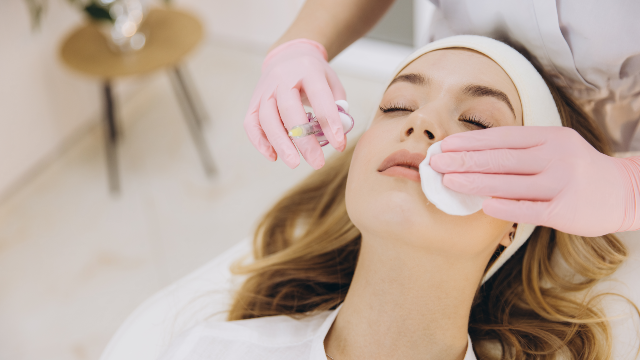
A Juvelook appointment generally begins with cleansing and, where appropriate, a topical numbing step for comfort. The product is then injected into the skin across the treatment area. The clinic emphasizes a focus on patient comfort throughout.
Injectable treatments involve small needle punctures, so it is normal to plan for the immediate after-effects described below. The number of sessions and the spacing between them are individualized; because collagen stimulation is gradual, more than one session is often part of the plan, and your physician will discuss what is appropriate for your skin. Juvelook may also be incorporated with other skin-rejuvenation treatments as part of a personalized plan when clinically appropriate, though any combination should be decided during consultation rather than assumed.
Results and Recovery
Recovery after a collagen-stimulating injectable is typically short. Maison de M Clinic notes that most people can return to normal daily activities the same day. Temporary redness, mild swelling, pinpoint injection marks, tenderness, or bruising at the injection sites are common and generally resolve within a few days, often within about two to seven days depending on the person and the area treated. Makeup is usually applied after the initial recovery period if the treating physician advises it, and following the clinic's aftercare instructions supports healing.
On results, expectations should be measured:
- Improvements develop gradually as collagen production responds, with initial skin-quality changes often becoming noticeable over several weeks and continuing thereafter.
- More than one session may be recommended, depending on your skin concerns and goals.
- Results vary between individuals, and the duration of results is not fixed; your physician may suggest follow-up evaluations or maintenance over time.
- No injectable is guaranteed, and none is permanent. Biostimulator materials are gradually absorbed, and skin continues to age, so ongoing skin care and sun protection remain important. Both the National Institute on Aging and Mayo Clinic emphasize daily broad-spectrum sunscreen as a foundation for protecting skin.
As with all dermal filler and injectable procedures, there are risks. The FDA notes that side effects such as swelling and bruising are common shortly after injection, while less common effects can include lumps or nodules, infection, or allergic reaction; rare but serious complications, including accidental injection into a blood vessel, are the reason technique and provider training matter so much. Reviewing risks with your physician before treatment is an essential part of informed consent.

Choosing a Clinic and Physician for Juvelook
Because injectable results depend heavily on assessment and technique, choosing an experienced clinic and a qualified physician is central. Maison de M Clinic in Seoul offers a range of non-surgical dermatology and regenerative aesthetic treatments and provides English-language consultation and reservation services for international patients. Its Chief Medical Director, Dr. Choi Chang Won, focuses on regenerative and aesthetic medicine and is a member of professional bodies including the Korean Association of Stem Cell Therapy. You can learn more about the clinic's physicians on the about-us page.
If you want a sense of patient experiences, the clinic publishes reviews and before-and-after references; these are context rather than predictions, since outcomes are individual. The single most reliable step is a consultation, where your skin can be assessed, the regulatory status of any recommended product can be explained, and a plan suited to you can be discussed.
The Bottom Line
- Juvelook is an injectable collagen-stimulating skin booster combining PDLLA with hyaluronic acid, designed to support gradual collagen production alongside early hydration.
- It is approved in Korea by the MFDS (KFDA) and is not approved by the US FDA; it should not be assumed to carry US clearance or to be equivalent to any US product.
- The FDA-approved PLLA biostimulator category (for example, Sculptra) offers general context on how biostimulators behave, but it is a different, separately regulated product from Juvelook.
- Recovery is usually short, with temporary redness, swelling, or bruising that typically settles within a few days; results build gradually and vary by individual.
- No injectable is guaranteed or permanent; candidacy, risks, and a personalized plan should be discussed with a physician at consultation.
Frequently Asked Questions
**What is Juvelook made of?**Juvelook is an injectable that combines poly-D,L-lactic acid (PDLLA), a biodegradable collagen-stimulating polymer, with hyaluronic acid (HA), which provides early hydration and smoothing. The PDLLA component is intended to prompt gradual collagen production over time.
**Is Juvelook FDA-approved?**No. Juvelook is approved in Korea by the Ministry of Food and Drug Safety (MFDS, also referred to as the KFDA) and is not approved by the US FDA. If you travel from the US, it is a treatment you would receive in Korea. It is not the same as, or equivalent to, US-FDA-approved PLLA products such as Sculptra.
**How is Juvelook different from a traditional filler?**Traditional hyaluronic acid fillers mainly add volume that is visible immediately. Juvelook is positioned as a biostimulator: its main goal is to support the skin's own collagen response gradually, aiming to improve overall skin quality rather than simply filling a specific line or area.
**When will I see results, and how long do they last?**Because collagen stimulation is gradual, initial skin-quality changes often become noticeable over several weeks and may continue thereafter. More than one session may be recommended. Results vary by individual, and duration is not fixed; your physician may suggest follow-up or maintenance.
**What is recovery like?**Most people return to normal activities the same day. Temporary redness, mild swelling, pinpoint marks, tenderness, or bruising at the injection sites are common and usually resolve within about two to seven days. Follow your clinic's aftercare guidance to support healing.
**Is Juvelook painful?**The clinic emphasizes patient comfort, and a topical numbing step may be used where appropriate. Sensation varies by person and area. As with any injectable, small needle punctures are involved, so brief discomfort is possible.
**What are the risks?**As with any injectable, side effects such as swelling and bruising are common shortly after treatment. Less common effects can include lumps or nodules, infection, or allergic reaction, and rare but serious complications are the reason technique and provider training matter. Discuss all risks with your physician before treatment.
**Who should avoid or postpone Juvelook?**People with active skin infections or inflammation at the injection site may need to postpone. Those who are pregnant or breastfeeding, or who have severe allergies, bleeding disorders, or certain medical conditions, should review their history with the treating physician, who determines eligibility.
This article is for general informational purposes and does not constitute individualized medical advice. Consult a qualified physician about your specific condition.
References
- U.S. Food and Drug Administration — Dermal Fillers (Soft Tissue Fillers)
- U.S. Food and Drug Administration — FDA-Approved Dermal Fillers (PLLA context)
- American Society of Plastic Surgeons — Dermal Fillers
- Mayo Clinic — Wrinkles (symptoms and causes)
- Poly-d,l-lactic Acid (PDLLA) Application in Dermatology: A Literature Review — PMC11434839
- The Efficacy of Combined Microneedling and Topical Poly-d,l-lactic Acid (Juvelook) Application for Facial Pore Reduction and Ski
More Clinical Articles
Continue reading physician-informed guides on non-surgical lifting, skin texture renewal, and aftercare in Seoul.
CellExosome BLACKLABEL: Exosome Skin Care at Maison de M
An evidence-cautious look at CellExosome BLACKLABEL exosome skin treatments at Maison de M Clinic in Seoul, and why exosome products are not FDA-approved.
Learn More
Sofwave and Thermage for Deeper Skin Tones: A Guide
How energy-based lifting devices Sofwave and Thermage work, and how clinicians tailor treatment for Latina, Mediterranean and deeper skin tones.
Learn More

Pting Laser vs CO2 Laser: Pain Scores and Recovery Benchmarks from KR
Pting Laser vs CO2 Laser: Pain Scores and Recovery Benchmarks from KR
Learn More