Two Hands Ultherapy Prime & Aesthetic Lifting Clinic in Gangnam, Seoul · 1:1 Physician Care
Ultherapy & Sofwave Specialized Clinic · Gangnam-daero
en-US

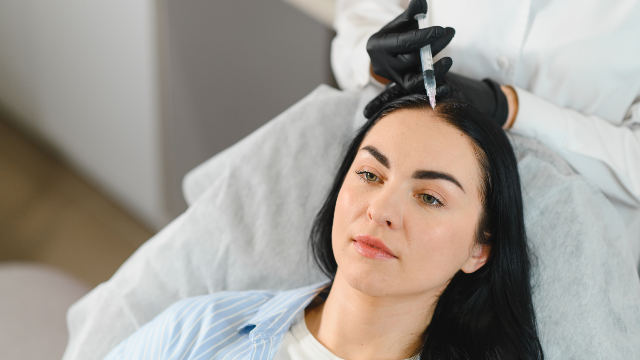
Clinical Guide
Hair Loss Injection Therapy (New M-Cell) at Maison de M
A neutral guide to the New M-Cell hair loss injection at Maison de M Clinic in Seoul: how it works, FDA status, candidacy, and expectations.
Schedule a ConsultationHair Loss Injection Therapy (New M-Cell) at Maison de M
Medically reviewed by Dr. Choi Chang Won, Chief Medical Director, Maison de M Clinic · Last updated July 2026
A hair loss injection in Korea is one of the most searched non-surgical ideas among people researching thinning hair, and Maison de M Clinic in Seoul offers a scalp-injection option it calls the New M-Cell hair treatment. Described by the clinic as a form of regenerative hair therapy in Seoul, this approach uses cells and biologically active components prepared from a patient's own blood, delivered into the scalp under medical supervision. Before considering any regenerative hair therapy, it helps to understand what these treatments involve, how they are regulated in the United States, and what current evidence does and does not show. This guide explains the New M-Cell procedure neutrally and focuses on realistic expectations rather than promises.
What Is the New M-Cell Hair Loss Injection?
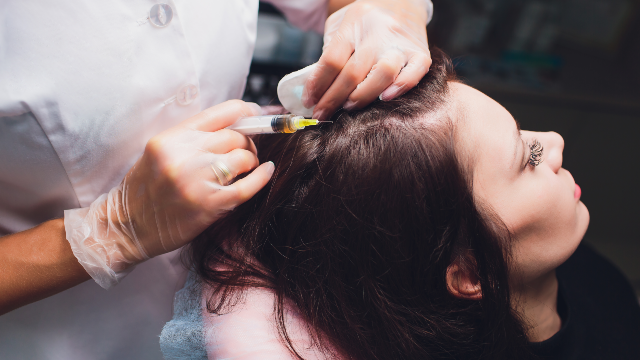
New M-Cell is the name Maison de M Clinic uses for an autologous blood-cell regenerative therapy. "Autologous" simply means the material comes from your own body. According to the clinic, blood is collected from the patient, processed on the same day using the clinic's protocol without laboratory cell culture, and then administered as part of a regenerative treatment plan. The clinic positions New M-Cell as a service intended to work alongside the body's natural processes rather than as a drug that treats a specific disease.
The Hair Loss Injection is one delivery method within the broader New M-Cell platform. In this application, the prepared blood-derived product is injected into the scalp. Maison de M Clinic describes the technique as customized to each person's scalp condition, hair-loss concerns, and the treating physician's assessment. The clinic does not present New M-Cell as a cure, and it states plainly in its own materials that "no guarantee of therapeutic outcome or disease-specific benefit is made."
It is worth being precise about terminology. Blood-derived injectables are sometimes grouped in marketing with "stem cell" and "regenerative medicine" language, but these are not interchangeable categories, and the way a product is prepared and described matters a great deal for how it is regulated. The sections below explain why that distinction is important for anyone in the United States researching this kind of treatment abroad.
How Autologous Blood-Derived Scalp Injections Are Described
The general concept behind blood-derived scalp injections is straightforward. A small volume of the patient's blood is drawn, then processed to concentrate certain components before being injected into areas of thinning. Platelet-rich plasma (PRP) is the most widely studied member of this family, and clinics use various proprietary preparation methods and device systems.
Maison de M Clinic describes its New M-Cell process in five broad steps: a medical consultation and eligibility assessment; blood collection; same-day processing using the clinic's protocol without cell culture; administration of the prepared product according to the planned treatment (scalp injection, in the case of hair loss); and a short period of post-treatment observation. Because the material is the patient's own, the clinic notes a reduced risk of immune incompatibility compared with donor-derived materials. As with any injection, temporary redness, swelling, bruising, tenderness, or discomfort at the blood-draw or injection site is possible, and infection or bleeding is possible although uncommon when proper sterile technique is used.
Independent research on blood-derived injections for pattern hair loss illustrates why expectations should stay measured. Systematic reviews of PRP for hair loss have reported mixed findings, and researchers repeatedly highlight that preparation methods, dosing, injection depth, and outcome measures are not standardized across studies. That lack of standardization makes it difficult to compare results or to generalize from one clinic's protocol to another.
What US Patients Should Know About FDA Status
This is the most important section for anyone in the United States. Autologous blood-derived and other regenerative injectable treatments for hair — including PRP and products described as "regenerative" or "stem cell" — are generally not approved by the US Food and Drug Administration (FDA) as effective treatments for hair loss.
The FDA has published a consumer alert on regenerative medicine products, including stem cell and exosome products. In it, the agency notes that there is a great deal of misleading information online about such products, that many have not been shown to be safe or effective for the conditions being advertised, and that some may carry significant safety risks. The FDA states that, as a general matter, these products require FDA approval, and it urges people to ask whether a product is FDA-approved, to contact the FDA with questions about how a product is regulated, and to report any adverse events through the FDA's MedWatch program.
There is also a common point of confusion worth clearing up. A device used to process blood inside a clinic may hold an FDA clearance as a piece of equipment, but a device clearance is not the same as FDA approval of a specific therapy as effective for hair loss. In other words, the existence of cleared processing equipment does not, by itself, establish that a blood-derived scalp injection works for regrowing hair. Maison de M Clinic's own approved language reflects this restraint: it presents New M-Cell as a treatment using the patient's own biological material and states that no guarantee of therapeutic outcome or disease-specific benefit is made.
If you are researching treatment abroad, it is reasonable to ask the clinic directly what a specific treatment is expected to achieve, what the evidence is, and what the risks are, and to weigh that against the FDA's cautions. You can raise these questions during a consultation through the Maison de M Clinic contact page.
Established, FDA-Approved Hair-Loss Options Exist Generally
For context — and without suggesting that any one path is right for you — it is worth knowing that some hair-loss treatments have been through the FDA approval process for effectiveness. Topical minoxidil and oral finasteride are commonly discussed, FDA-recognized options in the United States for certain patterns of hair loss. Their inclusion here is purely informational; whether any medication or procedure is appropriate depends on your diagnosis and should be decided with a qualified clinician.
Public-health and medical references also emphasize that hair loss has many possible causes. As Mayo Clinic and MedlinePlus explain, hair loss (alopecia) can stem from heredity, hormonal changes, medical conditions such as thyroid disorders or lupus, certain medications, physical or emotional stress, nutrition, and hairstyling practices. The National Institute of Arthritis and Musculoskeletal and Skin Diseases (NIAMS) describes alopecia areata, an autoimmune form in which the immune system attacks hair follicles. Because the right approach depends on the underlying cause, identifying that cause is a sensible first step before choosing any treatment.
What the Procedure Involves at Maison de M Clinic
At Maison de M Clinic, the New M-Cell Hair Loss Injection begins with a consultation. The physician reviews your medical history, current medications, allergies, and hair and scalp concerns, then determines whether you are a suitable candidate. According to the clinic, the treatment is generally performed as a same-day procedure because the protocol does not require laboratory cell culture, so extended waiting periods are not needed.
Regarding comfort, the clinic states that most patients experience only mild discomfort and that local anesthetic injections, topical numbing cream, and gentle injection techniques may be used to reduce sensation. General anesthesia or sedation is not typically described for this service. Downtime is generally minimal; the clinic notes that most patients can return to normal activities shortly afterward, though temporary scalp redness or tenderness may occur.
Maison de M Clinic is located in the Seocho-gu district of Seoul and provides English-language support for international patients, including online consultation before travel. You can learn more about the clinic's team and credentials on its about page, and you can read patient experiences on the clinic's reviews page.
Who Might Be Considered a Candidate

According to the clinic, people who ask about the Hair Loss Injection often have thinning hair or reduced density, notice hair becoming finer, experience increased shedding, have an M-shaped hairline or crown thinning, or have hair affected by frequent coloring or perming. However, candidacy is not automatic. Maison de M Clinic lists several situations in which the treatment may not be suitable, including active scalp infections, severe inflammation or untreated scalp conditions, certain medical conditions or medications that could affect healing or safety, pregnancy or breastfeeding, and cases of advanced hair loss that would more appropriately be addressed with surgical hair restoration. Unrealistic expectations — for example, expecting immediate or dramatic regrowth — are also flagged as a reason for caution.
Only a qualified physician who has examined your scalp and reviewed your history can determine whether this or any treatment is appropriate for you.
Understanding Results and Setting Realistic Expectations
Maison de M Clinic is careful to frame outcomes conservatively. It states that results vary depending on the individual's hair-loss condition, scalp health, and response to treatment, that any changes tend to develop gradually over time rather than immediately, and that maintenance sessions may be suggested. The clinic's official materials do not specify a fixed duration of results.
Given the FDA's cautions and the mixed, non-standardized nature of the published research on blood-derived hair injections, the most balanced way to approach New M-Cell is to view it as an elective, individualized option that the clinic offers — not as a proven or guaranteed solution. Words like "cure," "permanent," "guaranteed," and "100%" have no place in an honest conversation about regenerative hair injections, and Maison de M Clinic does not use them. A consultation is the appropriate setting to discuss what is realistic for your specific situation.
The Bottom Line
- New M-Cell is an autologous blood-derived scalp injection offered at Maison de M Clinic in Seoul; the clinic describes it neutrally and states that no guarantee of therapeutic outcome or disease-specific benefit is made.
- These treatments are generally not FDA-approved for hair loss, and the FDA cautions that products marketed as regenerative medicine (including stem cell and exosome products) may not be proven safe or effective and can carry risks.
- Device clearance is not treatment approval — cleared processing equipment does not establish that a blood-derived injection regrows hair.
- Established, FDA-recognized options exist generally (such as minoxidil and finasteride), and hair loss has many causes, so identifying the cause first is sensible.
- Results vary and develop gradually, if at all; a physician consultation is the right place to set realistic expectations.
Frequently Asked Questions
**Is the New M-Cell hair loss injection FDA-approved for hair loss?**No. Autologous blood-derived and regenerative injectable treatments for hair are generally not FDA-approved as effective treatments for hair loss. The FDA has issued a consumer alert cautioning that products marketed as regenerative medicine may not be proven safe or effective. Maison de M Clinic makes no guarantee of therapeutic outcome.
**What is the difference between PRP and New M-Cell?**Both are prepared from the patient's own blood. PRP (platelet-rich plasma) is the most studied blood-derived injection. New M-Cell is Maison de M Clinic's protocol, which it describes as using minimally manipulated blood cells processed the same day without laboratory cell culture. Preparation methods differ between clinics and are not standardized.
**Is the treatment painful?**According to the clinic, most patients experience only mild discomfort. Local anesthetic injections, topical numbing cream, and gentle injection techniques may be used to minimize sensation during the scalp injection.
**How long does it take and is there downtime?**The clinic describes New M-Cell as generally a same-day treatment, including consultation, blood collection, processing, and administration. Downtime is typically minimal, though temporary scalp redness or tenderness may occur.
**When would I see any change?**Results vary by individual and any change develops gradually over the following months, according to the clinic. There is no guaranteed timeline or outcome, and maintenance sessions may be suggested.
**Who should avoid this treatment?**The clinic lists active scalp infections, severe inflammation or untreated scalp conditions, certain medical conditions or medications, pregnancy or breastfeeding, and advanced hair loss requiring surgical restoration as reasons to postpone or reconsider. A physician determines eligibility after examination.
**How much does it cost?**Cost is discussed during a personalized consultation, since a treatment plan depends on your individual assessment. You can inquire through the Maison de M Clinic contact page.
**Can international patients arrange care in English?**Yes. Maison de M Clinic provides English-language support and online consultation for international patients, so you can discuss your concerns before traveling to Seoul.
This article is for general informational purposes and does not constitute individualized medical advice. Consult a qualified physician about your specific condition.
References
- U.S. Food and Drug Administration — Consumer Alert on Regenerative Medicine Products Including Stem Cells and Exosomes
- MedlinePlus (U.S. National Library of Medicine) — Hair Loss
- Mayo Clinic — Hair loss (Symptoms and causes)
- National Institute of Arthritis and Musculoskeletal and Skin Diseases (NIAMS) — Alopecia Areata
More Clinical Articles
Continue reading physician-informed guides on non-surgical lifting, skin texture renewal, and aftercare in Seoul.
CellExosome BLACKLABEL: Exosome Skin Care at Maison de M
An evidence-cautious look at CellExosome BLACKLABEL exosome skin treatments at Maison de M Clinic in Seoul, and why exosome products are not FDA-approved.
Learn More
Sofwave and Thermage for Deeper Skin Tones: A Guide
How energy-based lifting devices Sofwave and Thermage work, and how clinicians tailor treatment for Latina, Mediterranean and deeper skin tones.
Learn More

Pting Laser vs CO2 Laser: Pain Scores and Recovery Benchmarks from KR
Pting Laser vs CO2 Laser: Pain Scores and Recovery Benchmarks from KR
Learn More