Two Hands Ultherapy Prime & Aesthetic Lifting Clinic in Gangnam, Seoul · 1:1 Physician Care
Ultherapy & Sofwave Specialized Clinic · Gangnam-daero
en-US

Clinical Guide
Choosing a Korean Aesthetic Clinic: A US Patient's Due Diligence Checklist
A neutral due-diligence checklist for US patients choosing a Korean aesthetic clinic: verify credentials, device rules, quotes, and follow-up.
Schedule a ConsultationChoosing a Korean Aesthetic Clinic: A US Patient's Due Diligence Checklist
Medically reviewed by Dr. Choi Chang Won, Chief Medical Director, Maison de M Clinic
South Korea is one of the most active destinations in the world for non-surgical aesthetic and dermatologic care, and a growing number of patients from the United States consider traveling there for treatment. If you are one of them, the most useful thing you can do is approach the decision like a careful consumer of medical services: verify what can be verified, ask direct questions, and document the answers. A clinic that is comfortable being checked is showing you something valuable.
This article is a practical, neutral due-diligence checklist. It does not rank clinics or claim that any single provider is the "best" choice, because that framing tends to substitute marketing for verification. Instead, it lays out the specific things a U.S. patient should confirm before booking treatment in Korea, organized so you can work through them one by one. The U.S. Centers for Disease Control and Prevention (CDC) publishes guidance on medical tourism that runs through this checklist as a common thread: verify your provider, understand the risks, and plan for follow-up and complications before you travel.
Start With the Clinic's Registration and Legal Standing
The first item on any checklist is confirming that the clinic is authorized to treat international patients under Korean law. Korea regulates the practice of marketing to and treating foreign patients. Clinics that do so lawfully register with the Korean Ministry of Health and Welfare (MOHW) as a "Registered Medical Institution for Attracting Foreign Patients," under the framework governing overseas medical expansion and the attraction of foreign patients. Maison de M Clinic, for example, holds this registration.
Treat this registration as a baseline, verifiable fact rather than a ranking or an endorsement of quality. It confirms that a facility is authorized to work with international patients within the Korean system; it does not by itself tell you how skilled a particular clinician is or whether a specific treatment is right for you. Ask a clinic directly whether it holds this registration, and consider it one of several boxes to check rather than the finish line.
While you are confirming legal standing, verify that the clinic is a licensed medical facility staffed by licensed physicians, not an unregulated storefront. This is straightforward for established clinics and should not be difficult to confirm.
Verify Who Performs the Procedure and Their Qualifications
Perhaps the most important item on the checklist is identifying the specific physician who will treat you and understanding their training. Ask by name: Which doctor will perform my procedure? Will the clinician who consults with me also be the one treating me? What is that physician's medical training and specialty?
Here a point of caution matters for U.S. patients: Korean medical board specialties are structured differently from U.S. boards, and the names do not always map onto one another. A physician may hold a Korean national board certification in a given specialty and practice aesthetic medicine, which is entirely legitimate, but that is not the same thing as holding a U.S. board certification in dermatology or plastic surgery. The correct approach is to ask, not to assume, in either direction. Request the treating physician's documented qualifications and specialty, and understand what that credential means rather than reading it as an equivalent of a familiar U.S. title.
It is also fair to ask about the clinic's experience with the specific treatment you are considering and with international patients generally. An experienced, high-volume practice in a particular technique is a reasonable thing to ask about, but frame it as a factual question about the clinician's background rather than accepting promotional claims at face value.
Understand the Regulatory Status of Devices and Products
Aesthetic clinics use medical devices and injectable products, and these are regulated by the authority of the country where they are used. In Korea, that authority is the Ministry of Food and Drug Safety (MFDS). In the United States, it is the Food and Drug Administration (FDA). In Europe, products may carry a CE mark. A U.S. patient should understand a simple but frequently misunderstood point: MFDS approval or a CE mark is not the same as U.S. FDA clearance or approval.
This does not mean a device used in Korea is unsafe. It means the regulatory pathway is different, and you should not assume that a product legally used abroad carries the same U.S. status. Some technologies you encounter are globally recognized and do have specific U.S. FDA clearances for defined indications; others are branded or regional and do not. When a clinic names a device or product, it is reasonable to ask which regulator has authorized it and for what use, and to understand that a generic description of how a device works is more informative than a brand name alone.
Be particularly careful with treatments marketed as "regenerative," including anything described as an exosome product. The FDA has issued consumer safety information stating that there are no FDA-approved exosome products, warning of serious risks, and cautioning patients against unproven claims. This is an area where neutral, evidence-focused questions matter most. Ask what a product actually is, what its regulatory status is, and what the risks and evidence are, and be skeptical of language that promises "regeneration," "cell therapy," or a cure. The same caution applies to other injectables marketed as regenerative or as skin boosters; understand what each product is and how it is regulated rather than relying on the marketing category.
Get a Written, Itemized Quote and Written Policies
A recurring theme in medical tourism problems is vagueness about money and policies. Protect yourself by insisting on documentation. Ask for a written, itemized quote that lists each treatment, any consultation or testing fees, and what is and is not included. This lets you compare providers on a like-for-like basis and prevents surprises on treatment day.
Pay attention to taxes and inclusions. Korea applies a value-added tax, so a quote should make clear whether tax is included; verify this rather than assuming. Also confirm what happens to the plan if the clinician recommends a change after an in-person assessment, since candidacy is ultimately determined by examination.
Maison de M Clinic's documented practice is to provide a written breakdown of what a treatment or package includes before payment, and its reservation process involves the clinic confirming the plan following a doctor's review before payment is made. Whatever clinic you consider, look for that same clarity: a written breakdown before you pay. When it comes to deposits, cancellations, rescheduling, and refunds, ask for the written policy and read it. If a policy is not spelled out, do not assume; ask the clinic to confirm it in writing directly.
Finally, remember that elective aesthetic procedures are generally not covered by U.S. health insurance, and care received abroad is often not covered at all. Plan to pay out of pocket, and confirm any coverage question with your insurer in writing before you travel.
Confirm Language and Communication Support
Communication is a safety issue, not merely a convenience. You must be able to understand your consent forms, your treatment plan, and your aftercare instructions, and you must be understood when you describe your medical history and goals. Before booking, confirm exactly what language support a clinic provides at each stage: the remote consultation, the in-person visit, and aftercare.
Ask who your point of contact will be, how you will reach that person across the time-zone gap between the United States and Korea, and whether medical documents and instructions will be provided in English. Clinics that regularly serve international patients often build this in. Maison de M Clinic, for instance, provides English-language consultation and reservation for international patients and communicates through channels such as its website, messaging apps, email, and telephone. Use these questions to evaluate any provider on equal footing.
Insist on a Real Consultation and Realistic Expectations
Because you likely cannot visit a Korean clinic in person before deciding, the remote consultation carries weight. A meaningful consultation is a clinical conversation, not a sales pitch. Expect to provide medical history, current medications and supplements, and often standardized photographs so a clinician can assess candidacy. Use the time to confirm what is being recommended and why, what the realistic range of outcomes is, what recovery involves, and what the follow-up plan is.
Set expectations deliberately. Aesthetic medicine improves appearance; it does not guarantee a specific outcome, and results vary from person to person based on anatomy, skin condition, age, and how well a treatment matches the concern. Non-surgical technologies in particular tend to deliver gradual, natural-looking change rather than the dramatic results implied by heavily edited imagery, and some treatments require a series of sessions or maintenance over time. Treat any promise of a guaranteed result as a warning sign. A trustworthy clinician describes outcomes as ranges, is candid about limits, tells you when you are not a good candidate for something, and encourages an in-person assessment before anything is performed.
Plan Follow-Up and Complication Care Before You Travel
The final checklist items concern what happens after treatment, and the CDC is explicit that medical travelers should arrange for continuity of care and think through complications before they go, not after. Complications from non-surgical aesthetic procedures are uncommon with appropriate care, but they are possible, and distance makes them harder to manage if you have not planned ahead.
Ask the clinic directly: What are the possible complications of the specific treatments recommended for me? How is a complication handled if it appears while I am still in Korea? What should I do if a problem develops after I return home, and how do I reach a clinician? Confirm how the clinic conducts remote follow-up and what documentation of your treatment, including the products used, you will receive.
At home, identify in advance a local physician or dermatologist who could evaluate you if needed, and keep your treatment records accessible. Building enough time into your trip for recovery and any follow-up before a long flight is part of the same planning. Knowing where you would seek help, and having your records ready, turns a stressful scenario into a manageable one.
Red Flags to Watch For
Part of due diligence is recognizing the warning signs that should slow you down, regardless of how appealing a clinic's marketing or pricing looks. None of these is proof of a problem on its own, but each is a reason to pause and ask more questions before committing.
Be wary of guaranteed results. Responsible clinicians describe outcomes as ranges and probabilities, because results genuinely vary from person to person. A promise of a specific, certain outcome, or language about a "cure" or a "permanent" fix, is a reason for caution rather than reassurance.
Be wary of pressure to book quickly. Limited-time offers, urgency to secure a deposit, or reluctance to give you time to review a written quote and consent forms are all signs that a provider may be prioritizing conversion over care. A clinic confident in its work will give you the time to make an informed decision.
Be wary of vagueness about who treats you. If a clinic will not clearly identify the physician who will perform your procedure, or will not share that clinician's documented training and specialty, that is a meaningful gap. The same applies if a provider blurs the distinction between the person who consults with you and the person who treats you.
Be wary of unclear pricing and policies. Verbal-only quotes, refusal to itemize, ambiguity about whether tax is included, and undocumented deposit, cancellation, or refund policies all leave you exposed. Insist on written answers, and treat resistance to putting things in writing as information about how the clinic operates.
Be wary of aggressive claims about "regenerative" or exosome treatments. Marketing that leans heavily on the language of "regeneration," "cell therapy," or unproven skin boosters, without a clear account of what a product is and how it is regulated, warrants extra scrutiny. Remember that the FDA has warned there are no FDA-approved exosome products.
Finally, be wary of any provider who is dismissive of follow-up and complication planning. A clinic that treats aftercare as an afterthought is not equipped to support you across the distance between the United States and Korea.
Putting the Checklist Together
Worked through in order, the checklist is not complicated, and no single item is difficult on its own. Confirm the clinic's registration and legal standing. Verify the treating physician's name, training, and specialty, remembering that Korean boards differ from U.S. boards. Understand the regulatory status of every device and product, recognizing that MFDS and CE are not FDA, and be cautious about unproven regenerative or exosome claims. Get a written, itemized quote and read the written policies. Confirm language and communication support. Insist on a genuine consultation and keep your expectations realistic. Plan follow-up and complication care before you travel. Each answer you collect, in writing, makes your decision more informed and your trip safer.
Bottom Line
Choosing a Korean aesthetic clinic well is less about finding a "top" clinic and more about doing disciplined due diligence. The strongest signal is not a marketing claim; it is a clinic's willingness to be verified. Confirm registration, confirm who treats you and their documented qualifications, understand device and product regulation and the limits of overseas approvals, get everything about cost and policy in writing, secure clear communication, keep expectations grounded, and arrange follow-up and complication care in advance. If a provider makes this process transparent and easy, that is meaningful. If a provider resists it, that is meaningful too. Your own careful questions are the most reliable tool you have.
Frequently Asked Questions
**How do I confirm a Korean clinic is allowed to treat foreign patients?**Ask whether the clinic is registered with the Korean Ministry of Health and Welfare as a "Registered Medical Institution for Attracting Foreign Patients." This registration authorizes a facility to work with international patients under Korean law. Treat it as a baseline verifiable fact, not a quality ranking, and confirm it alongside the clinic's medical licensing.
**Does a Korean doctor's board certification mean the same thing as a U.S. board?**Not necessarily. Korean medical board specialties are structured differently from U.S. boards, and the titles do not always correspond. A physician may hold a legitimate Korean board certification and practice aesthetic medicine without holding a U.S. dermatology or plastic surgery board. Ask for the treating physician's documented qualifications and specialty and understand what the credential actually means rather than assuming equivalence.
**Is a device that is approved in Korea also FDA-approved?**No, not automatically. Devices and products are regulated by local authorities such as Korea's MFDS, and a CE mark is a European designation; neither is the same as U.S. FDA clearance or approval. Some products used in Korea are not FDA-approved for the use in question. Ask which regulator authorized a given device or product and for what indication.
**Should I be cautious about exosome or "regenerative" treatments?**Yes. The FDA has stated that there are no FDA-approved exosome products and has warned of serious risks and unproven claims. Ask exactly what a product is, what its regulatory status is, and what the evidence and risks are, and be skeptical of promises of "regeneration" or a cure. Apply the same scrutiny to other injectables marketed as regenerative or as skin boosters.
**What should a written quote from a Korean clinic include?**An itemized list of each treatment, any consultation or testing fees, and a clear statement of what is and is not included, along with whether Korean value-added tax is included, which you should verify. Ask for the written policies on deposits, cancellation, rescheduling, and refunds, and do not assume terms that are not documented.
**How do I handle follow-up or a complication after I fly home?**Plan for it before you travel, as the CDC advises. Ask the clinic how it manages complications and remote follow-up, keep written aftercare instructions and your treatment records, and identify a local physician or dermatologist who could evaluate you if needed. Build enough time into your trip for recovery and any follow-up before your flight home.
This article is general educational information and is not a substitute for individualized medical advice; consult a qualified clinician about your specific situation.
This article is general information only and is not financial or medical advice.
References
- CDC — Medical Tourism
- FDA — Aesthetic (Cosmetic) Devices
- FDA — FDA-Approved Dermal Fillers
- FDA — Consumer Alert on Regenerative Medicine (stem cells and exosomes)
- ASPS — Skin Rejuvenation and Resurfacing
More Clinical Articles
Continue reading physician-informed guides on non-surgical lifting, skin texture renewal, and aftercare in Seoul.
CellExosome BLACKLABEL: Exosome Skin Care at Maison de M
An evidence-cautious look at CellExosome BLACKLABEL exosome skin treatments at Maison de M Clinic in Seoul, and why exosome products are not FDA-approved.
Learn More
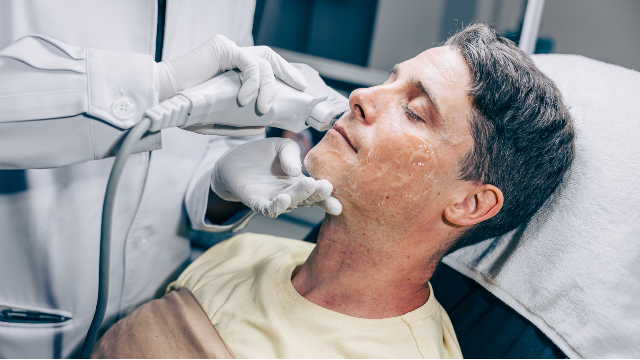
Sofwave and Thermage for Deeper Skin Tones: A Guide
How energy-based lifting devices Sofwave and Thermage work, and how clinicians tailor treatment for Latina, Mediterranean and deeper skin tones.
Learn More
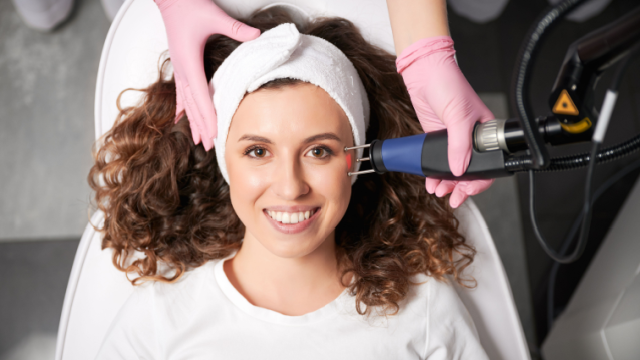
Pting Laser vs CO2 Laser: Pain Scores and Recovery Benchmarks from KR
Pting Laser vs CO2 Laser: Pain Scores and Recovery Benchmarks from KR
Learn More