Two Hands Ultherapy Prime & Aesthetic Lifting Clinic in Gangnam, Seoul · 1:1 Physician Care
Ultherapy & Sofwave Specialized Clinic · Gangnam-daero
en-US


Clinical Guide
CellExosome vs Rejuran vs Skin Boosters: Comparing Regenerative Skin Treatments
Compare CellExosome, Rejuran, and skin boosters as regenerative skin treatments, including FDA status, the FDA exosome alert, and realistic expectations.
Schedule a ConsultationCellExosome vs Rejuran vs Skin Boosters: Comparing Regenerative Skin Treatments
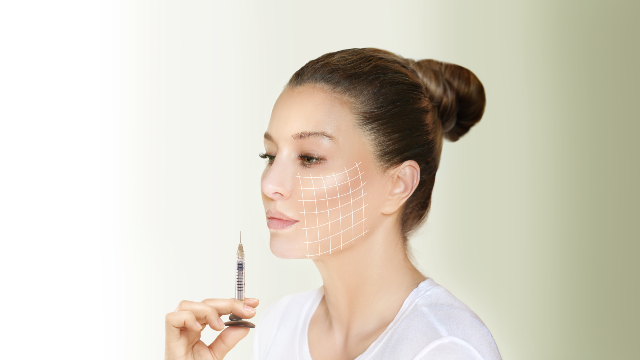
Medically reviewed by Dr. Choi Chang Won, Chief Medical Director, Maison de M Clinic
If you have been researching "regenerative" skin treatments popular in Korea, three names come up repeatedly: CellExosome, Rejuran, and the broad category of skin boosters. They are often grouped together because all three are injectable or microchannel-delivered treatments aimed at improving skin quality — hydration, texture, and elasticity — rather than adding facial volume the way traditional dermal fillers do. But they differ meaningfully in what they contain, how they are regulated in the United States, and how much evidence supports them. This guide compares them neutrally so you can ask better questions during a consultation.
Two themes matter throughout. First, regulatory status in the United States is not the same as availability or popularity abroad. A treatment can be widely offered in Korea and still not be approved by the U.S. Food and Drug Administration (FDA); approvals under Korea's Ministry of Food and Drug Safety (MFDS) or a European CE marking are not equivalent to U.S. FDA approval. Second, none of these treatments is a cure or a guarantee. Results vary from person to person, develop gradually, and depend on individual factors that only a clinician can assess.
What "regenerative skin treatment" actually means

The word "regenerative" is used loosely in aesthetic marketing, so it helps to define it plainly. In this context it generally refers to injectable or microchannel treatments that aim to support the skin's own repair processes and improve skin quality over time, as opposed to fillers that physically add volume. The three categories in this guide illustrate three different underlying ideas: exosome-based products (CellExosome), polynucleotide-based products (Rejuran), and a mixed class of skin boosters based mostly on hyaluronic acid or collagen-stimulating materials.
Because these categories are grouped under a single marketing umbrella, it is easy to assume they carry the same regulatory standing and the same weight of evidence. They do not. The sections below take each one in turn, with an emphasis on what U.S. patients should understand before traveling for treatment.
CellExosome: an exosome-based offering — and an important FDA caution
CellExosome is the name Maison de M Clinic uses for a regenerative skin treatment it describes as an exosome-based therapy intended to support skin regeneration and improve skin quality. Exosomes are tiny vesicles released by cells that are being studied for their role in cell-to-cell communication and tissue repair. The scientific interest in them is real, but the regulatory reality in the United States is unambiguous and must be stated clearly.
There are no FDA-approved exosome products. The FDA has issued a consumer alert on regenerative medicine products, including stem cell and exosome products, warning consumers directly. The agency states that certain clinics market these products with unproven claims, that some patients have been seriously harmed, and that it has received reports of serious adverse events. The FDA notes that products of this type generally require FDA approval and that, as of its alert, there are no FDA-approved exosome products. It urges people to ask whether a product is FDA-approved, to contact the FDA with questions about how a product is regulated, and to report adverse events.
For that reason, CellExosome must not be presented — by a clinic or by an article — as FDA-approved or as a proven therapy. The honest framing is neutral: it is a treatment the clinic offers and describes in its own terms, and independent regulatory approval in the United States does not exist for exosome products. Maison de M Clinic's own materials frame CellExosome descriptively, note that skin quality is intended to improve progressively over a series of treatments, and list situations that call for caution, such as active skin infections, inflammation at the treatment site, pregnancy, breastfeeding, severe allergies, or other significant medical concerns. If you are considering it, the most important questions to ask are what the treatment is expected to achieve, what evidence supports it, and what the risks are — and to weigh the answers against the FDA's alert.
Rejuran: polynucleotide, approved in Korea but not the United States
Rejuran is a polynucleotide (PN) product — a purified DNA-derived material — that Maison de M Clinic describes as a skin booster designed to support the skin's natural regeneration and improve elasticity, hydration, and texture over time rather than to add volume. Polynucleotide treatments have become widely used in Korea and are frequently discussed in K-beauty coverage.
Here the regulatory point is specific: Rejuran is approved under Korea's MFDS but is not FDA-approved for injection in the United States. That does not make it unavailable or unpopular abroad; it means that a U.S. patient should understand that they are receiving a treatment that has not gone through the U.S. approval process, and that MFDS or CE status is not the same as U.S. FDA approval. According to the clinic, minor injection marks, mild redness, swelling, or tiny papules may occur immediately after treatment and generally improve within a few days, and multiple sessions are typically recommended, with improvements developing gradually. As with any injectable, the clinic advises patients to disclose pregnancy, breastfeeding, allergies, active skin infections, bleeding disorders, or other conditions so that suitability can be assessed.
Skin boosters: a class, not a single product
"Skin boosters" is an umbrella term rather than one product. It generally refers to injectable treatments — often based on hyaluronic acid (HA), and sometimes on collagen-stimulating or other bio-revitalizing materials — that are placed superficially to improve hydration, radiance, and skin quality rather than to create structural volume. Maison de M Clinic offers several products within this class, and the category also overlaps conceptually with Rejuran.
As a class, skin boosters are not FDA-approved in the United States. There is a notable exception worth naming precisely because it is a common point of confusion: a specific hyaluronic acid microdroplet product marketed as FDA-approved to improve skin smoothness in a defined facial area. That single approval does not mean the broader skin-booster category is FDA-approved. Many products marketed as skin boosters — including polynucleotide and certain collagen-based injectables used in Korea — do not carry U.S. FDA approval, and, again, MFDS or CE status is not equivalent to U.S. FDA approval. It helps to think of "skin boosters" as a marketing category containing products with very different regulatory standings, so the relevant question is always which specific product is being proposed and how that particular product is regulated.
For general context on how injectable aesthetics are regulated, the FDA maintains information on aesthetic (cosmetic) devices and a list of FDA-approved dermal fillers; those resources describe what has and has not gone through the U.S. approval process. The American Society of Plastic Surgeons also provides patient-oriented background on dermal fillers, which — while distinct from these regenerative treatments in that fillers add volume — is a useful reference point for understanding injectable categories and the questions worth asking.
Comparing the three side by side
Keeping in mind that only a clinician who has examined you can advise on your situation, a few comparisons help organize the choice:
- What they contain. CellExosome is described as an exosome-based product; Rejuran is a polynucleotide (DNA-derived) product; skin boosters are a class based mostly on hyaluronic acid or collagen-stimulating materials.
- Regulatory status in the U.S. There are no FDA-approved exosome products, and the FDA has issued a safety alert about them. Rejuran is approved under Korea's MFDS but is not FDA-approved for injection. Skin boosters as a class are not FDA-approved, with a specific HA microdroplet product being an FDA-approved exception. MFDS and CE status are not equivalent to U.S. FDA approval.
- The shared goal. All three aim to improve skin quality — hydration, texture, elasticity — rather than to add volume like traditional fillers.
- Expectations. None guarantees a result. Improvements, where they occur, generally develop gradually over a series of sessions and vary by individual, skin condition, and the specific product used.
Many clinicians think in terms of a personalized plan rather than a single "best" treatment, and appropriate choices depend on your skin, your goals, your medical history, and an in-person assessment. Maison de M Clinic is located in Seocho-gu, Seoul, and provides English-language support for international patients; you can learn more about the team on the clinic's about page or arrange an individualized discussion through its contact page.
Questions worth asking before any regenerative treatment
Because "regenerative" is a broad marketing term, a few direct questions can protect you:
- Exactly which product is being proposed, and what does it contain? A category name like "skin booster" is not specific enough.
- How is that specific product regulated in the United States? Ask plainly whether it is FDA-approved, and remember that MFDS or CE status is not the same thing.
- What is the realistic expected outcome, over what timeframe, and how many sessions? Improvements are typically gradual and variable.
- What are the risks and reasons I might not be a candidate? Active infection, pregnancy, breastfeeding, certain allergies, and bleeding disorders are common cautions.
- What is the plan if I have a reaction after returning home? This is especially relevant for international patients.
What these treatments cannot promise
Whatever category you consider, be cautious about language like "cure," "permanent," or "guaranteed." These treatments aim to support and improve skin quality; they do not stop the natural aging process, and their effects are not permanent. Results vary, develop gradually, and depend on factors a clinician assesses individually. In the specific case of exosome products, the FDA's safety alert is a reason for particular caution rather than reassurance, and no efficacy or cure claim should be made.
Bottom Line
- These are three different things. CellExosome (exosome-based), Rejuran (polynucleotide), and skin boosters (a class, mostly HA or collagen-stimulating) share a goal of improving skin quality but differ in content and regulation.
- Exosomes carry a specific FDA caution. There are no FDA-approved exosome products, and the FDA has issued a consumer alert warning of serious risks; CellExosome should not be presented as FDA-approved or proven.
- Rejuran is MFDS-approved, not FDA-approved. Korean approval and CE marking are not equivalent to U.S. FDA approval.
- Skin boosters are not an FDA-approved class. A specific HA microdroplet product is an FDA-approved exception, but the broader category is not; always ask about the specific product.
- No result is guaranteed. Improvements are gradual and vary by person; an in-person consultation is the right place to set realistic expectations.
Frequently Asked Questions
**Are exosome treatments like CellExosome FDA-approved?**No. There are no FDA-approved exosome products, and the FDA has issued a consumer alert warning that such products are marketed with unproven claims, that some patients have been seriously harmed, and that serious adverse events have been reported. CellExosome should be understood as a treatment the clinic offers, not as an FDA-approved or proven therapy.
**Is Rejuran FDA-approved in the United States?**No. Rejuran is a polynucleotide product approved under Korea's MFDS, but it is not FDA-approved for injection in the United States. Approval under Korea's MFDS or a European CE marking is not the same as U.S. FDA approval.
**Are skin boosters FDA-approved?**As a class, no. Skin boosters cover many different products, and most are not FDA-approved in the United States. One specific hyaluronic acid microdroplet product marketed as an FDA-approved exception for improving skin smoothness in a defined facial area, but that does not mean the whole category is approved. Always ask which specific product is being proposed and how it is regulated.
**How are these different from regular dermal fillers?**Traditional dermal fillers primarily add volume or fill lines. These regenerative treatments are instead aimed at improving skin quality — hydration, texture, and elasticity. The FDA maintains information on aesthetic devices and FDA-approved dermal fillers, and the American Society of Plastic Surgeons provides patient background on fillers as a reference point.
**Which one should I choose?**There is no universal answer. The suitable choice — if any — depends on your skin, your goals, your medical history, and an in-person assessment by a qualified clinician. Results vary and are never guaranteed, and any plan should be individualized.
This article is for general informational purposes and does not constitute individualized medical advice. Consult a qualified physician about your specific condition.
References
- U.S. Food and Drug Administration — Consumer Alert on Regenerative Medicine Products Including Stem Cells and Exosomes
- U.S. Food and Drug Administration — Aesthetic (Cosmetic) Devices
- American Society of Plastic Surgeons — Dermal Fillers
More Clinical Articles
Continue reading physician-informed guides on non-surgical lifting, skin texture renewal, and aftercare in Seoul.
CellExosome BLACKLABEL: Exosome Skin Care at Maison de M
An evidence-cautious look at CellExosome BLACKLABEL exosome skin treatments at Maison de M Clinic in Seoul, and why exosome products are not FDA-approved.
Learn More
Sofwave and Thermage for Deeper Skin Tones: A Guide
How energy-based lifting devices Sofwave and Thermage work, and how clinicians tailor treatment for Latina, Mediterranean and deeper skin tones.
Learn More

Pting Laser vs CO2 Laser: Pain Scores and Recovery Benchmarks from KR
Pting Laser vs CO2 Laser: Pain Scores and Recovery Benchmarks from KR
Learn More