Two Hands Ultherapy Prime & Aesthetic Lifting Clinic in Gangnam, Seoul · 1:1 Physician Care
Ultherapy & Sofwave Specialized Clinic · Gangnam-daero
en-US

Clinical Guide
Aesthetic Medicine for Men at Maison de M: A US Guide
A neutral overview of non-surgical aesthetic options for male patients at Maison de M Clinic in Seoul, from skin tightening to injectables, for US men.
Schedule a ConsultationAesthetic Medicine for Men at Maison de M Clinic: A US Guide
Medically reviewed by Dr. Min Byung Yee, Chief Director and Board-Certified Family Medicine Physician, Maison de M Clinic · Last updated July 2026
Aesthetic medicine for men has moved firmly into the mainstream, and men's skin treatments in Seoul draw a growing number of US male patients who want subtle, natural-looking results rather than obvious "work." This guide gives a neutral overview of the common non-surgical options relevant to men—skin tightening and lifting, injectables, and skin-quality treatments—at Maison de M Clinic, a male-friendly aesthetic and dermatology clinic in Seoul, South Korea. It also explains how male skin and goals can differ from women's, what the US regulatory picture looks like for injectables, and what to expect. Throughout, the emphasis is on realistic information: outcomes vary from person to person, and nothing here is a promise of a specific result.
Why Men's Aesthetics Is Different
Men are not simply "smaller versions" of the same treatment plans used for women. Published reviews of male aesthetics describe meaningful anatomical differences: men tend to have thicker skin with higher collagen content, more robust facial musculature (which can produce stronger dynamic wrinkles), a squarer face with a broader and more angular jaw, and a distinct pattern of subcutaneous fat. These differences change how treatments are planned. Stronger muscles may call for different dosing of neuromodulators; thicker skin can respond differently to energy-based devices; and the aesthetic goal is usually to preserve masculine features—a defined jaw, straight brow, and balanced proportions—rather than to soften or feminize them.
Goals also differ. Literature on cosmetic procedures in men notes that male patients frequently want to look less tired or less "harsh" while still looking like themselves, and that the lower face and jawline are common areas of focus. Because of this, a good male aesthetic plan starts with a careful conversation about what "natural" means to that individual. Maison de M Clinic emphasizes individualized assessment at consultation, which is where a suitable plan—if any—is determined.
Skin Tightening and Lifting for Men
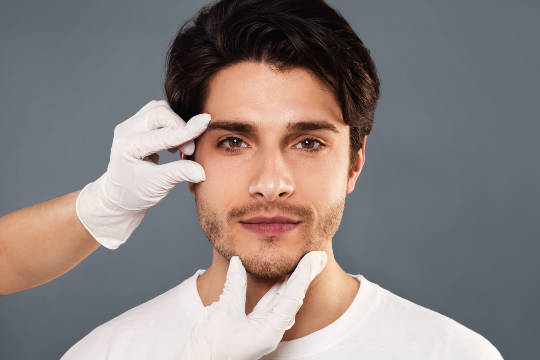
Skin laxity along the jawline and neck is one of the more frequent concerns men raise. Non-surgical, energy-based lifting works by delivering focused ultrasound or radiofrequency energy into deeper layers of the skin to stimulate collagen remodeling over weeks and months. It produces gradual firming rather than a surgical lift, and it suits mild to moderate laxity. In the United States, these energy-based aesthetic devices are cleared by the FDA as a category for specific cosmetic uses; clearance indicates a device is considered substantially equivalent to others on the market and is not a guarantee of a particular outcome.
Maison de M Clinic offers several relevant options:
- Ultherapy Prime (microfocused ultrasound). Uses real-time DeepSEE ultrasound visualization to target deeper structural layers. The clinic also describes an Ultherapy Prime Homme protocol, in which treatment planning is tailored to male facial anatomy—typically thicker skin and a stronger jaw structure—with an emphasis on jawline definition while preserving a natural masculine appearance.
- Sofwave (mid-dermal ultrasound). Stimulates collagen in the mid-dermis with surface cooling, aiming at firmness and fine lines over roughly three to six months.
- Radiofrequency (Thermage FLX, Density, InMode). Heats the dermis to prompt collagen remodeling for texture and mild laxity. Thermage FLX is contraindicated for people with pacemakers, defibrillators, or similar implantable electrical devices.
For all of these, results develop gradually and vary by individual, and the clinic determines suitability through a physician assessment. Non-invasive skin tightening is generally positioned by the American Society of Plastic Surgeons as appropriate for milder laxity, with surgery reserved for more advanced changes.
Injectables: Botox and Fillers, With Accurate US Framing
Injectables are among the most popular non-surgical treatments for men worldwide, and Maison de M Clinic offers botulinum toxin (commonly called Botox) and hyaluronic acid (HA) dermal fillers. Because regulatory status matters for US patients, here is an accurate framing.
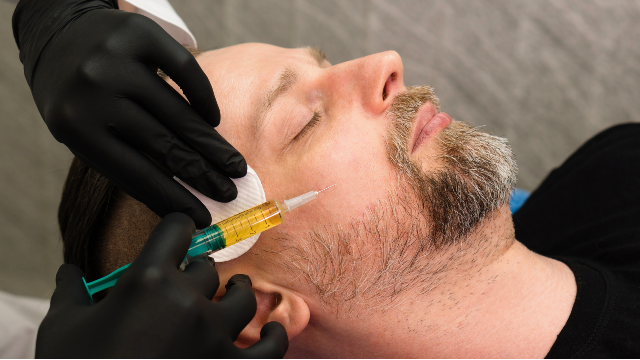
Botulinum toxin (Botox). As Mayo Clinic explains, botulinum toxin injections relax the muscles that create certain facial lines and are widely used to smooth wrinkles, with effects that typically appear within a few days and last around three to four months before repeat treatment is needed. In the United States, onabotulinumtoxinA (Botox Cosmetic) is FDA-approved for specific cosmetic uses such as frown lines between the brows (glabellar lines), crow's-feet lines, and forehead lines. For men, dosing often needs to be adjusted for stronger facial musculature. Some uses discussed in aesthetic practice—such as masseter (jaw) injection for a slimmer or softer lower face—are considered off-label in the US, meaning they are not among the FDA-approved cosmetic indications; these should be discussed carefully with the physician, including the evidence and risks. Botox is a prescription medicine that should be administered only by a qualified clinician, and possible side effects include bruising, headache, and, less commonly, temporary drooping or muscle weakness.
Dermal fillers. HA fillers add volume and soften folds. The US FDA notes that dermal fillers are approved for specific uses—for example, correcting moderate to severe facial wrinkles and folds, adding volume to certain areas of the face, and lip augmentation in appropriate patients—and that fillers are not approved for body contouring or to be injected into certain high-risk areas. The FDA also cautions that unapproved uses carry added risk. For men, filler is often used conservatively to support the jaw, chin, or midface while keeping proportions masculine. Maison de M Clinic offers HA filler ranges (such as and Belotero); the appropriate product and placement are determined individually.
Skin-Quality Treatments and Other Options
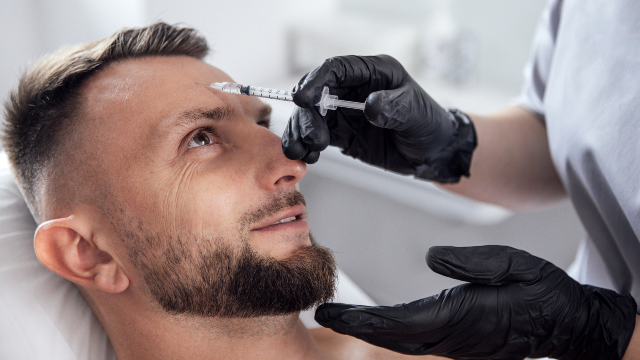
Beyond lifting and injectables, many men are primarily bothered by skin quality—dullness, texture, enlarged pores, or the effects of sun and shaving. Options at Maison de M Clinic in this category include:
- Skin boosters. Hydrating and skin-conditioning injectable treatments (for example, HA-based boosters and polynucleotide-based products such as Rejuran) aim to improve hydration, texture, and elasticity rather than to add volume.
- Pigment and tone lasers. Treatments such as toning lasers address uneven tone and pigmentation.
- Laser hair reduction. Soprano Titanium is a diode-laser platform used for long-term hair reduction, which some men choose for the beard line, neck, back, or chest. Multiple sessions are typically required, and results are described as long-lasting reduction rather than complete, lifelong removal.
- Regenerative and exosome-based treatments. The clinic offers regenerative options such as exosome-based skin treatments and autologous blood-derived therapy.
An important note for US patients: several injectable and regenerative products used in Korea—including certain skin boosters, polynucleotide-based injectables, exosome therapies, and collagen-stimulating injectables—are regulated by Korean authorities (MFDS/KFDA) but are not approved by the US FDA for effectiveness. This does not mean they are unavailable or unregulated in Korea; it does mean US patients should understand the difference in regulatory review and discuss the evidence directly with the treating physician before proceeding.
Common Concerns Men Bring to Consultation
While every plan is individual, a few themes come up often when male patients describe what bothers them, and they map onto the treatment categories above:
- "I look tired or angry at rest." Deep frown lines between the brows or heavy forehead lines can create a stern or fatigued impression. Botulinum toxin is commonly discussed here, with dosing adjusted for stronger male muscles so movement is softened rather than frozen.
- "My jawline is losing definition." Softening along the lower face and neck is a frequent driver of interest in energy-based lifting such as Ultherapy Prime Homme, which is planned around male anatomy. Advanced laxity, however, may call for a surgical opinion instead.
- "My skin looks dull, rough, or congested." Shaving, sun, and lifestyle can leave skin looking tired. Skin-quality treatments and boosters target hydration and texture rather than shape.
- "I want it, but I don't want it to be obvious." Discretion is a recurring priority for men. Conservative dosing, gradual protocols, and minimal-downtime options are usually favored.
A frank consultation is where these concerns are matched to appropriate options—or where a physician may advise against treatment. The clinic determines suitability individually rather than in advance.
Realistic Expectations for Male Patients
Whatever the treatment, a few principles apply:
- Improvement is usually gradual and subtle. Energy-based lifting develops over months; injectables are faster but temporary. None of these treatments stops aging.
- Results vary. Skin type, muscle strength, sun history, lifestyle, and individual response all influence outcomes. Photographs of other patients—including the clinic's published before-and-after references—illustrate possibilities but do not predict your result.
- Natural is the usual goal. For men, over-treatment can look unnatural; conservative, well-planned treatment tends to align better with masculine features.
- Maintenance matters. Neuromodulators and fillers wear off, and energy-based results fade over time, so ongoing care may be discussed.
Safety, Candidacy, and the Consultation
Candidacy is decided by a physician after reviewing facial anatomy, skin condition, medical history, medications, and goals. Safety points relevant to men include disclosing blood thinners (which raise bruising risk with injectables), avoiding RF devices if you have an implanted electrical device such as a pacemaker, and being honest about sun exposure and skincare habits. Energy-based and injectable treatments commonly cause temporary redness, swelling, or tenderness that resolves within hours to a few days; serious complications are uncommon with trained clinicians but no procedure is free of risk.
Maison de M Clinic provides English-language support for international patients, including virtual consultations, written treatment information, and follow-up communication—useful for US men planning treatment around travel. The team is led by Dr. Min Byung Yee, Chief Director and a board-certified Family Medicine physician; you can review the clinic and its physicians before booking. The main upfront cost is the consultation; specific treatment planning is handled directly by the clinic.
The Bottom Line
- Aesthetic medicine for men benefits from a male-specific approach: thicker skin, stronger muscles, and a preference for preserving masculine jawline and proportions all shape the plan.
- Non-surgical lifting (Ultherapy Prime, including a male-tailored Homme protocol; Sofwave; RF devices) is FDA-cleared as a category and offers gradual, modest firming for mild to moderate laxity.
- Botox is FDA-approved for specific cosmetic lines; some uses such as masseter injection are off-label in the US. HA fillers are FDA-approved for specific uses only.
- Several injectable and regenerative treatments offered in Korea are not US-FDA-approved for effectiveness—ask the physician about regulatory status and evidence.
- Results vary, no outcome is assured, and candidacy is determined at consultation.
Frequently Asked Questions
**What are the most common non-surgical treatments men ask about?**Botulinum toxin (Botox), dermal fillers, energy-based skin tightening and lifting, skin-quality treatments such as skin boosters, and laser hair reduction are among the most common. The right mix depends on your goals and assessment.
**Will treatments make my face look feminized?**That is not the aim. Male-focused planning generally works to preserve a defined jawline, straight brow, and balanced proportions. Conservative dosing and placement help keep results natural and masculine.
**Is Botox for the jaw (masseter) approved in the US?**Botox is FDA-approved for certain facial lines such as frown lines, crow's-feet, and forehead lines. Masseter injection for jaw slimming is considered off-label in the US. Discuss the rationale, evidence, and risks with the physician before deciding.
**Are Korean injectables and regenerative treatments FDA-approved?**Some are not. Products such as certain skin boosters, polynucleotide injectables, and exosome therapies are regulated in Korea but are not US-FDA-approved for effectiveness. Ask about the regulatory status of anything recommended to you.
**How long do results last?**It depends on the treatment. Botox typically lasts about three to four months; HA fillers last several months to over a year depending on product and area; energy-based lifting develops over months and then gradually fades. Maintenance is common.
**Is there downtime?**Most non-surgical treatments involve little downtime—temporary redness, swelling, or bruising that usually settles within hours to a few days. Your physician will explain what to expect for your specific plan.
**Can men combine treatments in one plan?**Yes, combinations are common—for example, pairing skin tightening with a skin-quality treatment. Any combination should be planned and sequenced by the treating physician after assessment.
This article is for general informational purposes and does not constitute individualized medical advice. Consult a qualified physician about your specific condition.
References
- Mayo Clinic — Botox injections
- U.S. Food and Drug Administration — Dermal Fillers (Soft Tissue Fillers)
- National Institute on Aging (NIH) — Skin Care and Aging
- American Society of Plastic Surgeons — Non-Invasive Skin Tightening
- Nonsurgical Cosmetic Procedures For Men: Trends and Technique Considerations (PMC5300725)
- Changing Aesthetic Surgery Interest in Men: An 18-Year Analysis (PMC10187949)
More Clinical Articles
Continue reading physician-informed guides on non-surgical lifting, skin texture renewal, and aftercare in Seoul.
CellExosome BLACKLABEL: Exosome Skin Care at Maison de M
An evidence-cautious look at CellExosome BLACKLABEL exosome skin treatments at Maison de M Clinic in Seoul, and why exosome products are not FDA-approved.
Learn More
Sofwave and Thermage for Deeper Skin Tones: A Guide
How energy-based lifting devices Sofwave and Thermage work, and how clinicians tailor treatment for Latina, Mediterranean and deeper skin tones.
Learn More
Pting Laser vs CO2 Laser: Pain Scores and Recovery Benchmarks from KR
Pting Laser vs CO2 Laser: Pain Scores and Recovery Benchmarks from KR
Learn More